

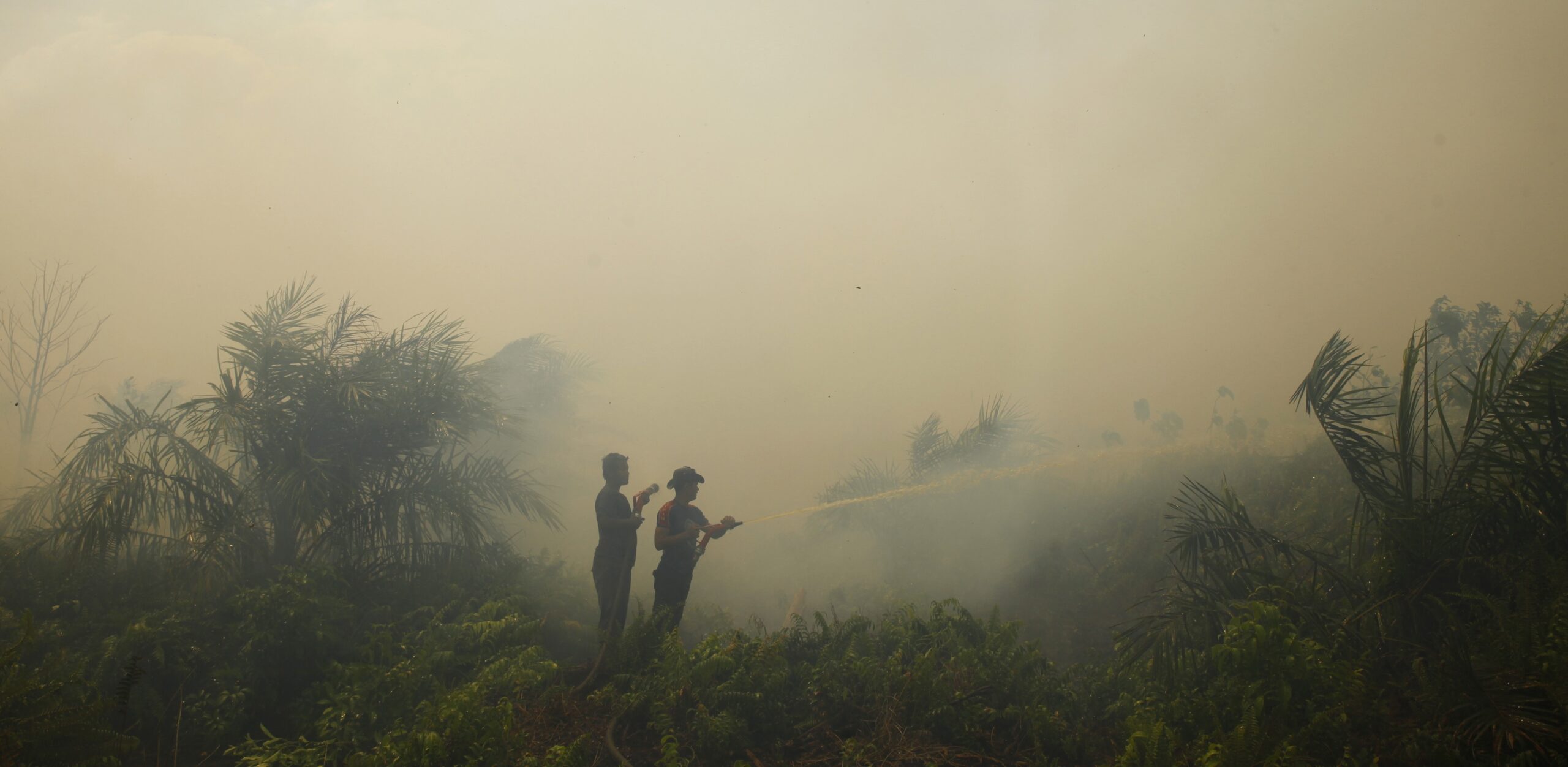
MILAN – A new satellite-driven mapping project has been launched to help palm oil companies identify and weed out growers who slash rainforest and violate anti-deforestation pledges.
Known as the ‘PALM Risk Tool’, the technology pinpoints nearly 800 mills, mostly in Southeast Asia, where raw palm fruit is processed into oil.
The tool collects information on the surrounding environment – including the rate of tree cover loss, forest fires and the location of protected reserves.
This is automatically analysed and each site is scored at a low, medium or high risk of future environmental harm and marked on an interactive map which has been made publicly available online.
The project’s developers, Global Forest Watch (GFW), a non-profit organisation that monitors forest landscapes, said the tool works because most growers can be found within a 50 km (30 mile) radius of the mills because fresh palm fruit must be processed quickly – usually within 24 hours of harvesting.
Anne Rosenbarger, Southeast Asia Commodities Manager for GFW, said the tool can help palm oil buyers investigate their own supply chains to prevent deforestation.
Since 2014, well over half the global palm oil trade has been covered by voluntary agreements between major producers to ensure “no deforestation”.
However, few companies can effectively trace their supply chain to farm level, Rosenbarger said, because many large companies could have many hundreds of suppliers.
Certifying each grower as sustainable is still the ideal, added Rosenbarger, but this would take a “long, long time” to achieve.