

By Shannon Larson
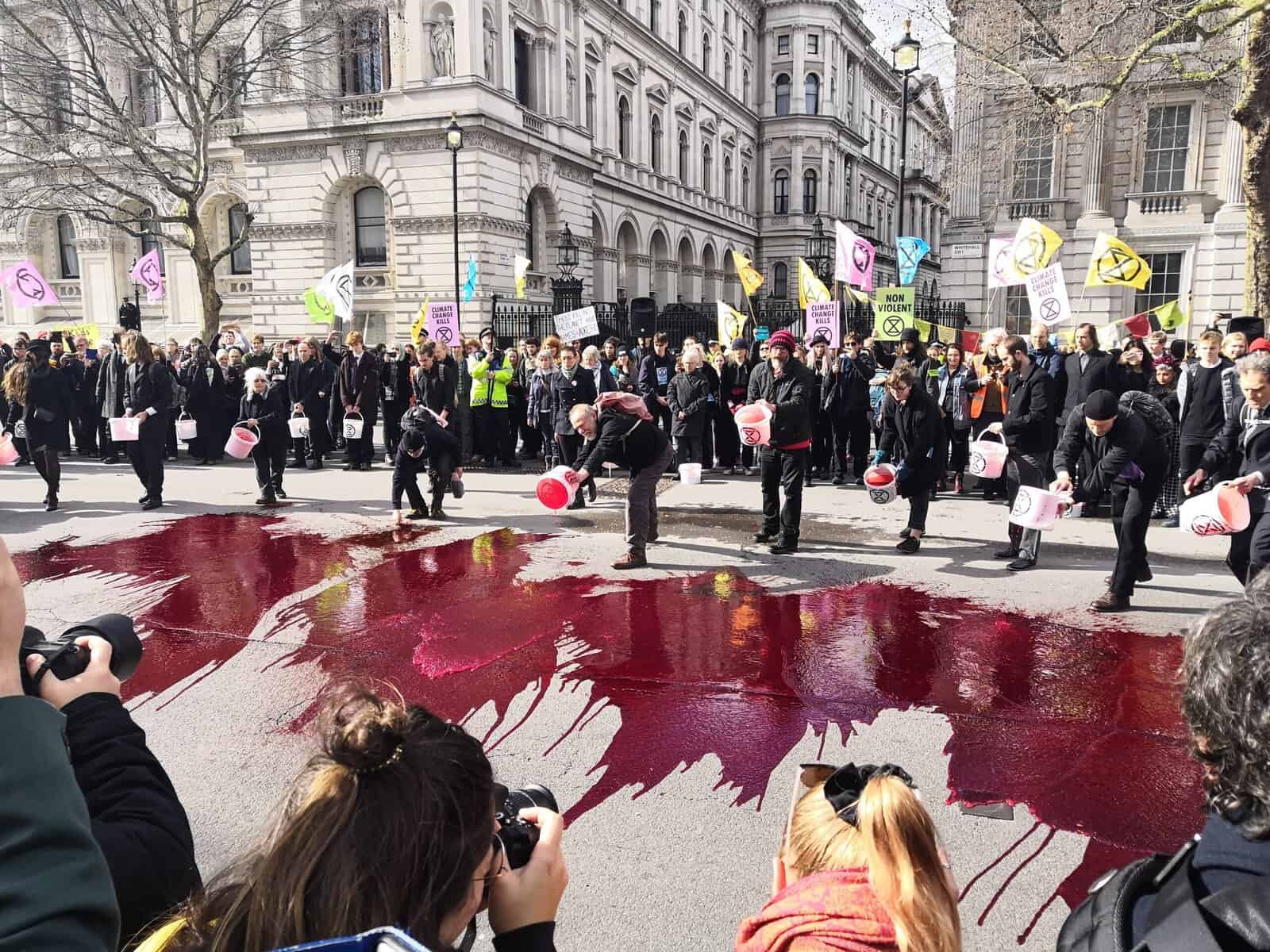
LONDON, April 9 (Thomson Reuters Foundation) – Cloaked in black and carrying white buckets filled with artificial blood, the group filed in silence to the entrance of London’s Downing Street, behind a troupe of child and teen activists.
Ringing a bell as they walked, the 45 adults – all participants in Extinction Rebellion, a protest movement seeking rapid action to curb global warming – formed an arc facing the British prime minister’s residence and poured out their buckets, turning the surrounding road into a sea of red.
The liquid, they said, symbolised “the blood of our children,” on the hands of politicians who have failed to act on climate change and stem its impacts, from worsening floods and droughts to growing poverty and water and food shortages.
Among those at the protest in March were three members of Christian Climate Action, a small group of retirees and students who say their religious faith is compelling them to take an increasingly active role in trying to stop climate change.
Climate change “is leading to a social collapse. We need to respond in more caring and collective ways,” said Phil Kingston, 83, a Catholic church member from Bristol who took a train to London to participate in the Downing Street demonstration.
As climate change protests pick up in London and around the world, they are drawing an increasingly broad range of protesters, from students following in the footsteps of 16-year-old Swedish “school strike” leader Greta Thunberg to grandparents concerned about the growing risks their grandchildren face.
Religious groups – from Christian, Jewish, Buddhist, Muslim and other faiths – are among those joining the protests, out of concern, in some cases, about the moral and spiritual implications of human-driven climate change.