

By Umberto Bacchi
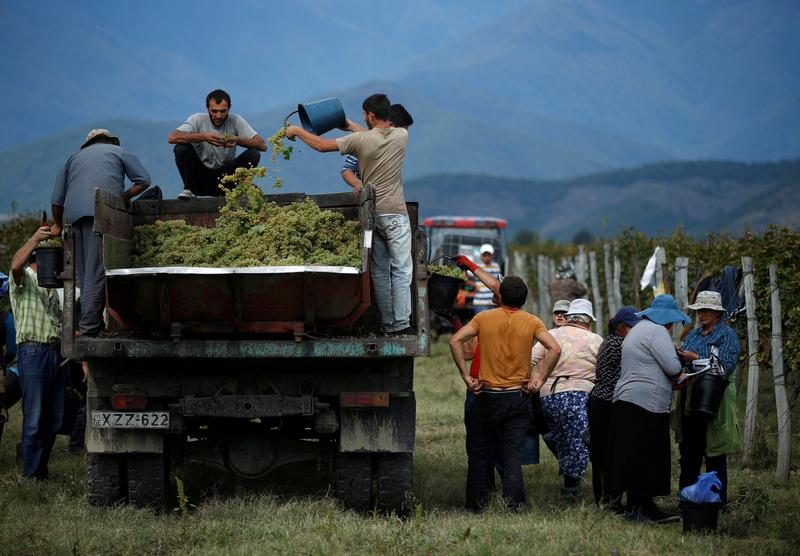
TBILISI, April 17 (Thomson Reuters Foundation) – When Georgian businesswoman Tamar Gerliani planted grapes on a small piece of land to start her own winery three years ago, she knew she faced an uphill battle in an industry dominated by men.
But she could not have foreseen that a legal reform designed to help Georgian landowners would make things even harder.
A ban on foreigners owning farmland introduced last year in Georgia’s new constitution has made it more difficult for farmers to borrow because the country’s mostly foreign-owned banks will no longer accept it as collateral.
That has thwarted hundreds of small farmers looking to expand, banking associations, farmers and pressure groups say – among them Gerliani, who needs $10,000 for a tractor to tend her vines.
“It’s difficult to work without a tractor,” the 31-year-old told the Thomson Reuters Foundation.
“This business already has many challenges and I could do without having to go ask around every time I need to use it.”
The new constitution states that, with a small number of exceptions, agricultural land can only be owned by the state, a Georgian citizen or a Georgian-owned entity.
The provision came into force in December last year as the former Soviet republic swore in a new president – though there has been a de-facto ban on foreigners buying farmland since 2017, when the government imposed a moratorium on purchases.
It followed widespread public concern about outsiders scooping up too much of the country’s fertile soil, particularly in strategically sensitive areas, said Agriculture Minister Levan Davitashvili.
About 40 percent of Georgia’s population live in rural areas, but less than 10 percent of the country’s land is arable – and foreigners own about 10 percent of it, he said.
“Most of our agricultural land is pastures located in high mountainous areas,” Davitashvili told the Thomson Reuters Foundation by phone.
“People were a bit concerned and this … was reflected in the constitution.”
But the ban is damaging small farmers, who often have no other collateral, said Teona Zakarashvili, a lawyer at anti-corruption watchdog Transparency International.
“This type of regulation has a bad effect on common people. It directly impacts the livelihood of small farmers who already are in a very poor financial state,” she said.
Since the moratorium came into force, about 1,500 loans were denied loans of it, according to the parliamentary committee on agrarian issues.
Women in particularly have been badly affected. They often have no other property because sons are traditionally favoured when it comes to inheritance, said Nino Zambakhidze, who heads the Georgian Farmers Association.