

By Kagondu Njagi
EMBU, Kenya, Dec 8 (Thomson Reuters Foundation) – Violet Karimi spends her days as she always has, attending to household chores and working on her farm.
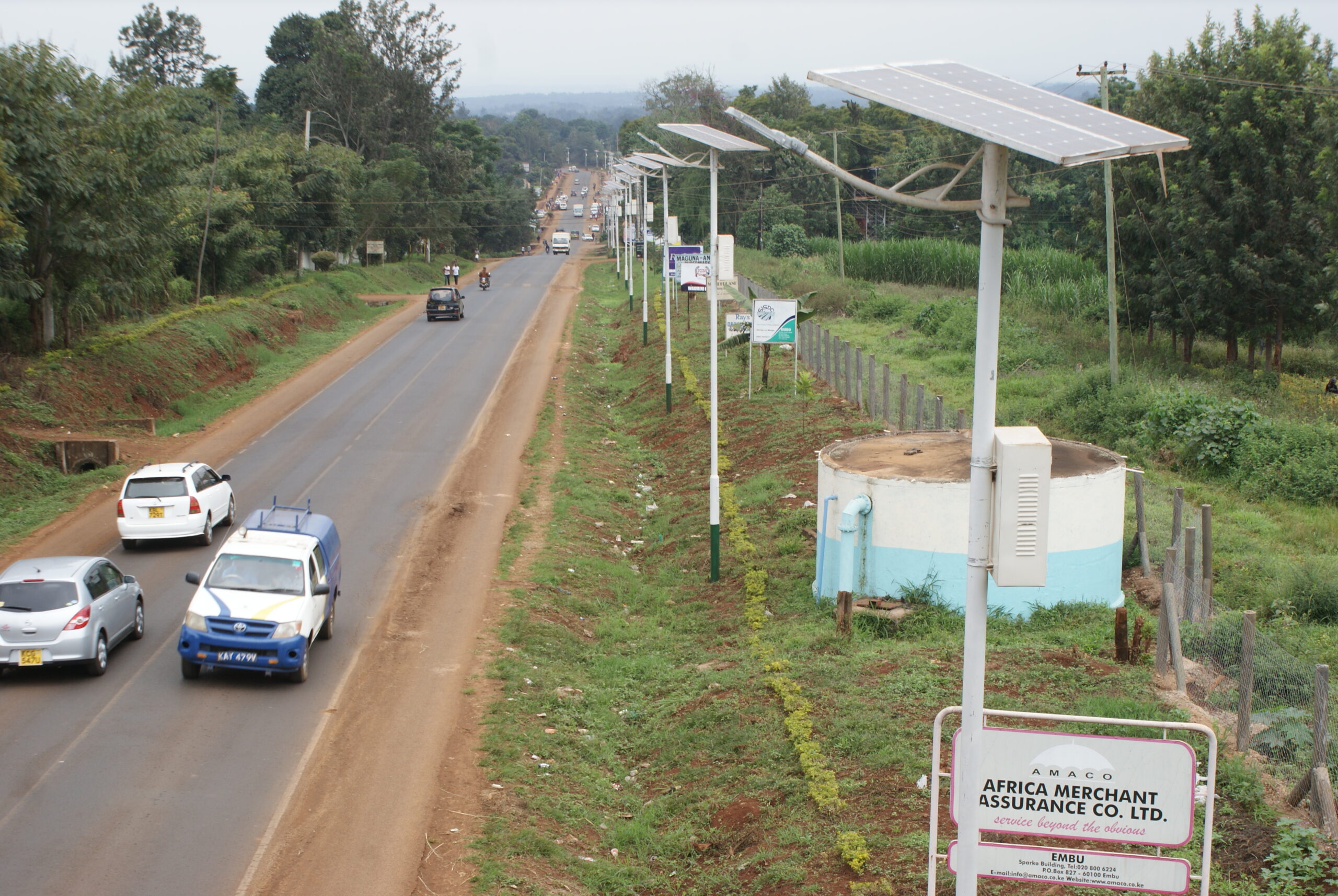
But when the sun goes down, she now has a second job, thanks to the arrival of solar lights in this town in eastern Kenya.
Each evening the widow leaves her three children studying at home by the light of a solar lantern and takes fruit and vegetables harvested on her farm to sell in Embu’s open air market.
“I collect my stock and head to the market where I trade until late in the evening,” said the 36-year-old. “This is possible because the solar lights in the market and the rest of Embu town are switched on the whole night.”
On a good day, she said, she can bring home as much as $30 – at least three times as much as she could sell in a shorter evening, before the lights made longer trading hours possible.
“Customers want to shop in the evening because that is when they leave work,” she said. “The solar lighting has encouraged them to stay and buy as long as they like.”
Solar energy – for lighting and to power businesses – is gaining a foothold across rural Kenya. In towns like Embu it is opening the way for new businesses, or new business hours, and giving families a chance to boost their incomes.