

By Sally Hayden
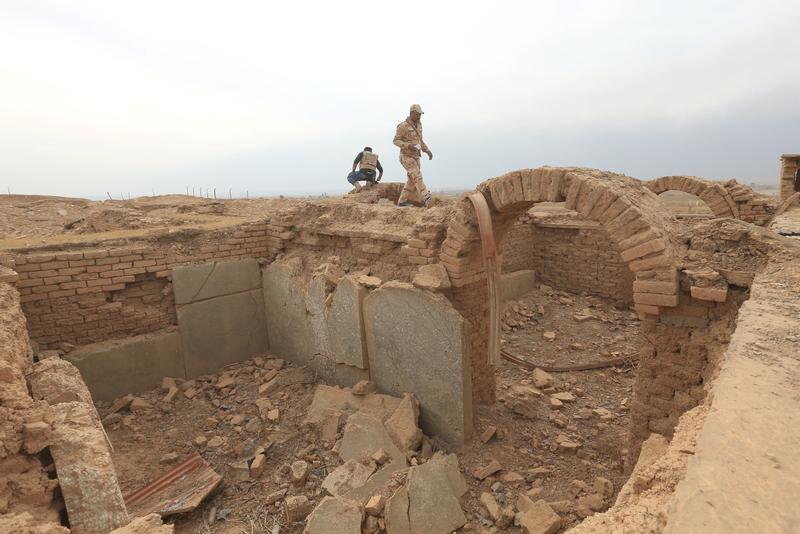
LONDON, Feb 20 (Thomson Reuters Foundation) – Standing in front of two ancient Assyrian statues, eight Iraqi archaeologists discuss not only the homes some have fled, but also how to avoid explosives when they finally go back to work.
They’re in London as part of a British Museum scheme aimed at equipping Iraq with the digital and excavation skills necessary to salvage artifacts and rebuild ancient sites Islamic State fighters have attempted to destroy.
Jonathan Tubb, head of the British Museum’s Iraq Emergency Heritage Management Training Scheme, told the Thomson Reuters Foundation the project began as an attempt to do something positive when nothing was possible on the ground.
“We could actually prepare people… for the day when these sites would be released again, liberated, and ensure that those people have all the necessary skills and tools to cope with the most appalling destruction,” he said.
The archaeologists each undergo three months of theoretical training at the British Museum and three more months of practical work at sites at Tello and Darband-i Rania in Iraq.
Zaid Sadallah, an archaeologist from Mosul in northern Iraq, fled his home when Islamic State fighters captured the city in 2014. An employee of the Mosul Museum, he headed with his family to nearby city Erbil.
In February 2015, he watched in horror as Islamic State videos were posted online showing men attacking the artifacts in the museum – some antiquities from the 7th century BC – using sledgehammers and drills.