


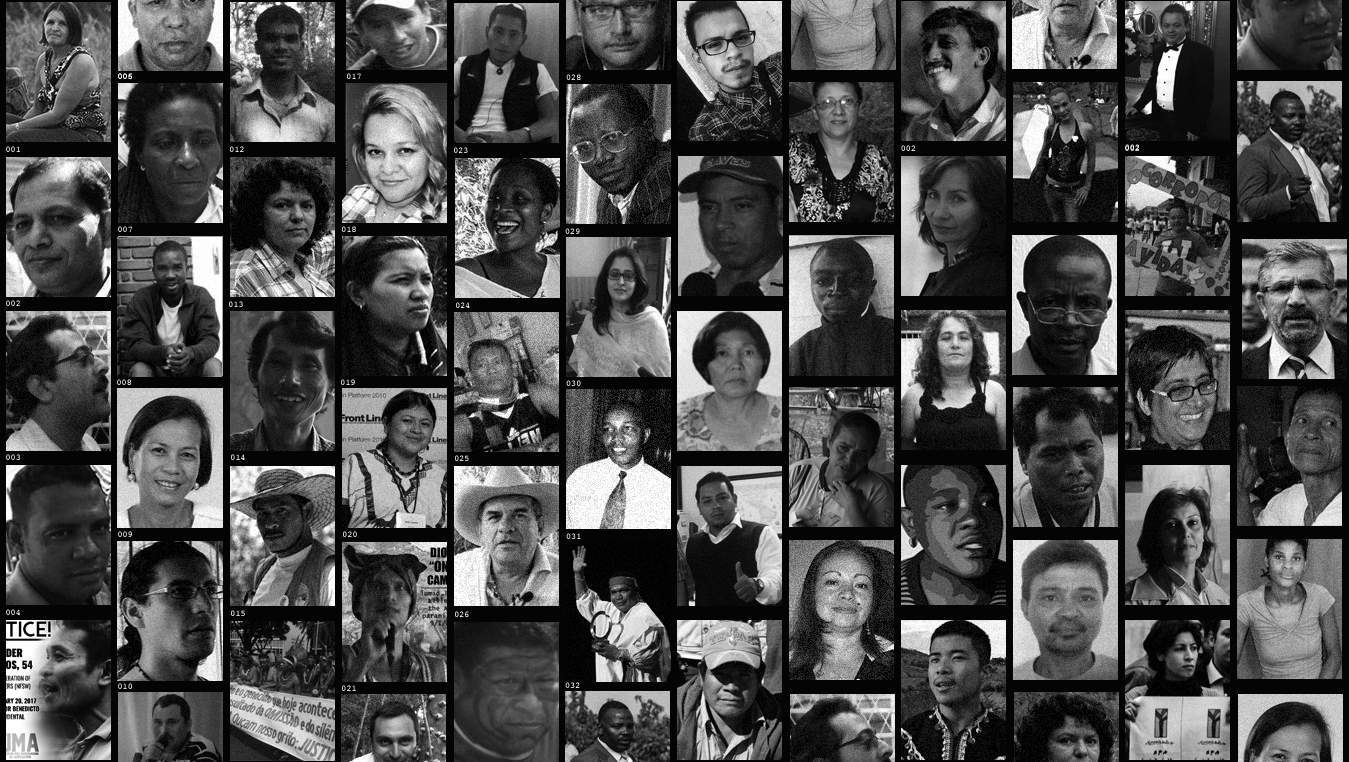
Thousands attacked, hundreds murdered as the global race for land and natural resources gathered pace. The Politics of Death project examined whether documented killings were only the visible part of a much larger global crisis.
The original interactive package is no longer available in a recoverable form. This neutral reconstruction preserves the component reports published by the Thomson Reuters Foundation and identifies each report and its original source. It does not claim to reproduce the former interactive shell.
Honduras: "Am I next?"
Every night, land rights activist Felipe Benitez and his wife wedged shut the doors and windows of their home and prayed gunmen would not break in and kill the family.
Honduras was described as the world's most dangerous place for environmental activists – local people battling business interests to preserve ancestral lands from mining, dams, logging, tourism and other developments.
"In Honduras, one of the ways to get you out of the way is murder," Benitez said from the mountain village of Santa Elena.
He feared he could be next as he led opposition to a hydroelectric dam on land claimed for the indigenous Lenca people. Several activists had been killed, including one whose dismembered body was found in a river.
The dangers gained global attention when renowned environmentalist Berta Caceres was gunned down in her home in March 2016. Fellow activists vowed to honour her legacy despite threats, beatings, arrests and kidnappings.
"Our territory is life itself," activist Margarita Pineda said. "If we don't protect it, who will?"
Read the full Honduras report: 'Am I next?' Deadly waiting game for land activists
Kenya: Colonial Scars and Drought
In Kenya's drought-stricken Laikipia region, armed herders searching for scarce grazing land drove tens of thousands of cattle onto private farms and ranches from poor-quality communal land.
Dozens were killed or injured. Farmer Martin Evans showed the bullet-holed door and bloodstained floor where a manager on his ranch had been shot by intruders.
Increasingly severe droughts, population growth and the enclosure of public lands left many traditional nomads without enough grass for their herds, driving them towards better-managed private land.
"We have nowhere to graze," Samburu herder John Leparsanti said. "I cannot wait and see livestock dying and yet there is grass here."
The conflict also exposed long-standing grievances over skewed land ownership dating to British colonial rule, when Maasai communities were pushed from their territory. Later governments redistributed or sold much of the land, while wealthy Kenyans, foreigners and conservationists bought large estates.
Read the full Kenya report: Colonial scars and drought feed land wars
Russia: Saving Moscow's Green Lungs
Physicist and environmental activist Yaroslav Nikitenko woke to graffiti next to the door of his Moscow apartment telling him to shut up, alongside a drawing of a gravestone bearing his name.
The threat was an attempt to end a campaign against a luxury residential complex encroaching on a park and ancient pine forest.
Moscow has seen increasing community battles to save public parks and spaces from reconstruction and gentrification. Greenpeace Russia estimated hundreds of hectares of green space had been lost to development and said the city was embroiled in scores of land disputes.
Among the public spaces at stake were the city's "green lungs" – the forest belt and park system that separated residential areas.
Nikitenko reported the threat to police but continued campaigning.
"When I got involved in public action, I always knew it's dangerous," he said. "I don't want to hide, I just want to continue my normal life."
Read the full Russia report: Muscovites march to save city's green lungs
Bangladesh: Defending Nature with His Life
Bangladeshi academic and activist Anu Muhammad was no stranger to death threats, beatings, persecution and arrest. A text message warned him to support the proposed Rampal coal-fired power plant or be hacked to death.
Muhammad had led a campaign against plans to build the plant near the Sundarbans, one of the world's largest mangrove forests and a UNESCO World Heritage site home to threatened species and vital to millions of livelihoods.
The government said Bangladesh needed electricity to develop and the project company argued the plant would not harm the forest. Muhammad feared an environmental disaster.
"We need to take this risk," he said. "By destroying a natural huge forest, power and other commercial enterprises reflect a blind development paradigm that puts profit before people and environment."
He said he had no intention of giving up.
Read the full Bangladesh report: The professor defending nature with his life
Brazil: Conflict over Land and Resources
The Brazil component examined the dangers faced by people defending land and natural resources amid a global race for commodities and development.
The report belongs to the original Politics of Death series and is preserved through its archived Thomson Reuters Foundation article. The former interactive transitions and proprietary package elements are not reproduced here.
Read the full Brazil report from the Politics of Death series
India: Lawyers Join the Land Battle
Rights lawyer Shalini Gera was drawn to Chhattisgarh by testimony about atrocities against indigenous people in the mineral-rich state.
Gera and other lawyers set up an office in the restive Bastar region. They said they were followed, had objects thrown into their home and were accused of helping Maoist rebels. A fearful landlord eventually evicted them, but they continued their cases from another city.
Chhattisgarh sits atop major reserves of coal, iron ore, bauxite, limestone, tin and gold. The race for resources pitted vulnerable communities against the state and stalled industrial projects worth billions.
Activists were caught between Maoist combatants and government security forces. Lawyers argued that people opposing projects were treated as enemies rather than citizens.
"There is violence against people who insist on their rights and we are perceived as anti-development for helping them," lawyer Sudha Bharadwaj said.
Read the full India report: Lawyers join battle over land in mineral-rich state
Ethiopia: Mapping the Dead
Academic Endalk Chala began documenting deaths in Ethiopia by scouring Facebook, Twitter and blogs to piece together who had died and where.
Protests began over a government plan to allocate farmland around Addis Ababa for urban development, threatening to displace Oromo farmers. The project was scrapped, but protests spread over arrests, political exclusion and the economy.
After communications were shut down, people in the Ethiopian diaspora pulled together evidence. Chala logged deaths on an interactive map and verified information sent through social media and messaging applications.
"There were reports that people were killed in the protests and no one was reporting about it," he said. "I just wanted to give perspective."
The work was difficult and dangerous. Witnesses described security forces firing into crowds, while people sharing information with outside groups risked reprisals.
Read the full Ethiopia report: The map maker who finds the bodies in the land battle
Credits and Recovery Note
Project authorship: Paola Totaro and Matthew Ponsford.
Component reporting included Anastasia Moloney, Nicky Milne, Katy Migiro, Claudia Ciobanu, AZM Anas, Rina Chandran, Sally Hayden and other Thomson Reuters Foundation journalists credited in the linked reports.
This body is a package recovery assembled only from identifiable component reports and verified project metadata. It is not represented as an exact copy of the unavailable interactive page.