

By Zoe Tabary
PARIS, Dec 29 (Thomson Reuters Foundation) – In a bright white room in a building north of Paris, Syrian musician Karam al Zouhir impatiently clicks a mouse as he presses his headphones against his ears.
The 30-year-old artist, who left his country shortly after civil war broke out in 2011, is composing a musical show for children based on recordings of migrant children telling their stories, with support from French writer Claire Audhuy.
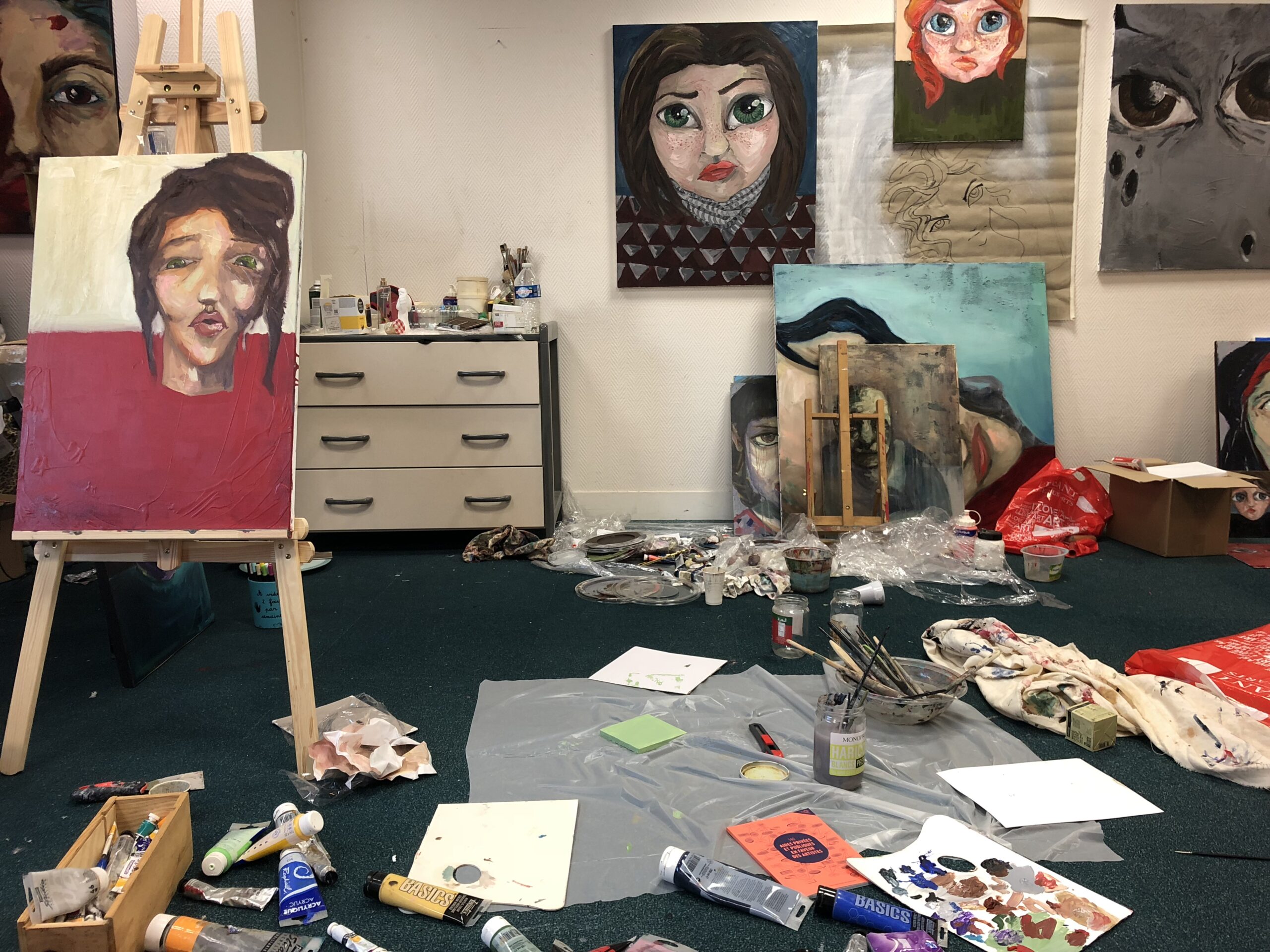
“In many ways kids are more perceptive and adaptable than adults,” said al Zouhir, one of about 200 musicians, painters and sculptors from conflict-affected countries working alongside each other in the workshop in northern Paris.
“There’s so much we can learn from the way they experience a crisis,” he said, totally engrossed in overlaying sounds of clinging forks and crushed cans on quotes from children.
Giving artists from countries such as Syria, Yemen and the Democratic Republic of Congo the chance to continue their work and rebuild their lives was the reason that former theatre managers Ariel Cypel and Judith Depaule set up the Agency for Artists in Exile earlier this year.
With funding from the Paris authorities and a 1,000 square metre space the size of four tennis courts provided by French charity Emmaüs Solidarité, artists need only pay a token one euro a year to work there, explained Cypel.
“Most of the people working here live in extremely precarious conditions,” he said. “So we try to take off some pressure and provide members with a bit of stability, if only in their work life.”
Artists come at all hours and can stay for as long as they want, Cypel added.
“When you’ve suffered torture, rape or forced exile, getting into work early is the last thing on your mind.”