

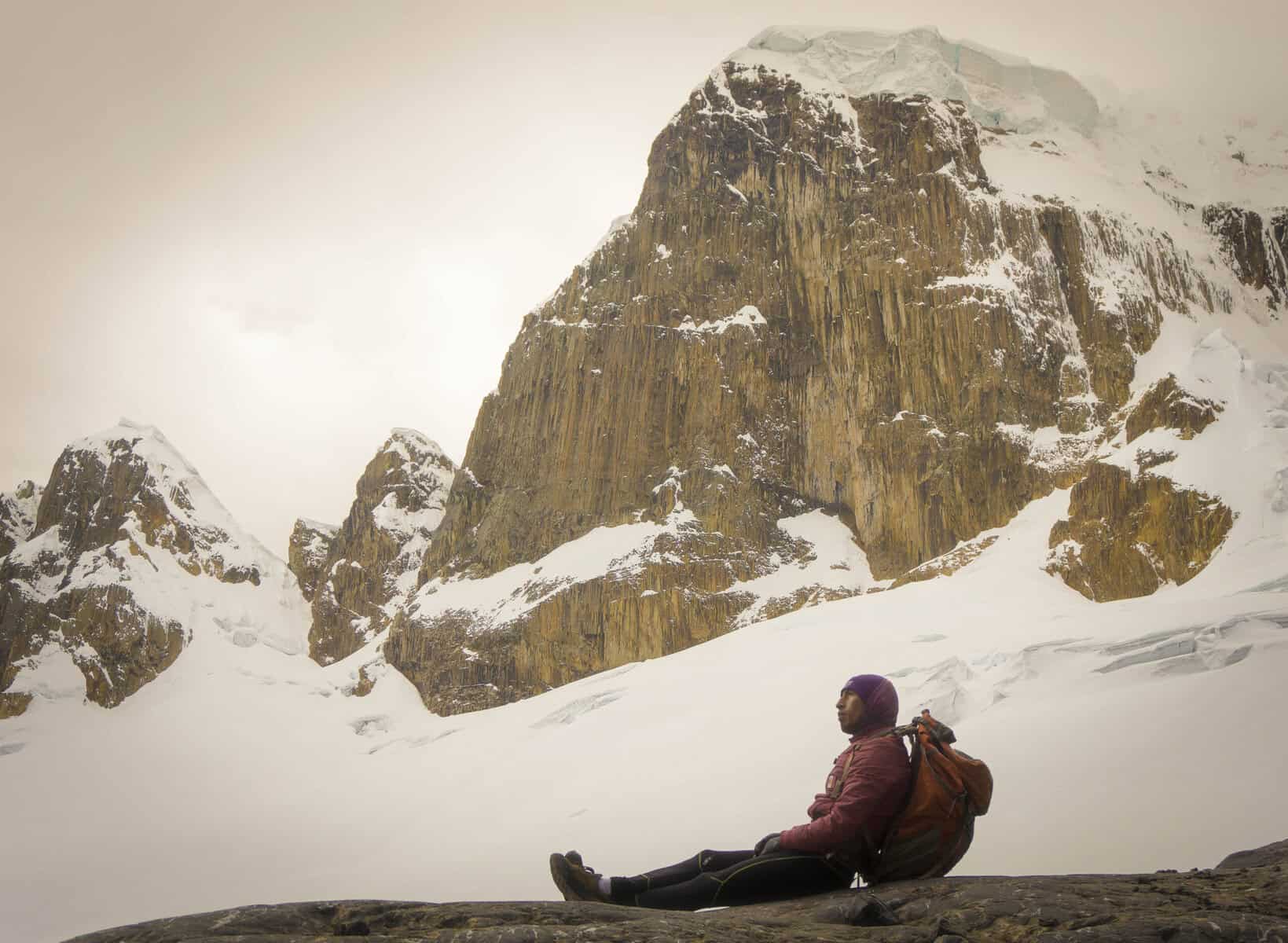
HUARAZ, Peru, Jan 17 (Thomson Reuters Foundation) – Mountain guide Roger Sánchez has spent 13 years guiding climbers through the glacier-strewn highlands of Peru’s Andean Cordillera Blanca.
But lately he’s found another client: mining companies looking for new digging spots as Peru’s high mountain glaciers melt.
Sanchez doesn’t mind the switch. “The mining companies pay better. I want my daughter to get a good education,” he explains.
But Peru’s fast-melting glaciers are bringing many other unwelcome changes for residents of Peru’s tourist-dependent Ancash region, north of Lima.
Lake Palcacocha, which sits above Huaraz, the region’s capital, has grown 34 times larger than it was in 1970 as glacial meltwater pours down from the mountains, said Courtney Cecale, a University of California, Los Angeles, PhD student in anthropology, who is studying climate impacts in the Cordillera Blanca.
“The wrong earthquake or avalanche could send an enormous tidal wave into the valley below, directly threatening 110,000 lives,” she said.
That threat is at the heart of a pioneering climate change lawsuit, in which Huaraz farmer and mountain guide Saul Luciano Lliuya is suing Germany utility RWE. The suit charges that RWE’s coal-fired power plants are an important contributor to climate change, and are raising risks to Luciano and other residents of Huaraz.
The lawsuit, which a German court has agreed to hear evidence in last year, seeks $20,000 toward a $4 million local government effort to cut flooding risks from the lake.
Meltwater from fast-disappearing glaciers also is eating into newly exposed rock in the Cordillera Blanca mountains, turning the water rushing downstream acidic – sometimes as much as lemon juice, making it undrinkable, said John All, a climate researcher and director of the Mountain Environments Research Institute at Western Washington University
“You find cows and other livestock dead in the pasture from just drinking the water they always have,” said All, who also heads the American Climber Science Program, which conducts conservation-focused research in remote and mountain environments.
In nine years of research in the area, he says he has seen more dead cattle and donkeys in areas suffering acid water problems than in other valleys – and even his own team feels ill working in those areas and drinking the local water.