

By Manipadma Jena
KAMLAPUR, India, Feb 12 (Thomson Reuters Foundation) – In her village of Komalia, the fog swirls so thick at 7 a.m. that Akansha Singh can see no more than 15 meters ahead. But the 20-year-old is already cycling to her workplace, nine kilometers away.
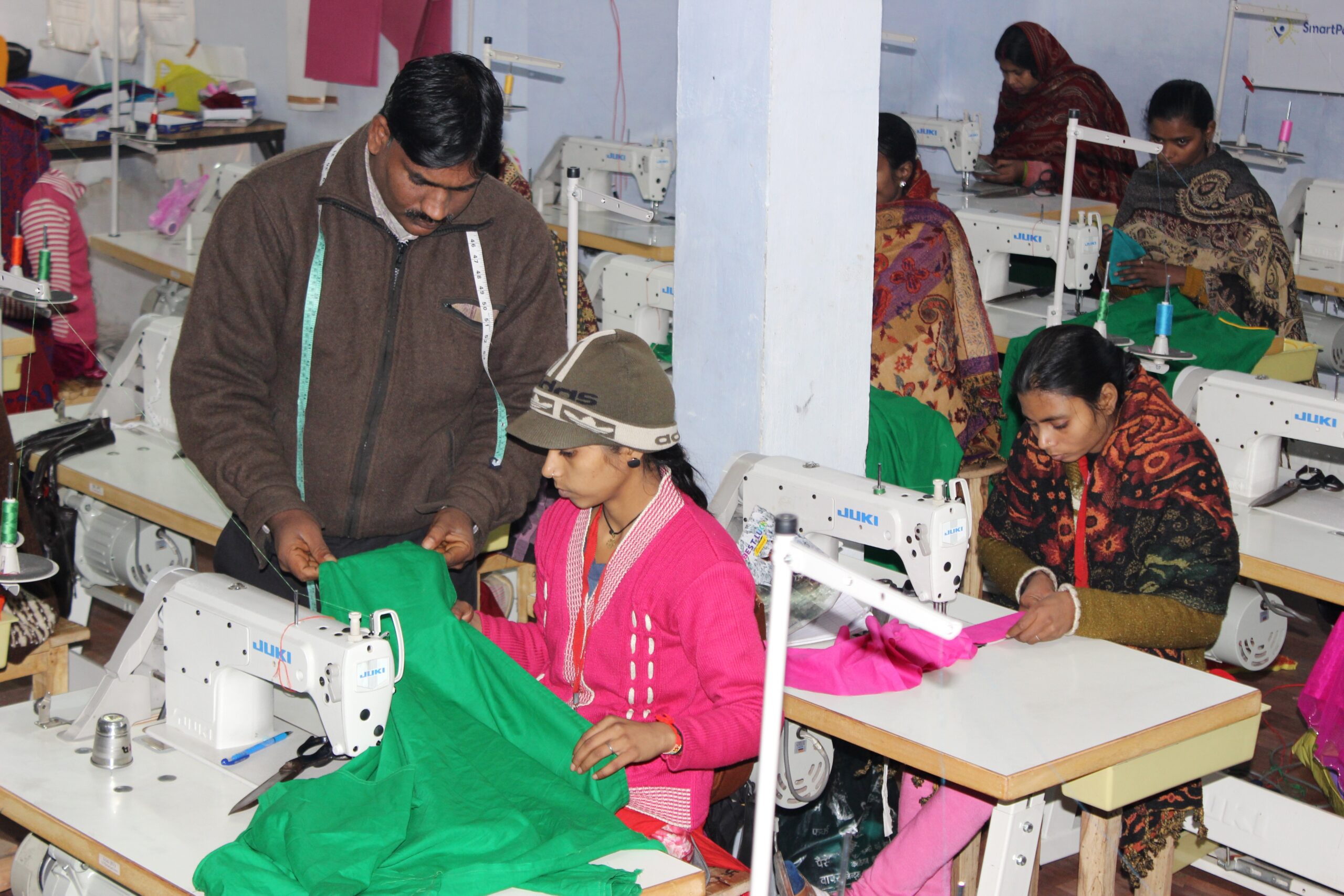
Halfway there she stops for two hours at a computer training centre, where she’s learning internet skills. Then she’s off again, and by 10 a.m. reaches the small garment manufacturing plant where she stitches women’s clothing for high-end brands on state-of-the-art electric sewing machines.
Solar energy powers most of her day – the computer training centre and the 25-woman garment factory run on solar mini-grid electricity – and clean power has given her personal choice as well, she said.
If the mini-grid system had not been put in place, Singh – a recent college graduate without funds to pursue training as a teacher, the only job open to women in her village – would have had no alternative but to marry, she said.
In fact, “I would already be married off,” she told the Thomson Reuters Foundation.
Today, however, she earns 4,500 rupees ($70) a month working on solar-powered sewing machines. She uses part of that to pay 300 rupees ($4.70) a month for her computer education class – and is planning to start a computer training centre closer to home.
Like her, most of the women at the factory earn between 2,500 and 4,500 rupees ($39- $70) a month, which has helped their families eat better, get children to school and pay for healthcare, they said.
“With a month’s earning alone we can buy new bicycles for ourselves and our school-going children,” Bandana Devi, a mother of four, told the Thomson Reuter Foundation, as she looked up from her sewing.
She bought one for her 12-year-old daughter, she said, and her 6-year-old rides pillion with her to the school, 2 km away.
Prime Minister Narendra Modi has announced a $2.5 billion plan to electrify every Indian household by 2019 – a huge task in a country where close to 240 million people still have no access to electrical power.
Solar power – including the use of small local grids – is likely to be a big part of the push, with 60 percent of new connections expected to be to renewable power, according to a report by the International Energy Agency.