

By Lin Taylor
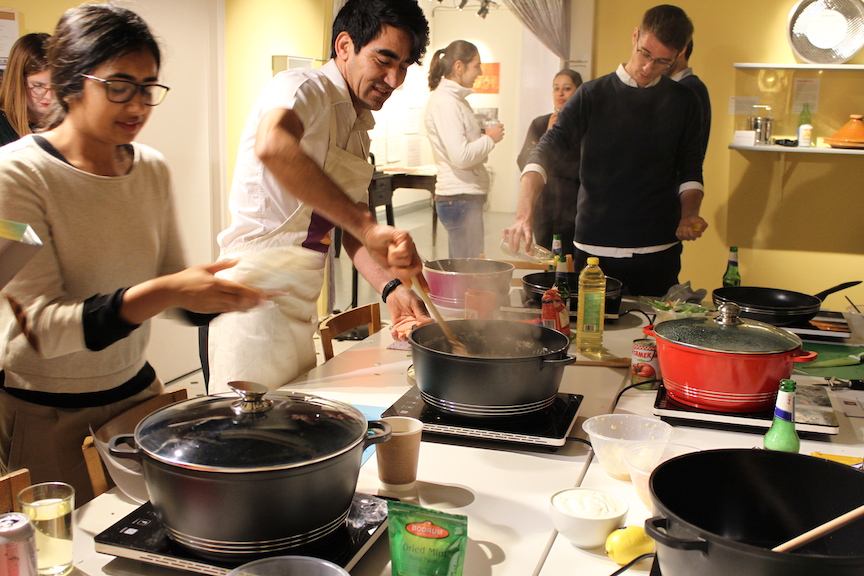
LONDON, Nov 23 (Thomson Reuters Foundation) – In a large warehouse in London, Afghan refugee Habib proudly watched cooking students stir pots of vegetable soup and fry lamb kebabs, preparing recipes passed down from his mother.
“This reminds me of when I was with my family. We eat this soup when we have something to celebrate,” he said at the pop-up kitchen at the Migration Museum where he is teaching a cooking class.
Surrounded by remnants of Britain’s migration history, including letters, clothing and photos of migrants, Habib is one of a handful of refugees running workshops and talks as part of the Room To Breathe exhibition.
“I feel very proud. It makes me feel like I have something to share with people,” said Habib, who arrived in Britain in 2016 after fleeing Afghanistan for political reasons and did not reveal his full name.
Four years ago, Habib would have cooked these dishes in the ‘Jungle’, a camp in northern France where he lived for four months with nearly 10,000 migrants, all hoping to reach Britain by stowing away on trucks, cars or trains.
Before it was demolished in 2016, the shantytown had become a symbol of Europe’s difficulty in dealing with the migrant crisis which saw millions of people arrive in Europe fleeing poverty and conflicts in the Middle East, Africa and Asia.