

By Rina Chandran
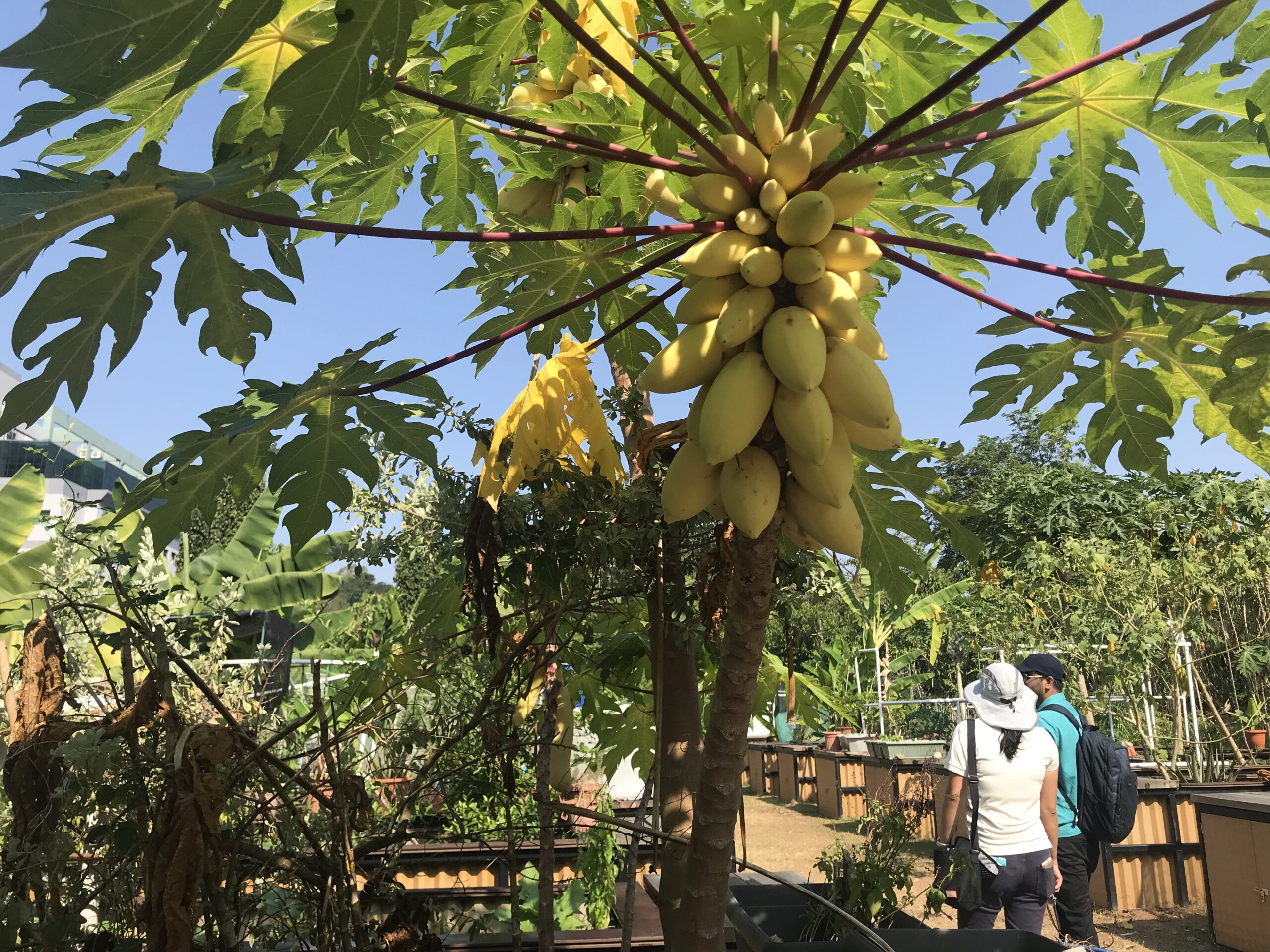
SINGAPORE, April 15 (Thomson Reuters Foundation) – Rain or shine, every day for the past year, Kanti Kagrana walks a short distance from his son’s flat to Singapore’s HortPark, a national park where he grows chillies, eggplant and spinach in his allotment garden.
Kagrana, a 60-something native of India, is among a growing community of urban farmers in Singapore, which introduced allotment gardens in November 2017, modelled after England’s programme which dates back to at least the 19th century.
Singapore now has more than 1,000 allotment gardens in a dozen of its national parks. Each is a raised planter bed measuring 2.5 metres by 1 metre, and can be leased for three years for S$57 ($42) annually.
“I enjoy gardening, but there is not enough space in my son’s flat,” said Kagrana, who has two plots.
“This gives me something to do, and I take the produce home so we save some money, as well,” he said as he turned the soil with a spade.
Agriculture makes up only about 1 percent of Singapore’s land area, but urban farming – including vertical and rooftop farms – is fast becoming popular.
Singapore last year topped the Economist Intelligence Unit’s (EIU) Global Food Security Index for the first time, scoring high on metrics such as affordability and availability.
Yet, as the country imports about 90 percent of its food, its food security is susceptible to climate change and natural resource risks, the EIU noted.
Former prime minister Lee Kuan Yew had envisioned the country as a “Garden City” in the 1960s.
With some 5.6 million people in an area three-fifths the size of New York City, land is at a premium in Singapore.
Yet it has among the most green cover of urban centres – 66 square metres per person, compared to New York City’s 23.1 sq metres, according to a Siemens-sponsored Green City Index.