

By Kieran Guilbert
BIRMINGHAM, England, May 23 (Thomson Reuters Foundation) – The officers arrived quietly at the house in central England – no need for a battering ram, a knock on the door sufficed.
Months of investigating, evidence from three Romanian modern slaves and a tip-off from a bank led anti-slavery officials to a residential street in Birmingham one sunny morning this week.
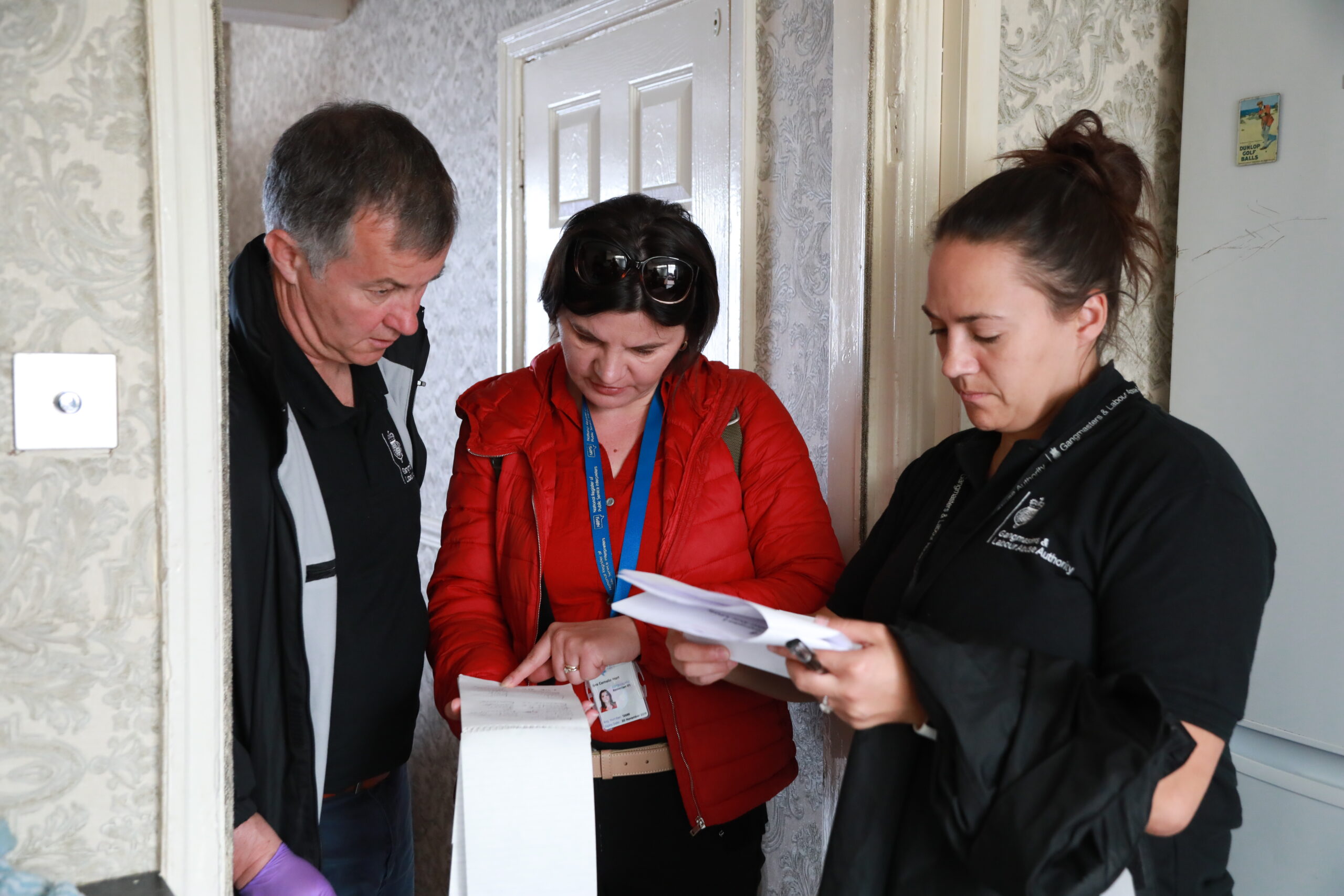
Several officers entered the home quickly yet calmly, moving children and possible victims out of harm’s way before arresting two men and a woman suspected of exploiting Romanian factory workers by saddling them with debts and seizing their wages.
Searching for evidence, the officials found a notepad filled with names, work shifts, earnings, living costs and debts owed – “useful material” suggesting labour abuse as the anti-slavery agency pursues a prosecution under the 2015 Modern Slavery Act.
“We engage with many potential victims who come here to seek a better life … but most don’t understand that they are being exploited, or victims of criminality,” said Andy Davies, senior officer with the Gangmasters and Labour Abuse Authority (GLAA).
“The reality is they are exploited financially, and don’t understand (their situation),” he said. “Bringing people to Britain, putting them to work, making money on the back of that labour – this is very much the definition of modern slavery.”
About 7,000 suspected slavery victims were identified last year, up a third on 2017, yet activists say the surge raises concerns about the government’s ability to support survivors.
Labour exploitation – from men working in car washes to children forced to carry drugs – remained the most common form of slavery, while most potential victims were from Britain, Albania and Vietnam, the same as in 2017, the statistics showed.