


By Caroline Wambui
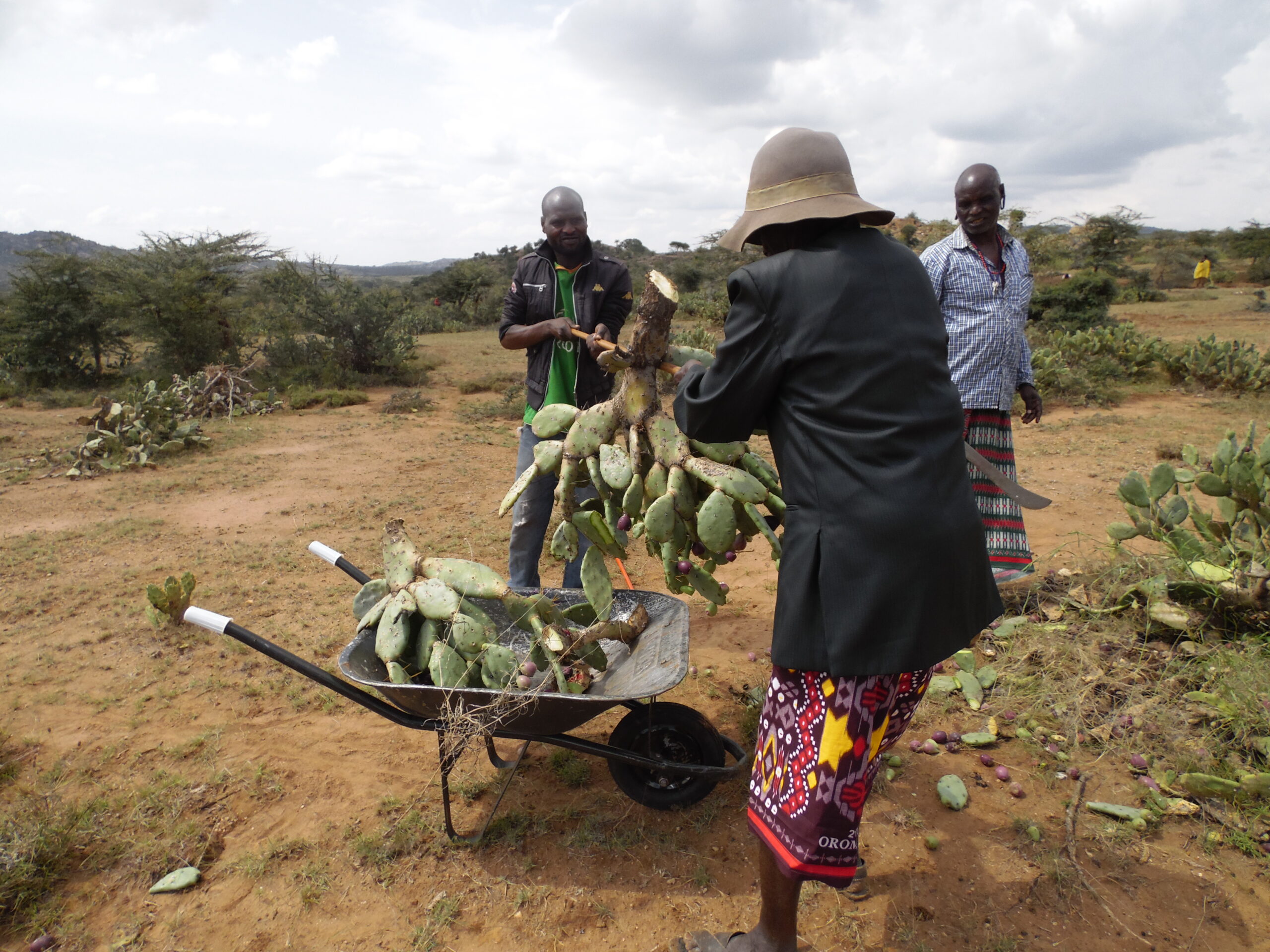
LAIKIPIA, Kenya, Sept 26 (Thomson Reuters Foundation) – Armed with rakes, hoes and machetes, a group of ranchers hacked at the spiky cactus plants sprouting all over their land, chopping them into pieces and carting them off in wheelbarrows.
In many parts of the world, the prickly pear (opuntia) is used as natural fencing and decoration, thanks to its flat, fleshy pads, colourful flowers and purple fruits.
But across Kenya’s arid northern areas, where grazing land is already depleted by frequent droughts, the cactus has become a nightmare for cattle ranchers and livestock herders.
Farmers at the communally managed Makurian Group Ranch in Laikipia County in Kenya’s Rift Valley say the non-native, invasive plant destroys the grass that feeds their animals and can make them sick when they eat it.
“Despite our ruthless battle with opuntia, the cactus has rendered thousands of acres into a wasteland and won’t go away,” lamented Jackson Mukurinu, a farmer at the ranch who has lost more than 800 goats and 85 cows after they fed on the cactus.
Hoping to loosen its grip on grazing land, farmers, charities and scientists are working together to eradicate the plant with methods ranging from feeding it to insects, to turning it into fuel.
‘HELPLESS’
The prickly pear was brought to the area by colonisers in the early 1900s, said Protas Osinga, a livestock officer in Laikipia.
Over time, a warming climate and rapid population growth have transformed it from a popular crop into an uncontrollable menace, he said.
During the droughts and prolonged dry spells that have become increasingly common in Kenya over the past decade, the cactus is often the only vegetation that can thrive, he noted.
Livestock, birds, elephants and baboons often have no choice but to feed on the cactus, and when they do, they disperse its seeds as they move around the area. Kenya’s expanding population, meanwhile, has stoked demand for milk and meat, motivating farmers to increase their herds with more animals spreading the cactus seeds, Osinga added.
Highly resistant to drought and able to re-sprout from the smallest piece of root, the prickly pear grows aggressively and is remarkably difficult to remove, said Lerina Legei, 80, an elder at the Makurian ranch.
In the past five years, over half of the more than 1,200 farmers living in the area have been forced to move to other parts of the ranch after the cactus overran their land, he said.
“Livestock is our livelihood and opuntia – having no competition – has conquered the land by suffocating the native crops, leaving no grass for our livestock,” said 42-year-old rancher Florence Kakweri.
She moved her family last year after the plant’s domination rendered them “helpless”.
Osinga, the livestock officer, told the Thomson Reuters Foundation that about two-thirds of the ranch’s 6,640 hectares (16,400 acres) had been invaded by the prickly pear so far.