


By Carey L. Biron
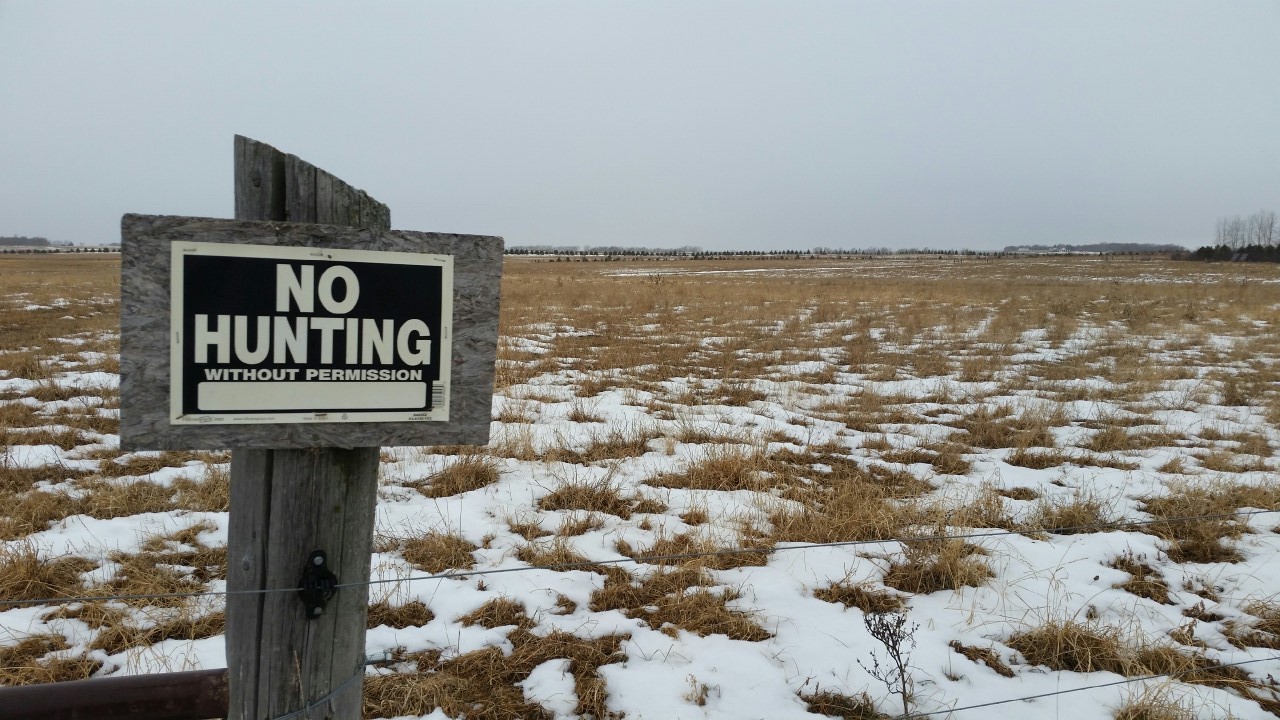
WASHINGTON, Feb 24 (Thomson Reuters Foundation) – A decades-long debate over hunting, private property and trespass may be nearing an end in North Dakota, one of the few places in the United States where fenced land is open to outsiders unless signs declare otherwise.
Lawmakers are closing in on a compromise that, if passed, as early as mid-April would tweak the laws governing the flat, wind-swept prairie lands of the state, one of the country’s largest agricultural producers.
North Dakota’s “open access” property laws have been particularly supported by hunters and fishermen, but efforts also have been made by landowner and agricultural groups to overturn them for at least 30 years.
For Emmery Mehlhoff, the debate has simmered throughout her life.
She and her husband now raise grain and cattle on lands that they own and rent. The law has meant $1,000 a year to purchase new metal signs barring entry, plus the time it takes to put them up.
“I’ve always been aware of this as a big issue,”, said Mehlhoff, who is also a public policy liaison with the North Dakota Farm Bureau.
The couple oversee thousands of acres and some of their fields are 60 mile apart.
Mehlhoff, 29, noted her family frequently allows hunters to access their properties when someone asks permission, but said she and others in the area have had problems with joyriders and dumping by others.
Last year they had to clean up 80 dead carp that someone had left in pastureland they lease, and friends have had signs ripped down by people who subsequently said they did not know the property was posted.
Now lawmakers are nearing a solution that has been years in the making: allowing landowners to use a state-run website to electronically post whether land is open or closed.
Supporters on both sides say the approach would be hard-won if it becomes law – and that the novel use of electronic posting could inspire other states with large tracts of private land.
“In North Dakota, all private lands are considered open to hunting unless physically posted. There’s been a longstanding policy to change that, and that’s been defeated,” said Republican state Senator Robert Erbele, who spearheaded the new effort.
“But with today’s technology, we’ve come up with another method,” he said in a phone interview. “It’ll be significant in that we finally have a collaborative solution.”
PUBLIC ACCESS, PRIVATE RIGHTS
The seeds of this friction can be found in the state’s constitution, noted Dana Michael Harsell, an associate professor of political science and public administration at the University of North Dakota.
“In the very first section of the Declaration of Rights, you have property rights and hunting,” he said.
“Your right to pursue property is featured prominently, and then you go to the next sentence, and it talks about hunting,” he said, noting these are “two very deeply engrained values” for residents.