

By Anuradha Nagaraj and Zofeen T Ebrahim
KELAMBAKAM, India/KARACHI, Pakistan, Sept 12 (Thomson Reuters Foundation) – In a dilapidated shelter in south India, surrounded by squalor, Alakamma Bibi dials her home in Myanmar every few hours.
All she gets is a beeping tone.
In the two weeks since she first heard of the upsurge in violence in Myanmar, she has spent countless hours trying to reach her parents and siblings, desperate to hear their voices.
“I can’t sleep anymore,” she said, hunched over a pot of bubbling rice.
“My parents may be dead, you know. They stayed back because it was home. Now suddenly there is no place to call home.”
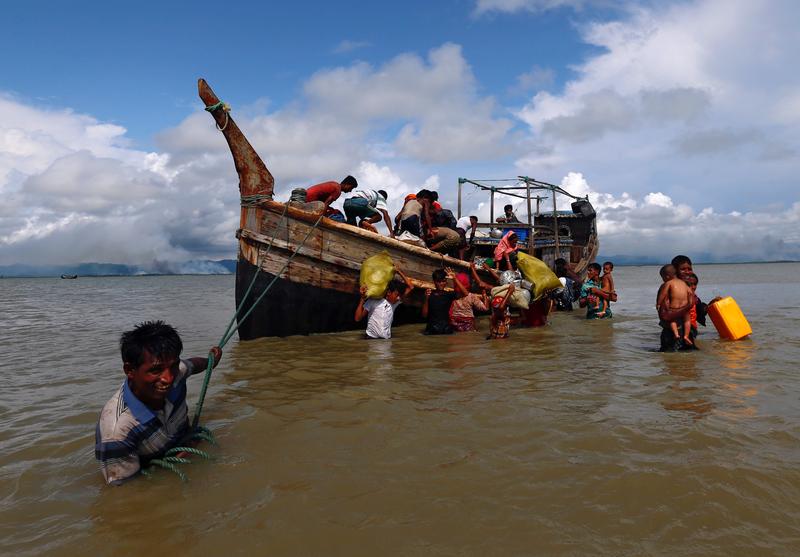
Bibi is one of hundreds of thousands of Rohingya Muslims who have fled from Rakhine state in Buddhist-majority Myanmar since 2012 to other countries, including Malaysia, Pakistan, India, Bangladesh, Saudi Arabia and the United Arab Emirates.
In the last fortnight alone, more than 300,000 Rohingya have fled across the border to Bangladesh, fleeing an explosion of violence.
Myanmar’s government regards the approximately 1 million Rohingya as illegal migrants from neighboring Bangladesh and denies them citizenship, even though many Rohingya families have lived there for generations.
In retaliation for attacks by Rohingya insurgents on police posts and an army base, the Myanmar army and Buddhist vigilantes have mounted a campaign of arson aimed at driving out the minority group, human rights monitors and fleeing Rohingya say, a charge the Myanmar government denies.
Pockets of Rohingya communities are dotted around South Asia, with exiles anxious for news of their relatives back in Myanmar.
In an alleyway in the garbage-strewn Hundred Quarters in Karachi, Hamida, who was born in the Pakistani city but speaks fluent Burmese and only a smattering of Urdu, has been reading verses from the Koran, praying for an end to the persecution of her Muslim relatives in Myanmar.
“My cousins fleeing from their village have told us many of our relatives have been butchered, even small babies,” said Hamida, aged in her 40s, adding many had asked for help.
“We know they desperately need money, but we ourselves live hand to mouth,” said the mother of seven whose fisherman husband Majid is often out of work.