

By Rachel Savage
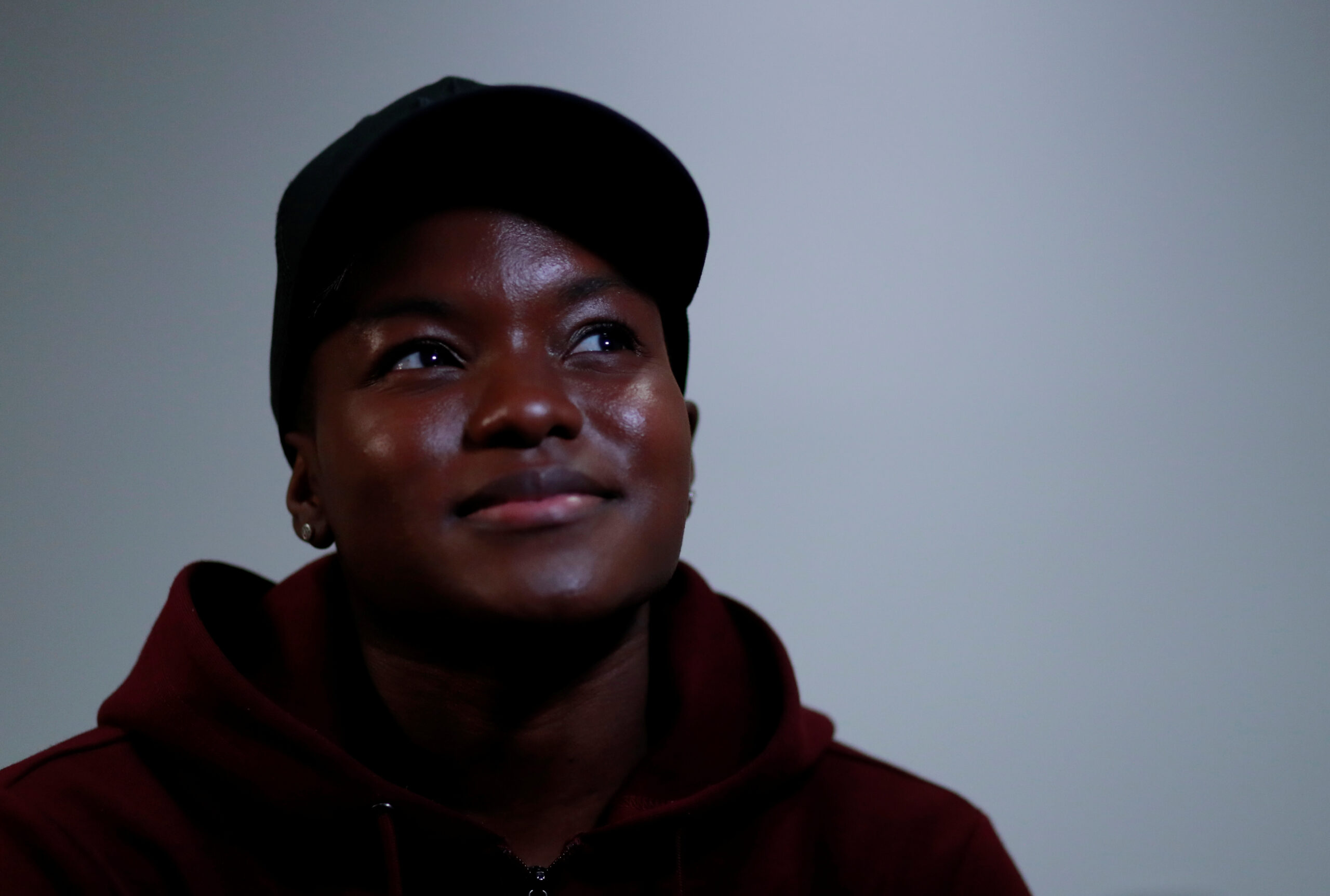
LONDON, Dec 15 (Thomson Reuters Foundation) – British Olympic boxer Nicola Adams has always faced two fights: one in the ring and another against those who argue women have no place in one of the most male-dominated of sports.
Adams, who is Black and a lesbian, said sexism had been the biggest barrier she had to overcome in her 25-year career, as a new documentary traces her journey as a trailblazer in the battle by female boxers to be treated as equals.
“We’ve just been put in a box for so long that whenever a woman does anything that’s outside the box it always seems really extreme, but it shouldn’t be,” Adams told the Thomson Reuters Foundation in a video call from her London home.
Adams, 39, became the first woman and first openly LGBT+ person to win an Olympic gold medal in boxing, with her victory at the 2012 Games in London making her a household name.
Her story is told in a new documentary, “Lioness: The Nicola Adams Story”, released on Amazon Prime last month.
The film traces her career from its early days in the northern English city of Leeds to her gold medals at the 2012 London and 2016 Rio de Janeiro Olympics.
It also features other female boxers who fought to carve out a space for women in the sport, such as Jane Couch, who won a 1998 court case to make women’s professional boxing legal in Britain.
Archive footage used in the documentary features well-known male boxers and promoters criticising the idea of women fighting.
“It’s a bit cruel really,” Amir Khan, a British former world champion, says in one archive clip.
“Why would I want to see that?”
Khan’s representatives declined to comment.
“Boxing had such an adverse reaction, like, ‘Oh, my God, women boxing – they’re too precious and fragile to be able to do something like that,'” Adams said.
LGBT+ ADVOCATE
Adams has also used her platform to dismantle stereotypes and speak out for gender, racial and LGBT+ equality.
She broke barriers in entertainment as part of the first same-sex partnership in British TV show “Strictly Come Dancing” last year, a contest that pairs celebrities with professional dancers to learn Latin and ballroom routines.
“I didn’t see why it should have been a big deal anyway. I mean, women have been dancing with women for God knows how long,” Adams said laughing, looking back on her much-discussed pairing with female dance partner Katya Jones.
She would have liked the pair to have done dances in which they did not portray themselves as just friends, like the show’s opposite-sex couples, who often play out heated romances.
“We should be able to show the passion of different dances,” said Adams.
“We need to get past the concept of women (being) seen as sexual objects. I think it will make it a lot easier for lesbians too, because automatically, as soon as someone sees a lesbian… (they’re) sexualised straight away.”
Adams said she does not let herself get bothered by the racism and homophobia she occasionally experiences, be it the suspicious security guards who trail her round stores to the offhand comments she gets that being a lesbian is a “waste”.
“It’s just laughable,” she said, of the intermittent abuse she and her girlfriend Ella Baig, a 23-year-old social media influencer, receive online – which they sometimes respond to with humour in TikTok videos.
“I don’t have that time to hate and focus on somebody that’s hating.”