

* Activists report hacking, online abuse and physical surveillance
* China said activists are paid to spread ‘made-up’ stories
* Uyghur diaspora comprises more than 1 million people
By Lin Taylor
LONDON, May 4 (Thomson Reuters Foundation) – Unwinding for the evening in her Washington, D.C. flat, Uyghur activist Jewher Ilham often has two thoughts as she turns on her laptop: What should I watch tonight? And will I be interrupted by Chinese hackers again?
From her webcam switching on by itself to her laptop’s cursor moving around as she watches Netflix, it is a bugbear Ilham has learnt to live with since she started criticising the Chinese government for detaining her father, a Uyghur academic, nearly a decade ago.
“When I’m bored, I talk to my laptop and I wave and say, ‘Hi, are you watching me? Actually, you shouldn’t waste your time on me because I have really nothing important or interesting for you to dig into,'” the 26-year-old labour advocate said.
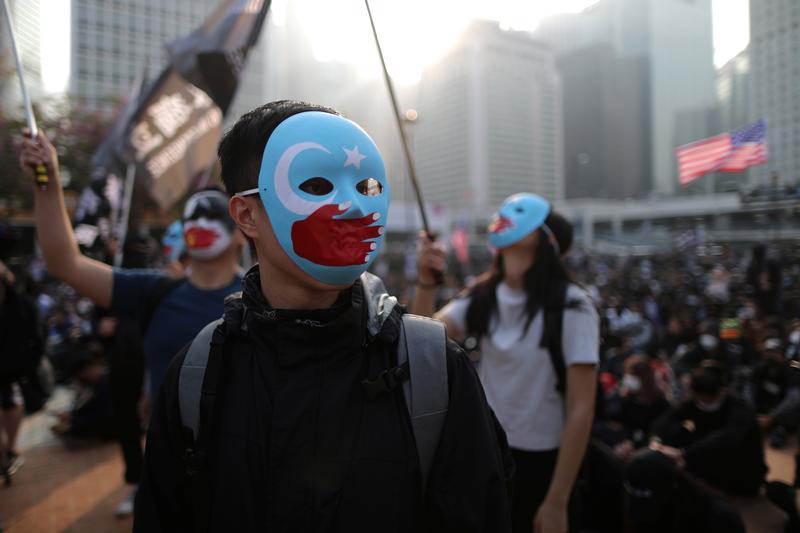
Ilham is part of a growing chorus of young Uyghurs living overseas who are mobilising online and using social media to campaign against forced labour in China’s northwestern Xinjiang province, home to the Uyghur Muslim minority.
Despite living abroad, many believe expanding their digital footprint through their online activism has made them – and their families – more of a target.
“I do feel conflicted every single day. If I speak up about my dad, would they torture my dad? Is it going to cause more harm?” said Ilham, who left China for the United States in 2013 and now works at the global Worker Rights Consortium.
China for months has pushed back against global criticism of its Xinjiang policies, with officials in China’s Foreign Ministry and the Xinjiang government saying the efforts are necessary to counter “lies and slander” by a network of “anti-China forces” abroad.
“There are some people hired by Western anti-China forces acting out made-up stories to smear Xinjiang and China abroad and make a living out of it,” the Chinese embassy in Washington said in an emailed reply to questions about surveilling Uyghurs.