

By Carey L. Biron
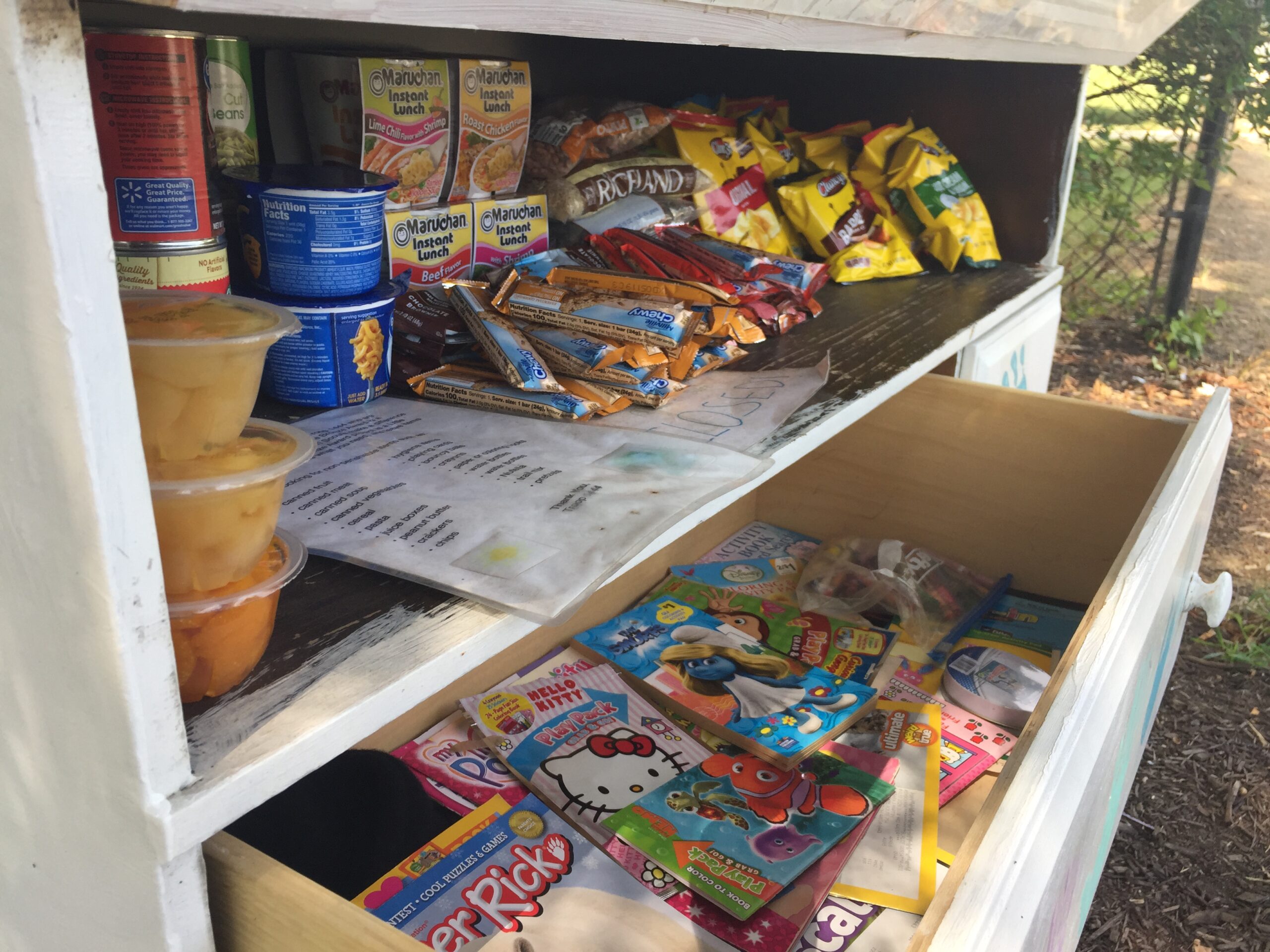
ALEXANDRIA, Virginia, Oct 21 (Thomson Reuters Foundation) – On a recent Sunday, across the Potomac River from the U.S. capital, two pre-teen girls were dusting off a refurbished dresser near a busy road, stocked with fruit, canned goods, toothpaste, children’s books and more.
Amanda Santana and Anna Rissi, both 12, had placed the dresser in their Alexandria neighbourhood last year and attached written instructions: “Take what you need, leave what you can”.
And to their surprise, many have been doing just that. The area’s residents regularly fill up the “pantry” with non-perishable food items, toiletries and toys to make them readily available – for free – to anyone who needs them, the girls said.
Their local project is part of the global Little Free Pantry movement, which gives those in need 24-hour access in their neighbourhood to food and other basic necessities they may not normally be able to afford.
The initiative’s founder, Jessica McClard, modelled it off of the Little Free Library project, in which community members and businesses in more than 90 countries have built freestanding boxes in cities where the public can leave and take books.
McClard built the international project’s first free pantry box in 2016, on the grounds of a church in Fayetteville, Arkansas, a state she said is perpetually one of the most food-insecure in the country.
Many emergency meal providers have irregular hours, but the free pantries are open all day, every day, she said.
And people can use the pantries privately and anonymously, avoiding the “shame” of using federal vouchers at a grocery store – something McClard remembers from having relied on food stamps earlier in her life.
“On the one side, there’s need and shame and judgment,” she said.
“And on the other, there’s trust and compassion — more of a focus on community as opposed to individual responsibility.”
As Santana and Rissi tidied their pantry in Alexandria, they recalled meeting a man who was using it recently.
“He said, ‘Today for the first time in a very long time, I had a fresh tomato,'” Santana told the Thomson Reuters Foundation. “That made me smile.”