

Coronavirus is changing the world in unprecedented ways. Subscribe here for a daily briefing on how this global crisis is affecting cities, technology, approaches to climate change, and the lives of vulnerable people.
By Shuriah Niazi
SAGAR, India, Sept 4 (Thomson Reuters Foundation) – Basant Ahirwar worked as an expert mason in India’s northern Uttar Pradesh state before the country’s coronavirus lockdown shut down business and forced him to return, jobless and largely on foot, to his home in central India’s Madhya Pradesh state.
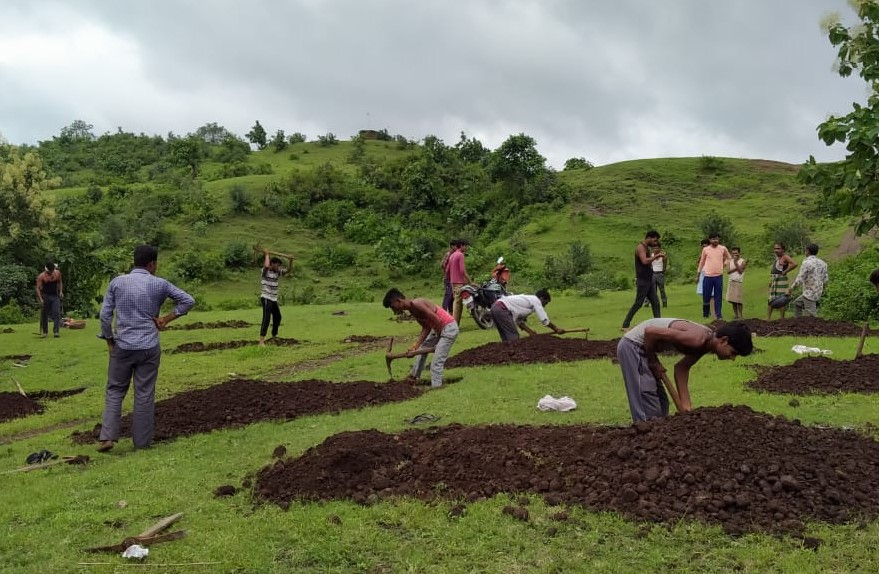
Now, however, he has found new work: Digging water capture pits into the hillsides of his drought-hit home district, a project aimed at restoring depleting aquifers and providing an income to thousands of unemployed workers.
About 7,000 returning migrant workers and other unemployed people have been hired to do the work, with 50,000 pits dug since April on more than 40 hills around Sagar district, authorities said.
“This work has become a means of sustenance for us,” said Ahirwar, who said he was being paid about 190 rupees ($2.50) a day for the work – a third of what he used to get as a mason but welcome in a time when few other jobs are available.
He said rainwater was already collecting in the trenches and “the hills, which were earlier barren, have now become lush and green”, raising the prospect that farming in the district, slammed by drought, could become more successful again.
The work, which had been carried out earlier on a smaller scale, is being done under the Mahatma Gandhi Rural Employment Guarantee Act, which aims to offer at least 100 days of paid employment a year per family in need of work.
Ichchhit Garhpale, the head of Sagar district’s panchayat, or local council, said the effort aims to improve groundwater levels in the district.
As rainwater flows down the hills, it is trapped in the trenches, he said, and percolates slowly into the soil, rather than rushing away and causing erosion.
He said the pit system could help capture as much as 60 million litres of additional water in the course of a year.
Similar pits are planned on 20 to 25 more hills owned by the state government in the district, he said, as the project pushes ahead.
The work has come as a relief to thousands of migrant workers who rushed home in March after Indian Prime Minister Narendra Modi declared a nationwide lockdown as cases of the coronavirus began rising.
The shutdown left millions without prospects for work – but efforts like that in Sagar have helped shore up families and raised the prospect that some may remain in their home districts.