

Coronavirus is changing the world in unprecedented ways. Subscribe here for a daily briefing on how this global crisis is affecting cities, technology, approaches to climate change, and the lives of vulnerable people.
By Megan Rowling
BARCELONA, July 3 (Thomson Reuters Foundation) – As Sierra Leone emerged from an Ebola epidemic in 2015, it was clear that health facilities lacking a reliable energy supply had been a big obstacle to treating patients.
But putting solar panels on the roof of every clinic wasn’t the right answer either as often such projects fall into disrepair within a year, said Nick Gardner, the Sierra Leone manager for the U.N. Office for Project Services (UNOPS).
Instead, the government and UNOPS decided to bring electric power to 94 communities – starting with their health centres – by using nearly $50 million in aid funding to build solar mini-grid systems, seen as more sustainable.
Fifty have now been switched on and handed over to companies, which are investing $14 million of their own money and running them as businesses, charging customers fair tariffs.
“We wanted these to be commercially viable standalone mini-grids that do not need ongoing subsidisation from the government or donors,” Gardner told an online event this week.
Most community health centres still struggle to pay for electricity, he said – but that problem was solved by getting the facilities to donate public land to site the grids in exchange for free power.
Gardner said the newly electrified health centres have won over villagers, with visits to seek advice on diseases or for maternal healthcare rising by up to 26% after reliable electricity was brought in.
But Sierra Leone’s success story wasn’t replicatedly widely in West Africa after the Ebola outbreak, energy experts said – though this time, with the coronavirus pandemic, they hope that will change.
Damilola Ogunbiyi, CEO of international energy access body Sustainable Energy for All (SEforALL), said many promises to power up healthcare post-Ebola had not been kept – but there was now a better understanding of how to scale sturdy solutions.
“This time it feels like something is going to happen,” with virus tracking facilities and labs, for instance, getting sustainable solar power supplies, she told the Thomson Reuters Foundation.
CUT OFF
Maria Neira, who leads the World Health Organization’s work on environmental issues, said the COVID-19 pandemic had reminded the world that health facilities need electricity – ideally from renewables such as solar – “more than ever”.
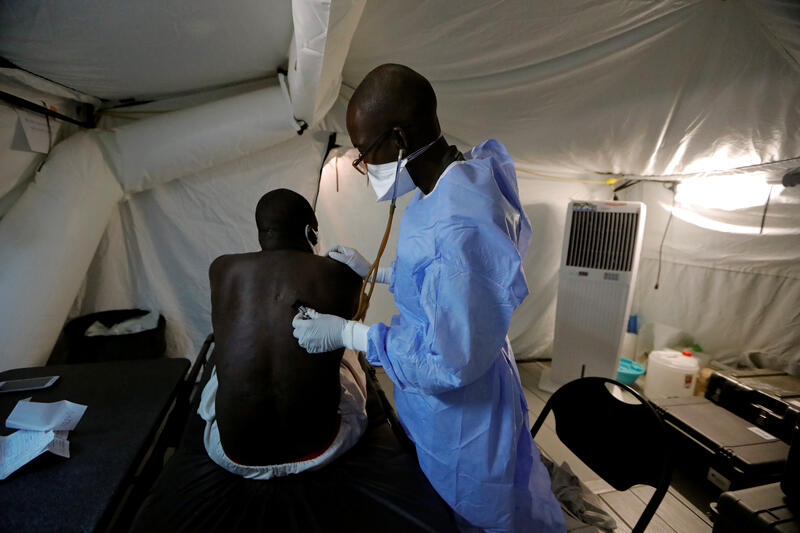
Hospitals and clinics require electric power for myriad uses, from lighting, ventilation and cleaning to refrigeration for vaccines, lab work, surgery and running life-saving equipment such as ventilators, she said.
Yet more than 1 billion people worldwide do not have access to health facilities with a reliable power supply, putting basic care at risk, she told the webinar.
A multi-agency report released in May showed that 25% of health clinics in six surveyed countries – Cambodia, Myanmar, Nepal, Kenya, Ethiopia and Niger – lacked any electricity access at all.
Jem Porcaro, who works on energy for healthcare at SEforALL, said governments and medics had begun to realise that could change as the technologies and companies to fix the problem surged over the past few years.
“In the context of COVID, ministries of health and their development partners … are really picking up on this issue,” he said.
But both new business models and more efficient medical equipment, designed to run on off-grid power, will be needed for a large-scale shift, as well as increased funding, he added.