

* “Fire weather” days spike in U.S. beyond regular hot spots
* Climate change seen as key driver of fire-prone conditions
* Increases seen in states like Oklahoma, Kansas
By David Sherfinski
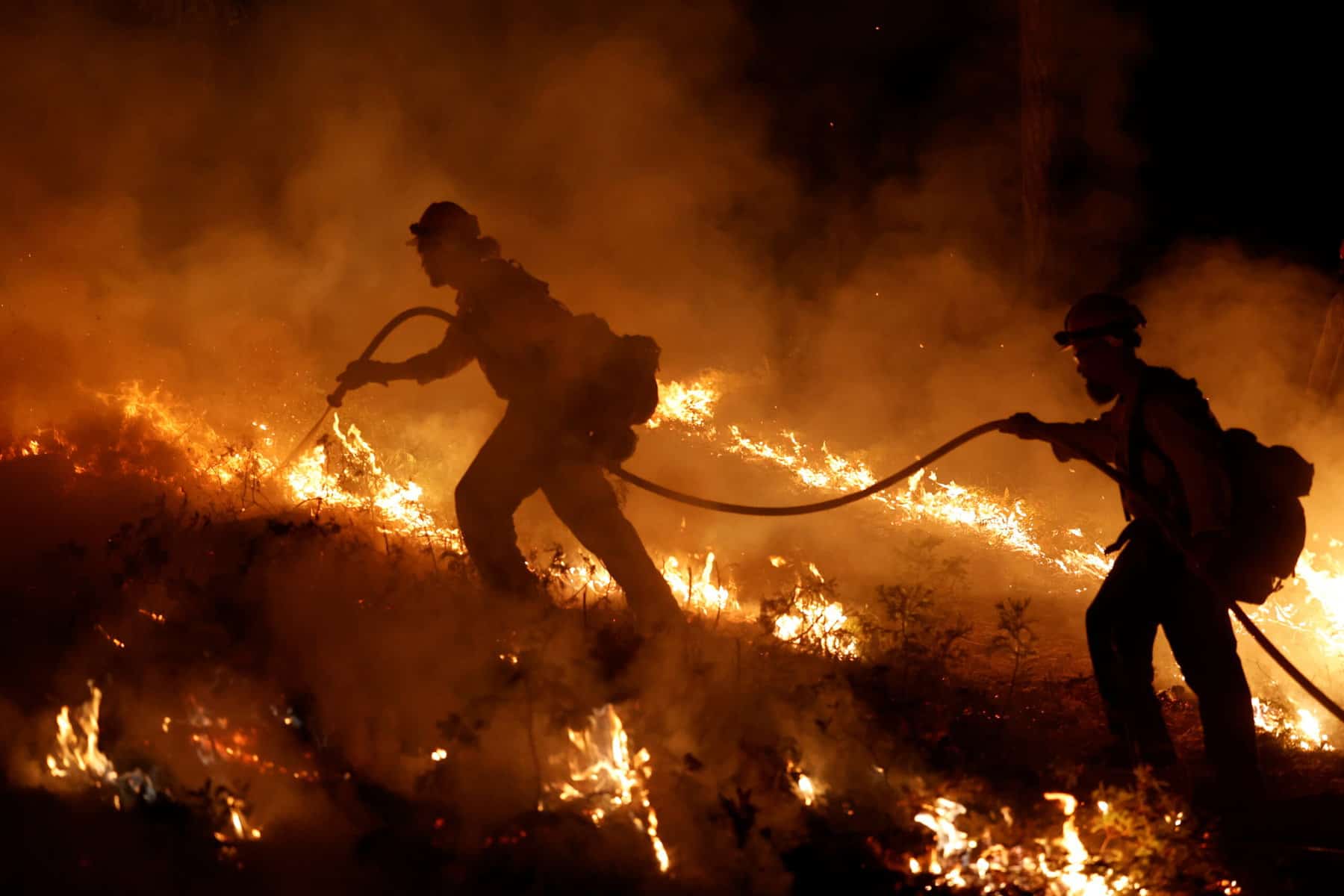
WASHINGTON, Aug 25 (Thomson Reuters Foundation) – Climate change is fueling conditions for more rapid growth of wildfires in the western United States – including in some places, from Oklahoma to Nebraska, that may not expect them, researchers said Wednesday.
Wildfires are already devastating broad swaths of the West coast but other western states are also seeing spikes in fire-prone days, suggesting safe havens from the deadly blazes will continue to decline without greater efforts to curb climate change.
“(In) most of these communities, it’s not a matter of if – it’s a matter of when,” said Kaitlyn Weber, a data analyst for Climate Central, the research group that released a new report on fire risks.
Weber, who grew up near where the Caldor fire has burned through more than 100,000 acres of land outside of Sacramento this month, said parts of California dominated the places most fire-prone, as expected.
What was more surprising was the growing number of days in which heat, wind and low humidity were boosting fire risks in other states, she said.
“Going into Oklahoma and parts of Kansas… even parts of Nebraska – it is changing,” she said. “The weather is setting the stage more often for these serious fires.”
The San Joaquin and Sacramento drainage regions of California ranked second and seventh respectively in their percentage increase in “fire weather” days between 1973 and 2020, according to the analysis, which looked at federal climate zones across 17 states.
A fire-prone day is considered one where temperatures hit at least 45-55 degrees Fahrenheit (7-12 degrees Celsius) depending on the season, wind speeds top 15 miles per hour and relative humidity approaches thresholds the federal government uses to define elevated fire risk – 15% humidity in many parts of the west.
“Climate change is causing an increase in temperatures, and that increase in temperatures is causing a serious drying trend out in the west,” Weber said. “It’s greatly increasing the risk of more severe wildfires.”
California accounted for nearly 40% of the total acreage burned by wildfires in 2020 in the United States, according to the Congressional Research Service. But other states also showed rising fire risk.
Two regions in Nevada, which encompass Las Vegas and the south-central part of the state, had the highest average number of “fire weather” days per year between 1973 and 2020, with 94 and 93 respectively.
In 2020, Nevada saw more than 250,000 acres burned in wildfires, according to the National Interagency Fire Center, ranking near the top of all U.S. states.
Areas of New Mexico, California, and Texas saw the biggest total increases in fire days since 1973, with about two additional months of “fire weather” now compared to 1973, the analysis found.
Parts of southern Texas, California, Oregon and Washington, meanwhile, saw the biggest percentage increase in fire weather days since the early 1970s, with such days more than doubled, it found.
Southwest Oklahoma, which borders Texas, saw a 169% jump in fire weather.