

By Athar Parvaiz
SRINAGAR, India, June 1 (Thomson Reuters Foundation) – As soon as his son graduated from college, Ghulam Mohi-u-Din Dar asked him to take care of the family flower business in Kral Sangri, near Srinagar, the largest city in Indian-administered Kashmir.
“I knew it would be a waste of time for him to search for a job in the government or private sector,” Dar said, referring to the dearth of local employment opportunities.
Years of running his small business had given Dar, who left school after 10th grade around age 16, a sense of how his son’s higher education level could help him make a success of things.
Since Fayaz Ahmad started managing the business five years ago, it has flourished, said Dar.
“He most often searches for scientific ways of flower cultivation and marketing trends on his laptop or phone. This has helped us make the most from flower cultivation,” Dar said.
As the Himalayan region struggles with unemployment and the loss of large swathes of its agricultural land to construction, local farmers are being won over to floriculture.
Most Kashmiris have traditionally earned their living from farming, but rising numbers are selling their land, complaining they earn too little from growing traditional crops such as rice and maize, due to small plot sizes and low yields.
From 2006 to 2016, Kashmir lost 53,000 hectares (130,966 acres) of paddy land, according to its agricultural ministry.
A government survey in January put the region’s unemployment rate at 25 percent, almost double the national level.
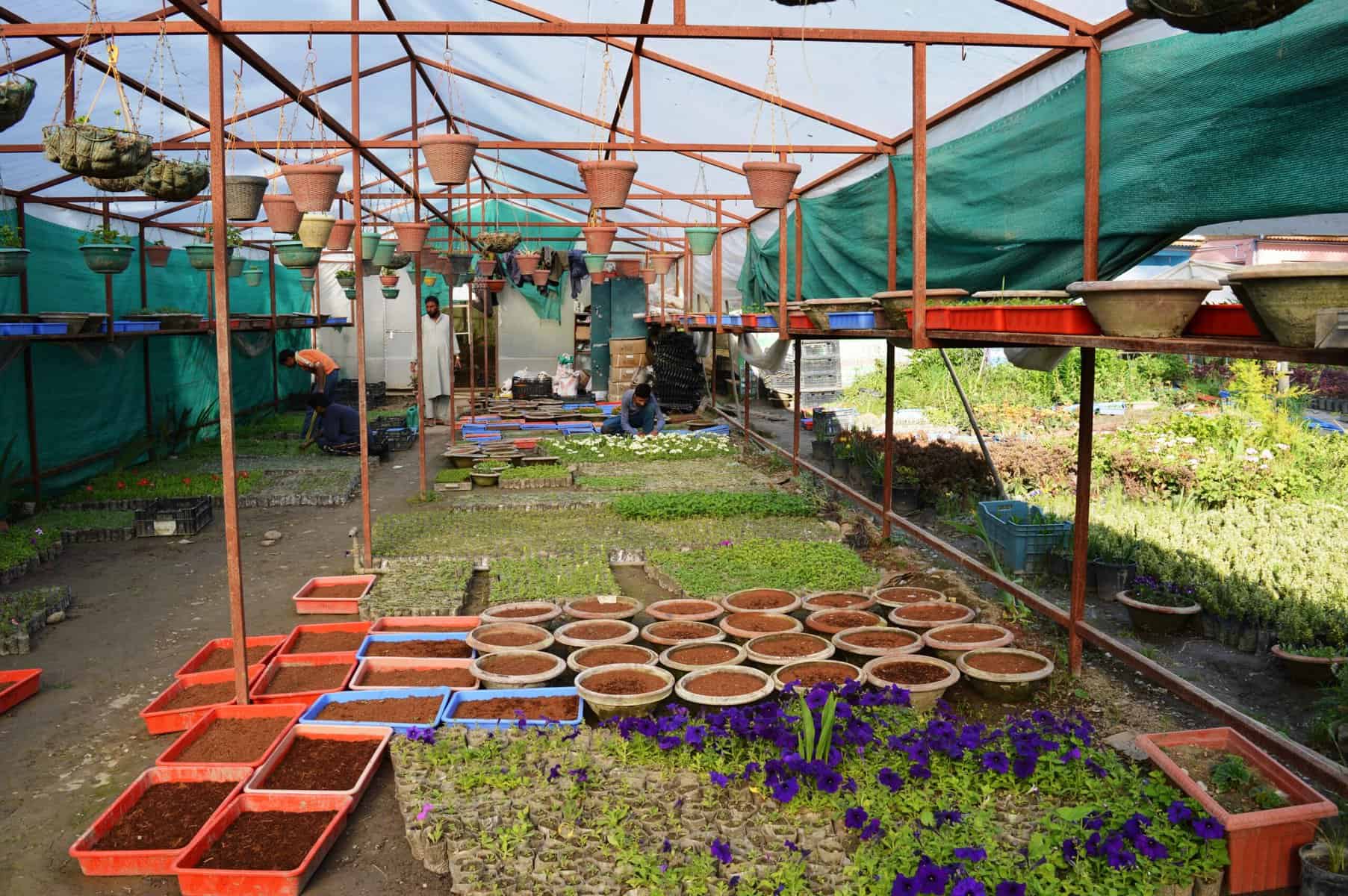
While directing labourers in one of his polyhouses, Ahmad said he was enjoying life as an entrepreneur.
He employs nine people on the flower farm, and pays a total of about 400,000 rupees ($6,200) annually in salaries.
Previously, the family grew flowers on a tiny patch of land, but that has now expanded to a quarter of an acre.