

By Kagondu Njagi
NAIROBI, Jan 20 (Thomson Reuters Foundation) – Sitting on a low bench at her shop in a Nairobi slum, Grace Wangari sifted through a handful of grains that a waiting customer had just ordered.
As she poured them into a shopping bag, the customer scrolled through her phone to pay for the purchase.
Normally, Wangari would have been paid in shilling notes, Kenya’s hard currency, but in some ways she preferred the digital payment that was instantly transferred to her phone.
“I am happy with this transaction because there is no risk of losing my stock to conmen or people who have come to take goods on credit,” said Wangari, a middle-aged trader in Mukuru Kayiaba, one of the city’s poorest slums.
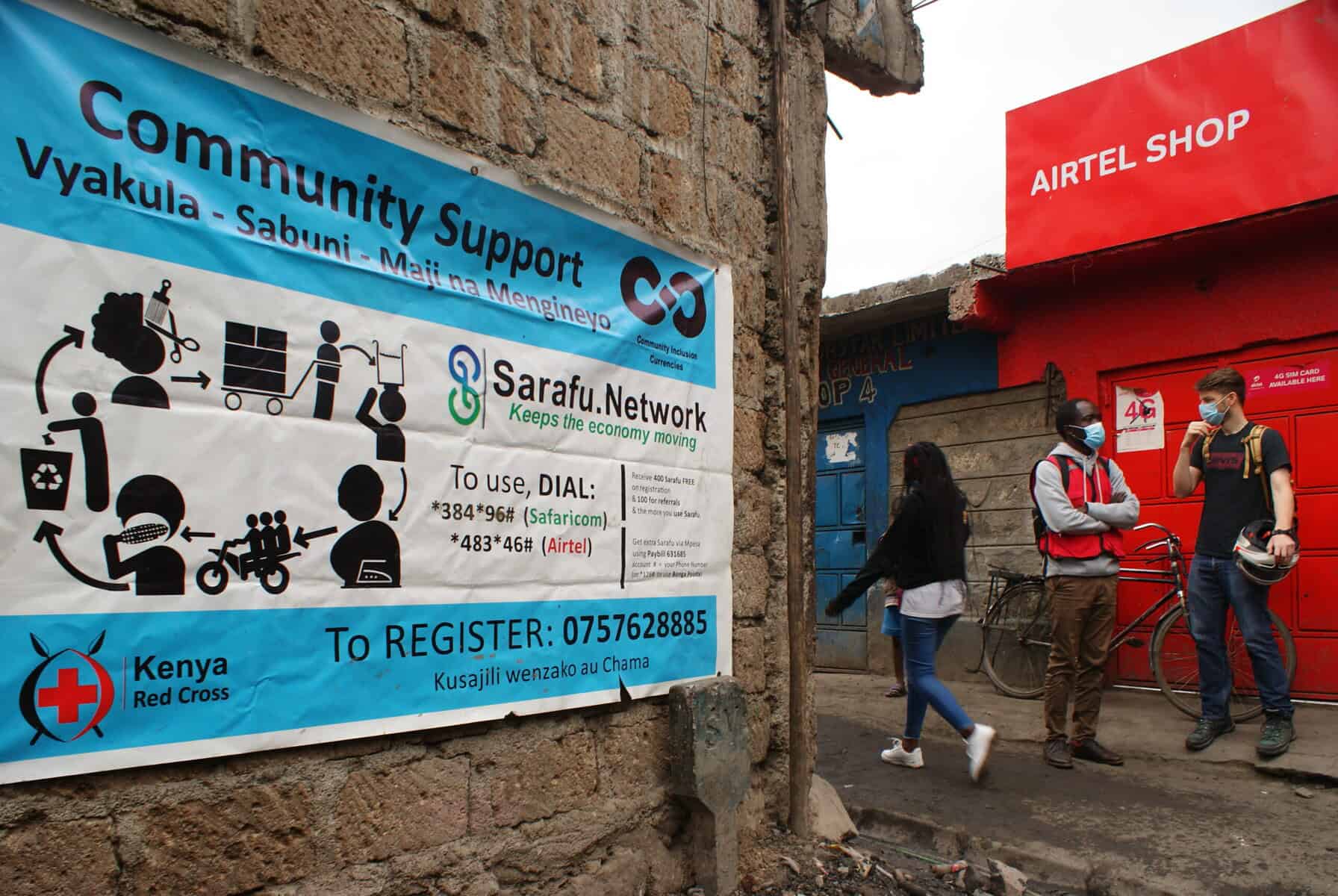
The transaction happened through Sarafu, a blockchain-based community currency that is helping thousands of Kenyan slum dwellers pay for food, water and sanitary items as they battle through the COVID-19 economic downturn.
Each week, families are issued with virtual vouchers worth 400 Kenyan shillings ($4), which they can use to buy essential goods, said Roy Odhiambo, an innovation officer at Kenya Red Cross Society (KRCS), one of the groups behind the project.
Vendors can then send the vouchers to Grassroots Economics, the Nairobi-based social enterprise that co-developed Sarafu (“coins” in English) with U.S.-based engineering firm BlockScience, and redeem them for cash.
Odhiambo said more than a third of the vendors in Mukuru are already signed up to the project, which launched in 2019 with the aim of helping struggling families get hold of everyday basics without worrying about having cash on hand.
Now the project is providing a lifeline for families trying to cope with the financial pain of the pandemic, he noted.