

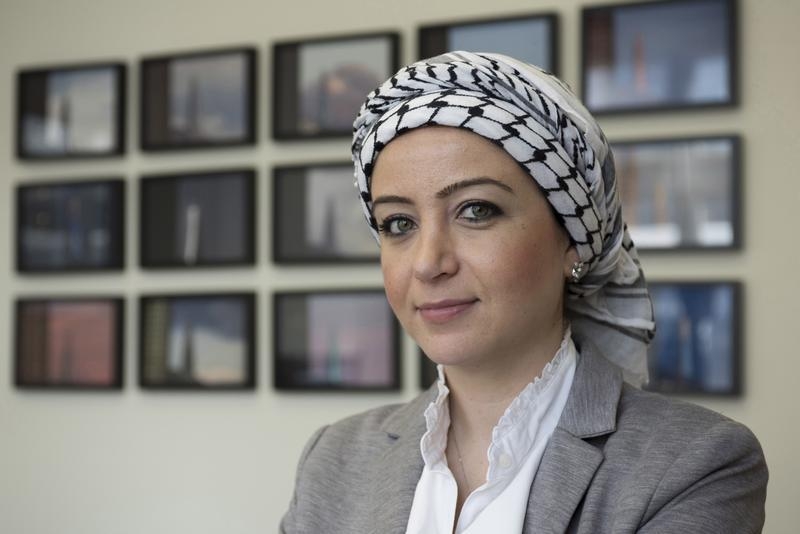
LONDON, April 13 (Thomson Reuters Foundation) – A series of short films, “Syria’s Rebellious Women,” by Zaina Erhaim tells the stories of women who stepped into positions of leadership and responsibility usually reserved for men.
If such remarkable women went undocumented, the Syrian filmmaker says, “the male winners will be writing the history, and the heroines will be forgotten.”
Erhaim, being honored with a 2016 Freedom of Expression award from Index on Censorship, has trained more than 100 citizen journalists in Syria and helped establish a number of independent newspapers and magazines.
In an interview with the Thomson Reuters Foundation, she discussed their challenges and how Syrians carry on despite the war and chaos around them.
THOMSON REUTERS FOUNDATION: At the beginning of the Syrian conflict, there were many foreign journalists reporting from the country. As they began to leave, what kind of space did this open up for Syrian journalists?
ERHAIM: It created the need for Syrians to do the journalism work themselves and to be citizen journalists. But sadly, this didn’t make the citizen journalists credible enough for the international media to take them seriously and deal with them as actual journalists.
It’s very sad to see that an agency is dealing with the same citizen journalist for four years, taking all their credible news from him, but when it comes to payment or to health insurance, or to considering him as a correspondent, they don’t.
TRF: What were your aims with the training courses you ran in Syria?
ERHAIM: When the revolution started, many of my friends who had no experience in journalism at all, they started looking for a journalist that they can trust. I decided that I’m going to do my best to give them those skills that I gained so they could be taken seriously.
They’re risking their lives so that this news can go out.
So what I have been trying to do, mainly, is just to help them be more professional and be taken seriously.