

* Brazil banned asbestos in 2017 but mining continues for export
* The country’s last mine can no longer sustain Minaçu’s economy
* Mining company and government urged to support local transition
By Fabio Teixeira
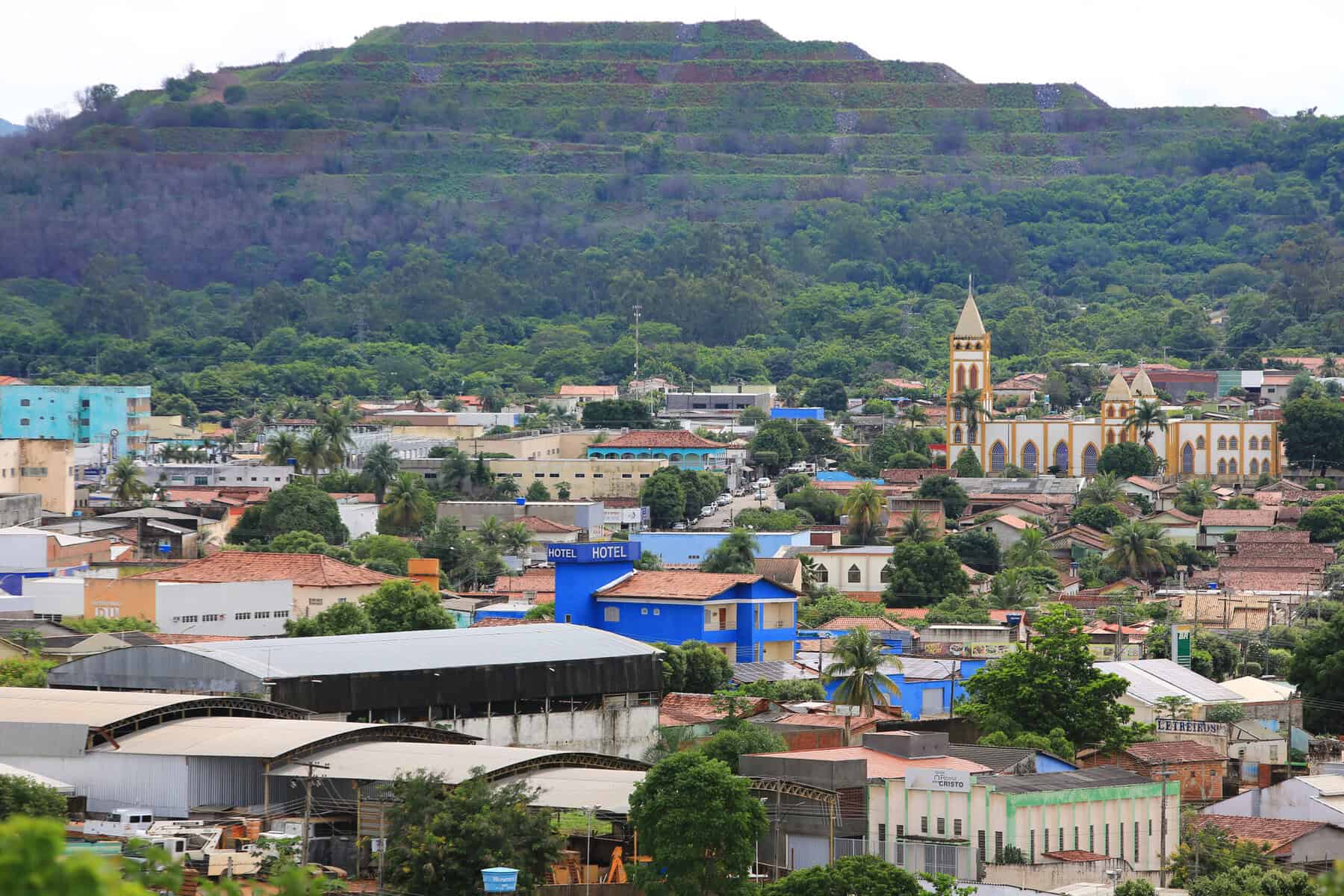
MINAÇU, Brazil, Jan 25 (Thomson Reuters Foundation) – In the Brazilian town of Minaçu, it used to snow, locals like to tell visitors. But the white powder that covered the streets and roofs from 1967 through the late 1980s was far from harmless snowflakes. It was a dangerous carcinogen: asbestos.
The “snow” is a memory from when the town’s chrysotile (white) asbestos mine lacked safety procedures to contain the powder and stop it spreading across the nearby urban area.
To many residents, those were the good old days, when the town of 28,500 in the central state of Goiás thrived and jobs were plentiful at Sama, the company that extracts asbestos from Cana Brava, a mine covering an area almost as large as Minaçu.
Asbestos is a fire-proof fiber used as a building material and in industrial products, but is also well-known as a substance that can cause cancer.
About 107,000 people die each year from asbestos-related diseases, the World Health Organization said in a 2014 paper, adding that local levels of asbestos-linked deaths only decline decades after its use ends.
Due to these health risks, asbestos is banned in about 60 countries.
Brazil imposed a ban in 2017, but a state law under dispute in the courts keeps the Cana Brava mine operational.
Minaçu is now at a crossroads. It is home to the last asbestos mine in Brazil – but the mineral no longer sustains the town, which has fallen on hard economic times.
At any point, a court decision could suspend the mining activity, as it did for 16 days last year, or end it for good.
Alongside a recent hiring boom, thanks to the development of a new rare earths mine in the region, some residents believe Minaçu should reinvent itself and move on from asbestos.
For others, without asbestos, the town is over.
“If Sama stops, the town stops,” said Joaquim de Souza, 54, who lives near Minaçu’s massive hill of asbestos tailings.
Between 1985 and 1991, Souza worked for Sama’s contractors, bagging the white powder. Now his son works for Mineração Serra Verde, the rare earths mining company, which plans to provide elements for wind turbines, mobile phones and electric cars.
Souza believes Serra Verde is the future, but would not think twice before allowing his grandson to work at Sama when he grows up.
“There is no danger,” he told the Thomson Reuters Foundation.