

By Stefanie Glinski
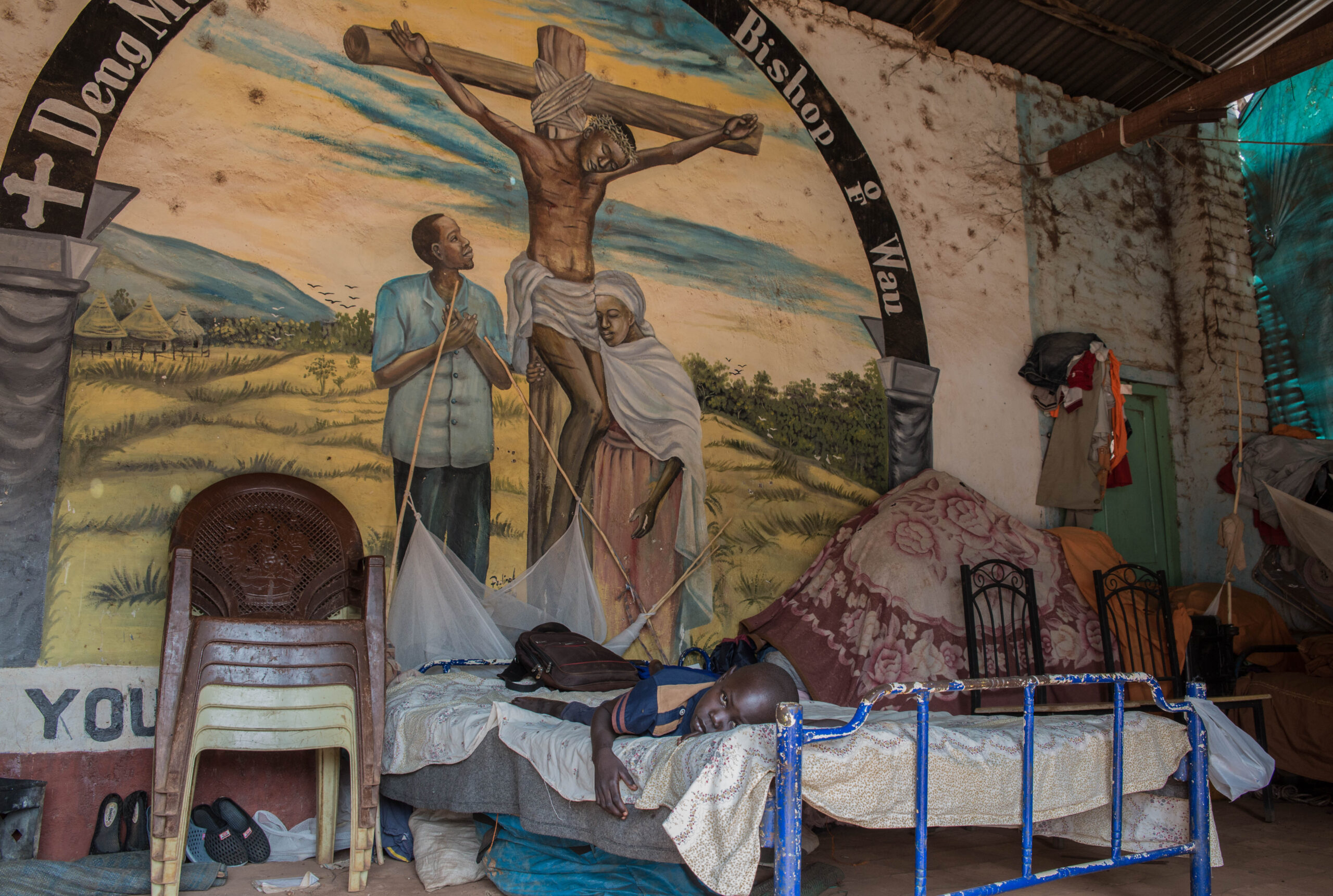
WAU, South Sudan, Aug 24 (Thomson Reuters Foundation) – Below a painted scene of African mud huts and a crucified Christ, eight-year-old Juma lies on a blue metal bed, recovering from malaria.
The chapel has been home for the past year, even though Juma’s old place of residence is just two miles down the road. But it’s not safe for him to go back. Now it lies empty and looted; many of his former neighbours have been killed.
Juma is among more than 10,000 people who have found refuge in the backyard of St Mary’s Cathedral in South Sudan’s Wau.
It is the country’s biggest church, its brick dome rising above the surrounding houses and unpaved roads, the colour blending with the local red dust and soil.
Once used for preaching and workshops, the smaller chapels around the main cathedral and surrounding grounds have become a full-fletched city, one with its own shops, latrines, schools and a graveyard.
On Sundays, worshippers still attend services in the main cathedral, decorated with stained-glass windows and images of saints at the altar.
In the outside camp, hunger and fear abound.
“We haven’t received food in four months,” said Juma’s neighbour Irene, who desperately wants to set up a small shop, but has no funds.
Her shelter is a few blankets and some plastic sheets, big enough to cover her bed, but barely waterproof during the current rainy season.
“I’m hungry, but I’m afraid to go home. Soldiers are still roaming the area and loot houses constantly. My brother died and my sister was raped in last year’s attack. I’m scared of a similar fate. Many people have been assaulted and tortured. That’s why I can’t leave the cathedral camp.”