

By Lin Taylor
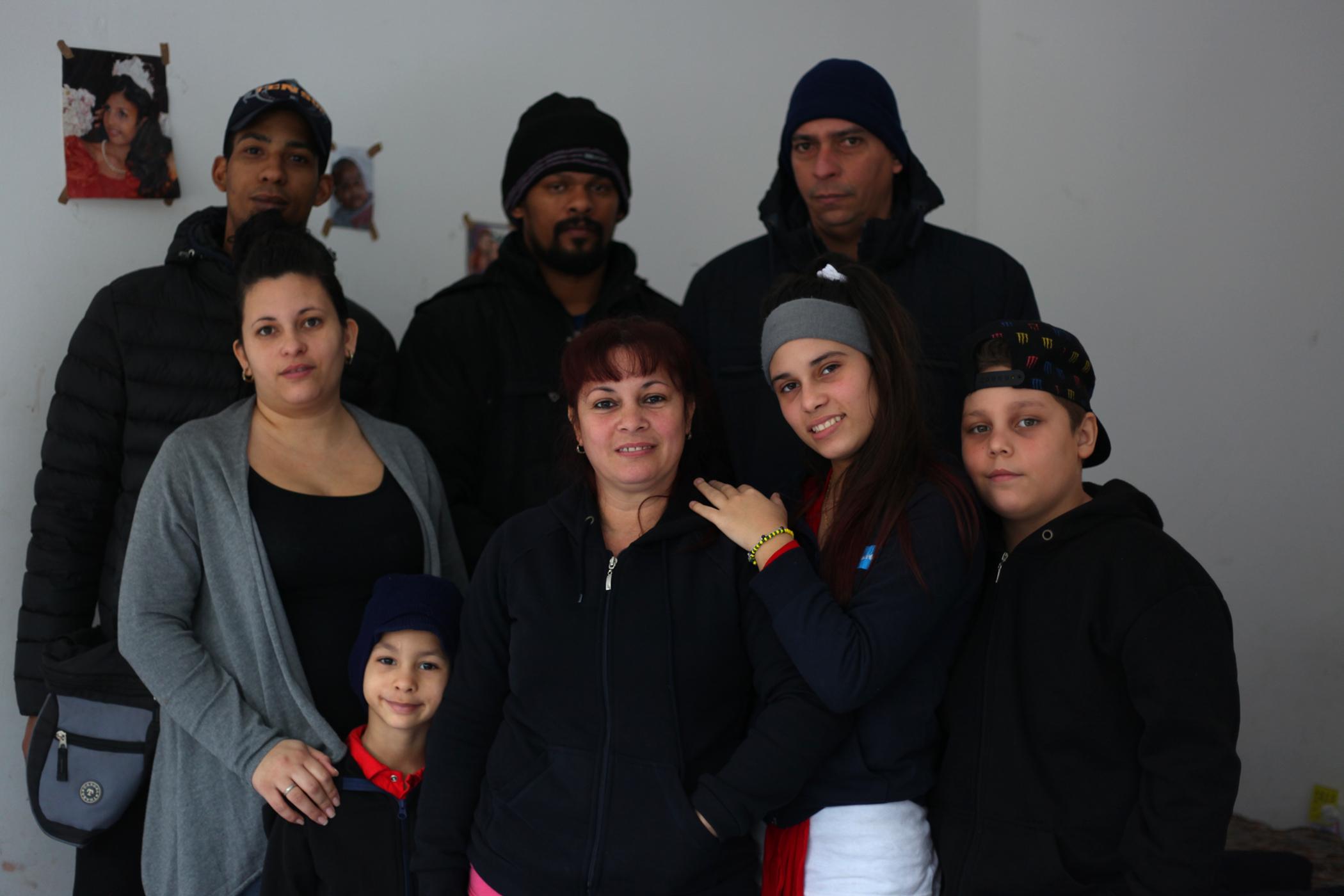
ADAŠEVCI, Serbia, Feb 13 (Thomson Reuters Foundation) – As snow falls outside a migrant centre along a highway near the Serbian town of Adaševci, a large Cuban family huddles together in their bedroom, idly playing with their mobile phones to pass the time.
With old photos dotting her walls and laundry hanging by her frosty windows, Tania Hernandez’s tiny room – which she shares with six family members – is a far cry from sunny Havana, the Caribbean island capital she left behind in August last year.
But living in these cramped conditions is nothing compared to the political repression Hernandez said she had to endure.
“We decided to leave because in Cuba there’s no freedom. We were very tired of so much repression upon our shoulders, it was too much,” the Spanish-speaking mother of three said through a translator.
The family is part of a small but growing number of Cubans travelling through the Balkans towards Spain, the United Nations International Organization for Migration (IOM) says.
The unlikely migrant route from Cuba to Spain via Russia and the Balkans became apparent at the height of the European migration crisis in 2015, said IOM’s Western Balkans coordinator Peter Van der Auweraert.
“The route is attractive because they don’t need a visa to go to Russia,” he said in a telephone interview. “So at least they can get close to the (European Union) without any visa issues.”
Around 7,700 migrants live in Serbia, the U.N.’s refugee agency (UNHCR) reports, with around 6,500 people housed in government-run camps, most of whom have fled conflicts and poverty in Afghanistan, Pakistan, Iraq, Iran and Syria.
As of Jan. 25, there were 168 Cubans living in Serbian reception centres, according to IOM, stranded after below-freezing temperatures and closed borders halted their journeys.
RELATED: Penniless and alone, migrant children in Serbia sell sex to survive