

By Layli Foroudi
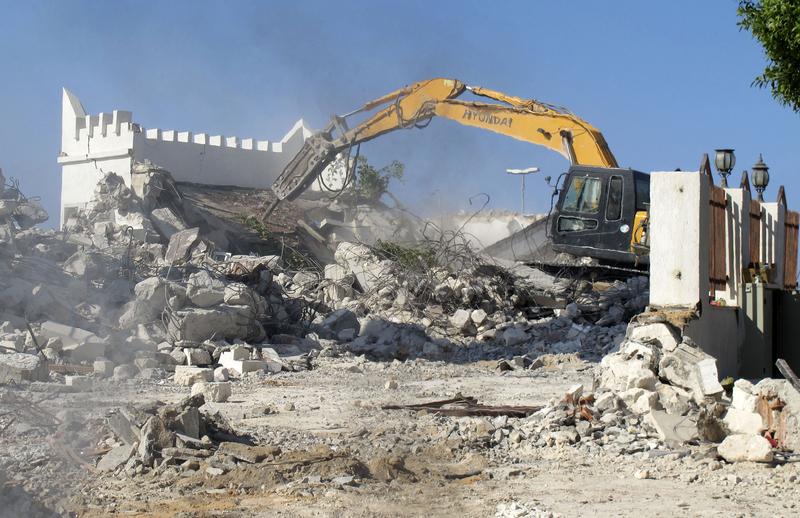
TUNIS, March 16 (Thomson Reuters Foundation) – When a bulldozer razed the domed, century-old zawiya to the ground, turning the oldest Sufi place of study and worship in the Libyan coastal city of Sirte into a pile of rubble, Oussama Ali Bin Hamel was not shocked.
The sheikh has documented the destruction of more than 530 Sufi cultural sites across Libya over the past decade.
“This seems like a big number, but it is the reality,” said Bin Hamel, who has been documenting destroyed Sufi sites, like the one in Sirte in February, for the Al-Mostagir Billah Centre, which studies and promotes the mystical Islamic belief.
“Shrines, zawiyas, a library with 4,000 titles – including manuscripts that date back 500 years – have been burned (or) completely destroyed,” he said.
Since NATO-backed rebels ousted longtime ruler Muammar Gaddafi in 2011, chaos and a lack of security in Libya, combined with the rise of extremist Islamist groups, has led to an uptick in attacks on Sufi sites, say scholars and heritage groups.
Cultural sites have become targets in conflicts across the Sahara region and the Middle East.
Islamic State militants have torn down ancient sites in Syria and Iraq with bulldozers and explosives.
More recently, in January, in the wake of Iranian military commander Qassem Soleimani’s death in a U.S. drone strike, President Donald Trump tweeted that the country would obliterate 52 sites that are “important to Iran and the Iranian culture”.
In Libya, Sufi sites are being destroyed by Islamist groups who “dismiss Sufism and everything that has happened over 1,500 years because they are restoring the ‘pure Islam (from the time) of the Prophet’,” said Islamic studies scholar Zahra’ Langhi.
Both sides of the current civil war between the U.N.-backed Government of National Accord (GNA) and the Libya National Army (LNA) under commander Khalifa Haftar are allied with groups that view Sufi practice as superstitious, she noted.
“This is not only a mosque or a religious minority, this is a war on memory and on our history,” said Langhi, who is also co-founder of the Libyan Women’s Platform for Peace movement.
TARGETED
Sufism, a mystical strain among both Sunnis and Shi’ites, dates back to Islam’s early days. Besides the standard prayers, Sufi devotions include singing hymns, chanting the names of God or dancing to heighten awareness of the divine.
Today, “while there are few Libyans who are still formally participating in Sufi orders, traditional Libyan cultural practices and folk customs embrace certain Sufi traditions,” said Jason Pack of the D.C.-based Middle East Institute.
The mystical belief has become a part of the national culture, creating a resonance with “the majority of people, even if they are not Sufis”, said Bin Hamel, the Sufi sheikh.