

LONDON (Thomson Reuters Foundation) – The European Bank for Reconstruction Development (EBRD) is ready to step up its fight against corruption in the countries in which it invests and is willing to be more public in the way that it does so, the president of the bank said.
While the EBRD is confident that the projects that it finances are corruption-free, it must do more to tackle corruption in the wider economy, Suma Chakrabarti told a conference of anti-corruption lawyers on Thursday.
“What good in the long term is an oasis of corruption-free EBRD projects when the rest of the private sector faces corrupt practices day in and day out?” Chakrabarti said.
“Can we in all honesty chalk up our progress against corruption as a success, can we speak of real progress when many, perhaps more than 50 percent of the countries in which we are investing, are still languishing in the bottom half of Transparency International’s Corruption Perception Index?” Chakrabarti said at the International Bar Association’s Anti-Corruption Conference in Paris this week.
The EBRD was set up to help former communist countries in Eastern Europe develop market economies and invests mainly in the private sector. It lent nearly 9 billion euros ($12 billion) last year.
Corruption is on the rise globally and, in addition to the democratic and institutional damage that corruption causes, it is increasingly cited as a reason for not investing in a country, Chakrabarti said.
Many of the economies on which the EBRD focuses its attention, the former Soviet states and more recently the post-Arab Spring states, are still suffering from the 2008 financial crisis and badly need foreign direct investment. But perceptions of corruption are damaging their recovery, Chakrabarti added.
SHINING THE SPOTLIGHT ON UKRAINE
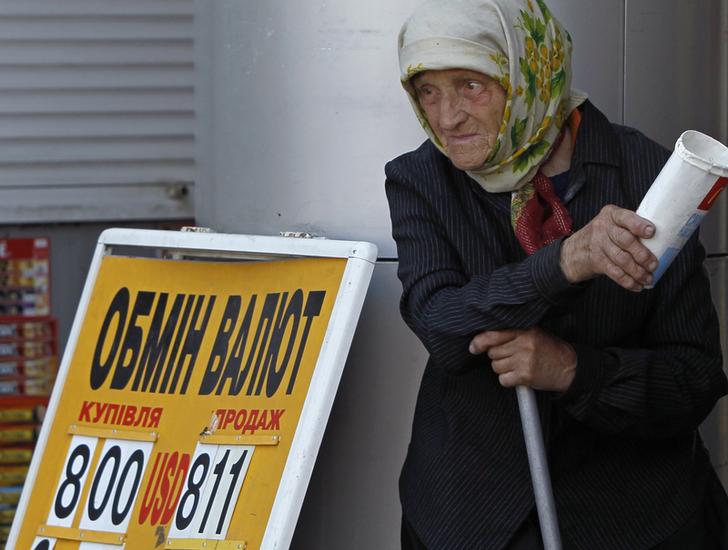
Ukraine attracted just over $6 billion in foreign direct investment last year compared to over $10 billion each for its EU neighbours Poland and Czech Republic with corruption and selective justice blamed for the country’s poor investment record.
“The EBRD’s approach so far… has been to talk about systemic corruption in private with the governments of our countries of operations,” Chakrabarti said.
“However, in February, when I visited the Ukraine… I felt we had no option any longer because we were not making any progress with this private discussion in tackling the corruption problem in the Ukraine,” he added.
According to Chakrabarti, Ukraine’s econony has been hit by the combined economic slowdowns of both the EU and Russia, but the EBRD has continued to invest about one billion euros ($1.3 billion) a year into the country.
“While it is by no means alone in the extent that it faces serious integrity issues and widespread corruption, the Ukraine is a country where the problem is most definitely resulting in growing investor reluctance, it is very difficult to get foreign investors or domestic investors now to invest in the Ukraine because of corruption levels,” Chakrabarti said.
The EBRD has partnered with the Ukraine government and local businesses to develop an anti-corruption initiative which, in time, will include an independent ombudsman to whom businesses will be able to turn for assistance should they come under pressure from corrupt public officials, Chakrabarti said.
“It has become all too clear that you have to go beyond that micro approach of defending the integrity of our projects if we want to make serious progress in tackling corruption at a more macro level,” Chakrabarti said.
“We stand ready to step up our efforts to fight corruption in our region and by doing so support the transition to more open, more efficient, more accountable market economies and democracies,” he added.