

By Zoe Tabary and Valeria Cardi
R’KIZ, Mauritania, May 30 (Thomson Reuters Foundation) – Chronic fatigue, weight loss and lingering sadness. Mohammed Elmouved does not need a doctor to diagnose his symptoms.
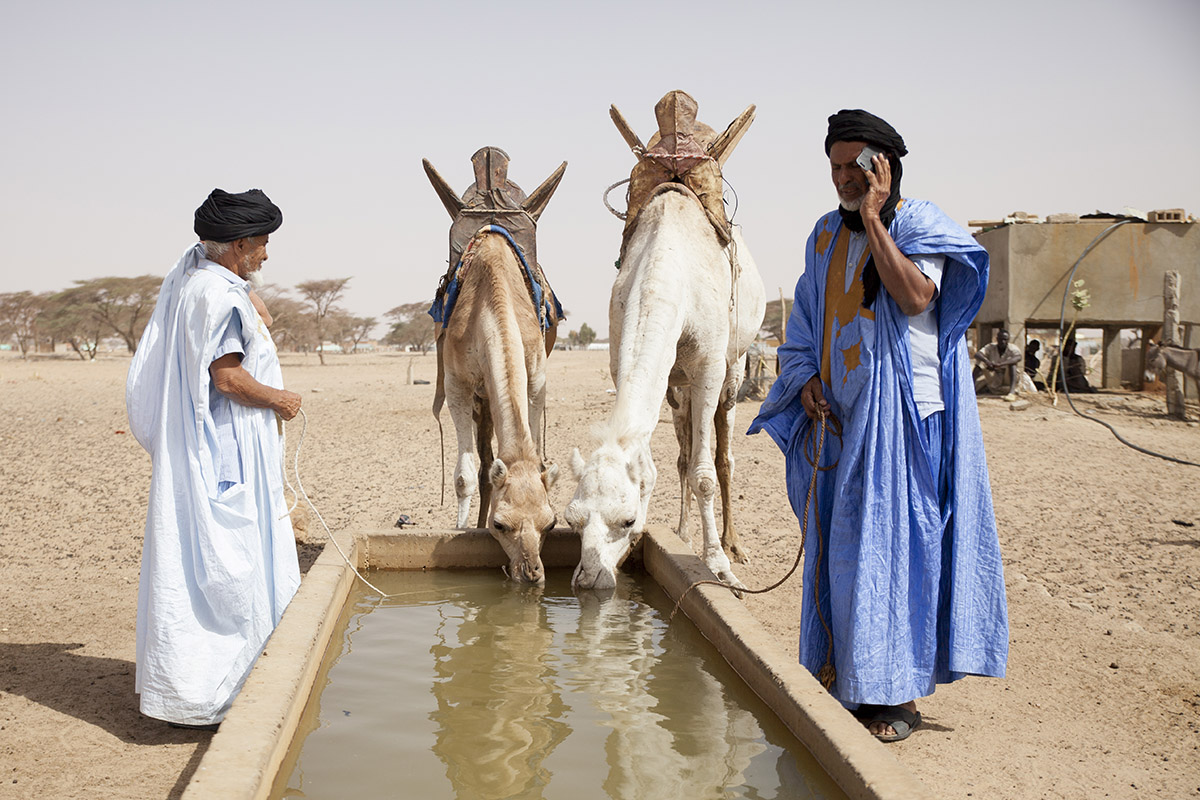
“It’s my animals,” said the livestock owner, at a dusty herders’ camp in R’Kiz, on the edge of the Mauritanian desert.
“They’ve barely had anything to eat or drink in days, so the weakest ones are dying … Whatever they feel, I feel.”
His emaciated goats wobble around a trough half-filled with water, while other smaller bleating competitors try to push to the front for a drink themselves.
With his goats, cows and camels, Elmouved is crossing stretches of arid land in southern Mauritania to reach Senegal, 40 km (25 miles) away on Africa’s west coast, where he plans to sell part of his herd to buy feed for his stronger animals.
“There are no trees, no pastures here but I think I will have more luck on the other side of the (Senegal) river,” said the herder, aged in his fifties and swathed in a long bright blue and gold robe.