

Coronavirus is changing the world in unprecedented ways. Subscribe here for a daily briefing on how this global crisis is affecting cities, technology, approaches to climate change, and the lives of vulnerable people.
By Thin Lei Win
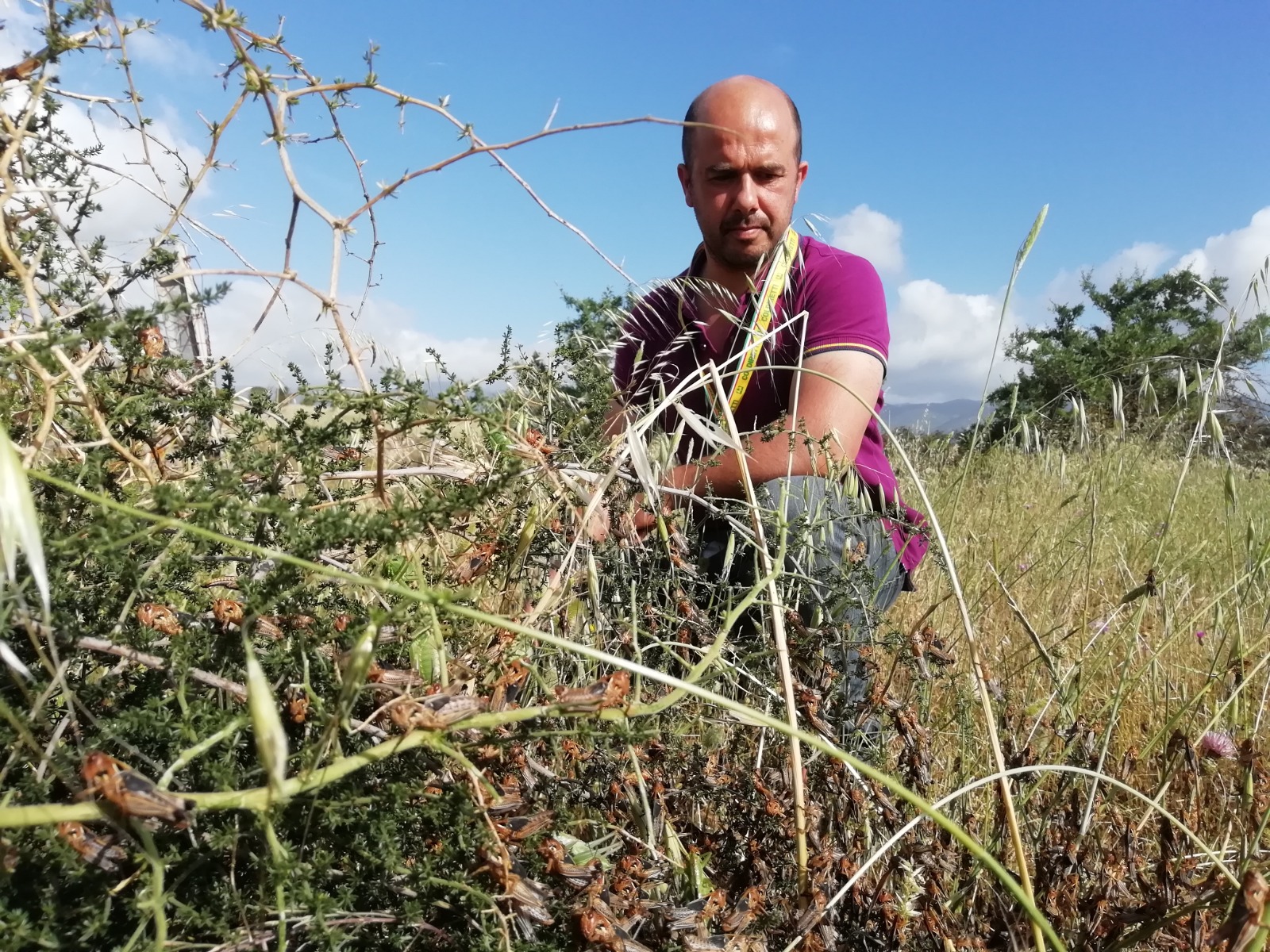
ROME, June 26 (Thomson Reuters Foundation) – Swarms of locusts have stripped thousands of hectares of pasture and cropland in Sardinia, devastating farmers already struggling from the coronavirus pandemic, farming groups said.
Their numbers fuelled by rising temperatures, the pests have damaged nearly 15,000 hectares (37,000 acres) of grazing land in the central province of Nuoro, said Michele Arbau, of the Sardinia branch of Italian agricultural association Coldiretti.
“Farmers have lost the summer pasture and partly the fodder for autumn and winter… and the very few people who grew barley had to give that up too,” he told the Thomson Reuters Foundation.
During the summer months, locusts are a common phenomenon on the Mediterranean island of Sardinia – known for its idyllic beaches and exclusive resorts – but this year’s outbreak has been much larger than normal.
Last year, the pests destroyed about 2,500 hectares in what was then described as the worst outbreak since the end of World War Two.
More extreme weather driven by climate change can affect the development and spread of insect infestations, including locusts, according to Ignazio Floris, a professor of entomology at the University of Sassari in northwest Sardinia.
Rising temperatures can cause longer dry periods, leading soils to become arid and unplanted, which creates ideal conditions for insects that like laying their eggs in dry, untilled soil, he said.
More frequent extreme weather swings – including drought in 2017, too much rain in 2018 and both extremes last year in Sardinia – also seem to be spurring bigger locust invasions, said Coldiretti’s Arbau.
More idle farmland on the island also is a factor, with more farmers leaving land unplanted because they can no longer sell their harvest at a profit, Arbau said.
The locust invasion adds to Italy’s woes.
The country was the first in Europe to be badly hit by the coronavirus and it is still recovering from the pandemic, which has killed more than 34,000 people – the fourth highest death rate in the world – and infected nearly 240,000.