

RUNCUREL, Romania – The letters arrived just before Christmas last year, 134 envelopes addressed to the residents of Runcurel, a village in Romania’s south west.
Inside was the news that Jilt Nord, a state-owned coal mine, planned to expand and the people of Runcurel would lose their homes and land.
One of 12 lignite (brown coal) mines under state-owned energy holding company Oltenia Energy Complex (OEC), Jilt Nord is running out of coal and its owners want the land where the villagers’ houses stand.
Backed by a Romanian government executive decree dated Dec. 9, the mine was declared a project of national importance and earlier attempts to reach a deal with villagers were abandoned.
Runcurel’s people were given 30 days to clear their homes in exchange for one euro ($1.14) per 1 square metre (1.2 square yards) of land.
The villagers say no compensation was offered for homes, orchards, crops or other assets linked to the land and have lodged court action against the company.
However, OEC disputes this, saying it offered various forms of recompense.
“OEC went to the town hall, made a list of the pieces of land, prepared expropriation papers and then sent notifications by post to the owners to come to the company and give away their property rights in exchange for the set compensation,” villager Nicolae Bratu said.
“That was all the negotiation we got,” he told the Thomson Reuters Foundation. “That’s why people are revolting now. I will not allow them to take away my good farming land and leave me without a home.”
RE-LOCATION PROMISES
The rapid industrialisation of Romania under communist rule saw a national expansion of coal mines and power plants. But after the revolution of 1989 properties taken by the state for mine expansion were restored to their owners or their descendants in many parts of the country.
But in Runcurel the battle continues with OEC which was set up in 2012 with the Romanian economy ministry holding about 77 percent and blue-chip investment fund Fondul Proprietatea owning about 21.5 percent.
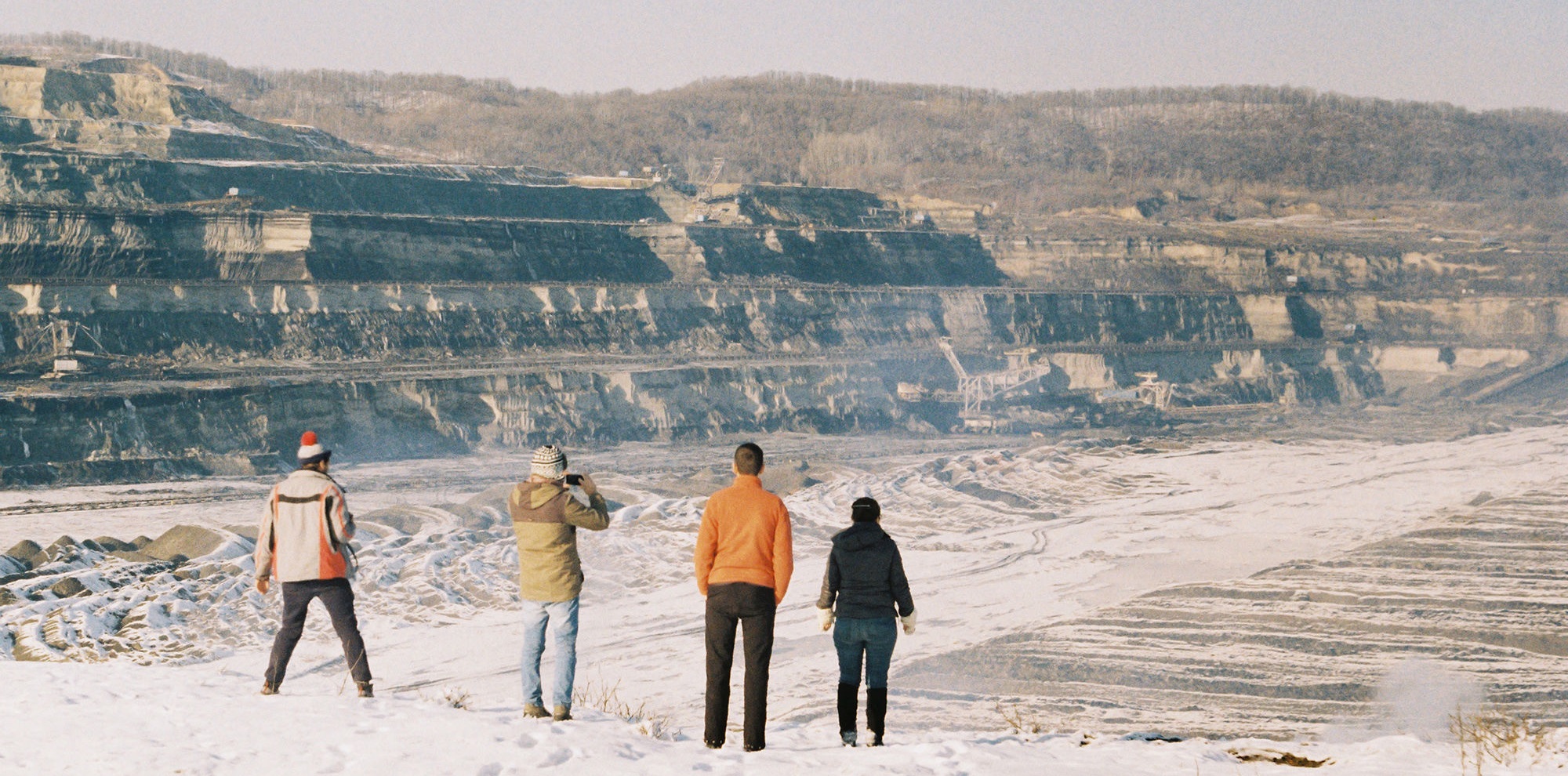
Walking along the edge of the 4 kilometre (2.5 mile) open-cut mine, Bratu joked that he was “inspecting his property” because the land the pit lies in was also taken by the company – without compensation – during the communist era.