

By Sebastian Rodriguez
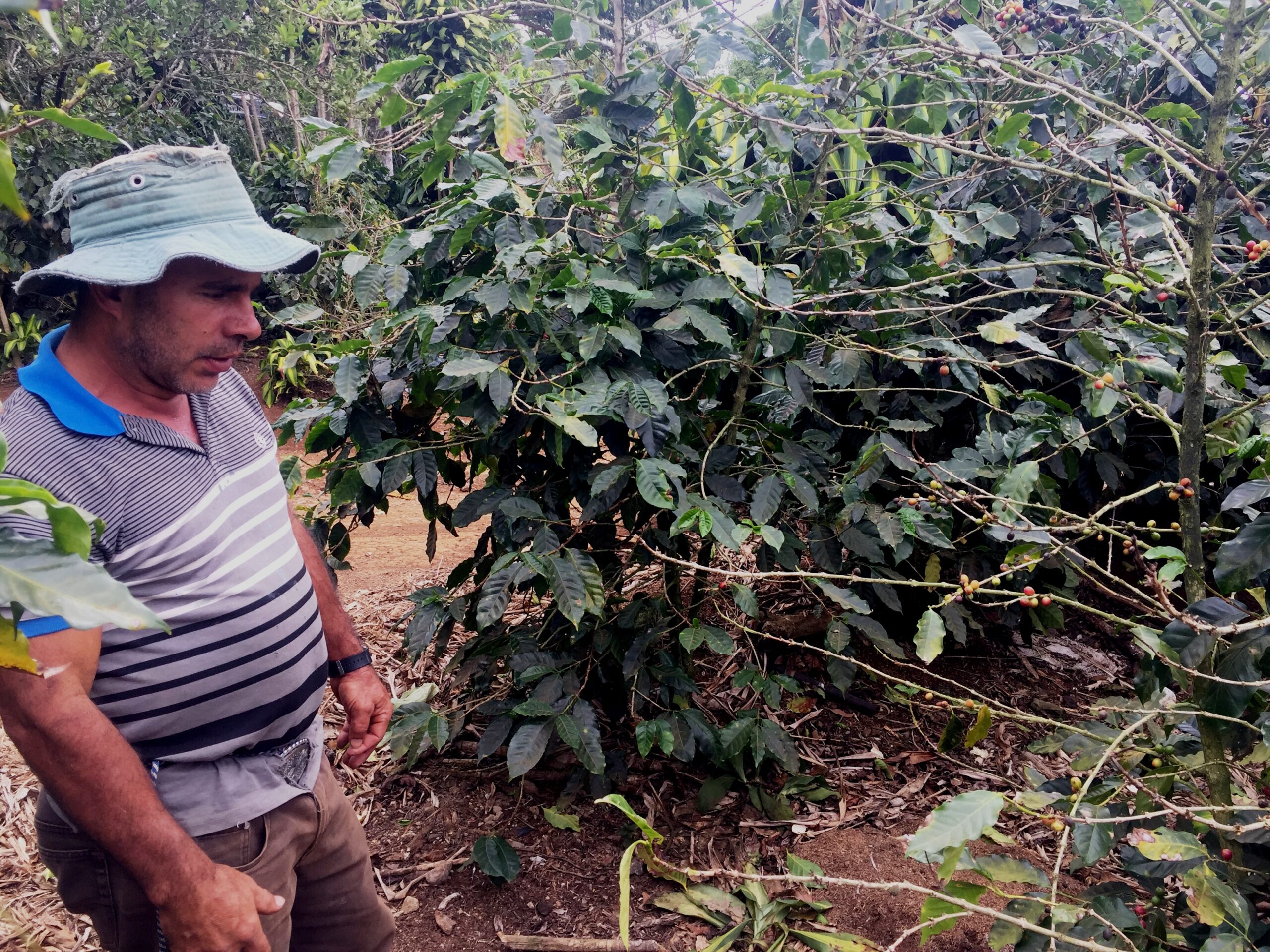
PIEDADES NORTE, Costa Rica, Feb 21 (Thomson Reuters Foundation) – When Vinicio Chaves started working in the fields 30 years ago, he never thought of insuring his coffee farm against wild weather. Now he sees it as a necessity.
In 2017, Tropical Storm Nate hit his farm in Piedades Norte, a small town in Costa Rica’s Alajuela Province, felling guava trees and stripping coffee beans off the branches.
“It was the worst I’ve seen,” Chaves said. “It was sad to see all the coffee thrown on the floor.”
But he did not lose money from the damage, unlike in previous years.
The farmer was compensated for his losses through a “climate insurance” policy offered by the National Insurance Institute (NII), a state agency that is the country’s main insurer.
Boosting agricultural insurance is important as climate extremes become more frequent on a warming planet, said a 2017 study by the Costa Rica-based Tropical Agricultural Research and Higher Education Center (CATIE).
Public finances are coming under strain as the Costa Rican government ends up subsidising disaster-hit farmers for their crop losses, it said.
Chaves said he would not risk another crop season without insurance, but he remains in the minority among Costa Rican farmers.
Less than 500 are protected by insurance against climate and weather disasters. Since 2015, when the NII launched the policy, uptake has grown more slowly than expected.
Even in the first year, which had the largest insured area as big rice farms tried it out, barely 2 percent of the country’s agricultural land was covered, according to NII data.
Daniela Guevara, an agricultural economist at the NII, said the institute had struggled to promote the insurance, meaning most farmers still did not know about it.
Xinia Chaves, executive director of the Coffee Institute of Costa Rica (ICAFE), said growers like her had traditionally seen insurance as an unnecessary expense.
But that could shift as the climate heats up, she added.
Often storm-affected farmers who lost their plantations in regions like Perez Zeledon or Coto Brus restored them in the same vulnerable way, she said.
“They are assuming a very large financial risk,” she added.
ICAFE has organised talks and workshops with foreign experts aimed at promoting insurance against extreme weather.
But the various efforts had yet to create an insurance culture among farmers, she added.