

By Kim Harrisberg
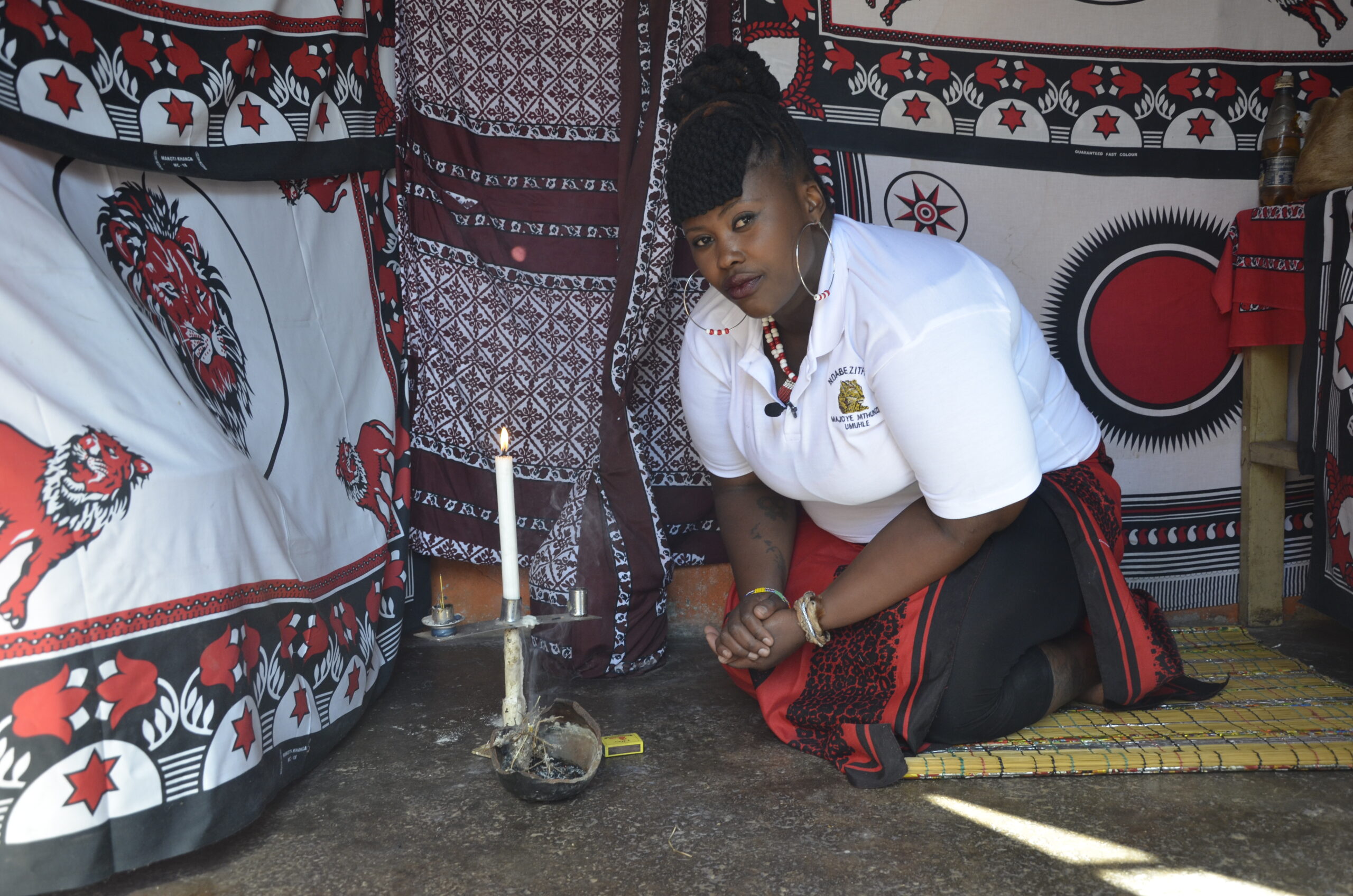
KATLEHONG, South Africa, Aug 12 (Thomson Reuters Foundation) – Smoke swirled around Badanile Maci as she crouched on all fours, clapping and chanting with half a dozen other sangomas – South African traditional healers – to greet their ancestors’ spirits.
Widely respected by South Africans as spiritual guides, healers and counsellors, gay sangomas like 23-year-old Maci are also challenging the idea that being lesbian, gay, bisexual or transgender (LGBT+) is unAfrican.
“When we are together in our traditional ceremonies, we are free,” said Maci, who knew she was gay at the age of 15 and brought her first girlfriend home a year later.
“Our traditional beliefs have created a safe space for the LGBT community … We find the support we never had before,” she said, sitting beside jars of dried leaves, twigs and herbs in her consulting room in Katlehong, 35km east of Johannesburg.
Sangomas – sometimes called witchdoctors – believe they are called by their ancestors to heal. By consulting with spirits and using rituals and natural medicines, they predict the future and help clients with problems from sickness to relationships.
In a country where lesbians are often subjected to the trauma of “corrective rape” to make them straight, and access to mental health care is limited, gay sangomas are finding their own remedies to achieve happiness and win social acceptance.
“I have had suicidal thoughts,” said Nomsa Mokoena, a 33-year-old sangoma, recalling how her family rejected her when they found out she was a lesbian.
“But my ancestors have guided me through the worst of my depression,” she said, from eMalahleni, about 140km east of Johannesburg.
Through advice from her ancestors in dreams, Mokoena was able to understand her depression, which she described as an “ongoing battle” but preferable to going to hospital.
“We find power in ourselves … I don’t have to be ashamed or live a lie,” she said.
READ MORE: This is part of a series exploring mental health in a rapidly changing world