

By Busani Bafana
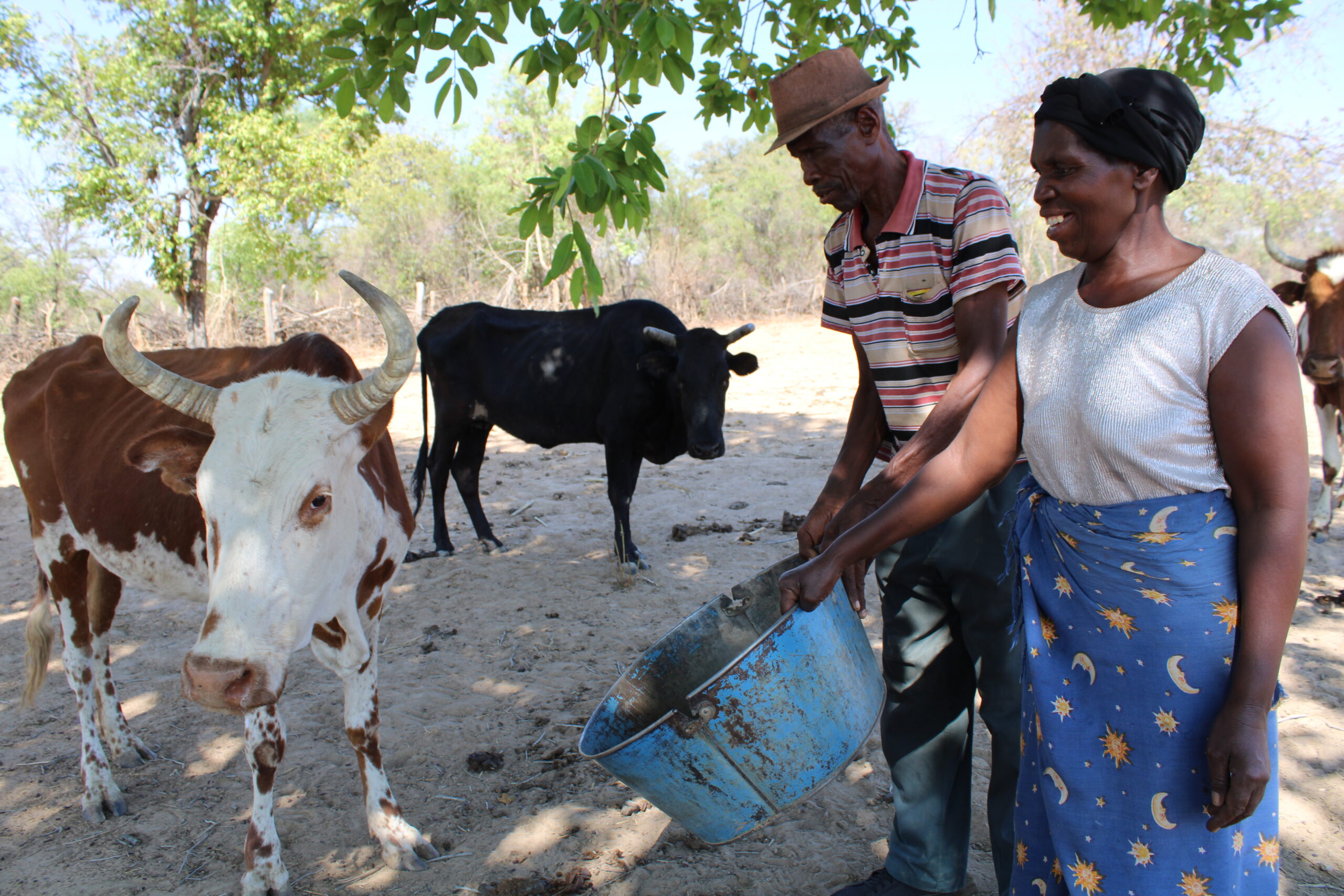
NESIGWE, Zimbabwe, Dec 5 (Thomson Reuters Foundation) – Livestock farmer Siphiwe Moyo walks briskly under the scorching sun until she arrives at a shady tree in the middle of a parched, unplanted maize field.
She is making a second check on three emaciated cows, two of which are pregnant.
Moyo, 59, is relieved to see them still standing. She and her husband, Daniel sometimes have to lift the weakened animals back to their feet three times a day in a frantic bid to keep them alive.
As another drought ravages Zimbabwe, farmers in livestock-rich Matabeleland, in the country’s west, are again counting their losses as animals die from thirst and lack of food.
Zimbabwean farmers, hit by more frequent droughts as climate change takes hold, have made efforts to change livestock practices to better cope with dry times – but not all of the new adaptation strategies are holding up, they say.
As a result, in a region where livestock are a store of wealth for most families, drought is again drying up income and reducing savings, farmers say.
“The cattle are our bank,” Siphiwe Moyo told the Thomson Reuters Foundation, as her cows – two of them pregnant – stood in the shade.
If the cows die, “we will lose five animals in one go”, she said.