

By Kim Harrisberg
JOHANNESBURG, Nov 9 (Thomson Reuters Foundation) – Mimi Ngalula never imagined cardboard boxes, cans and bottles would save her five children from hunger during lockdown, but over the past four months, digging through Johannesburg’s trash cans has become her lifeline.
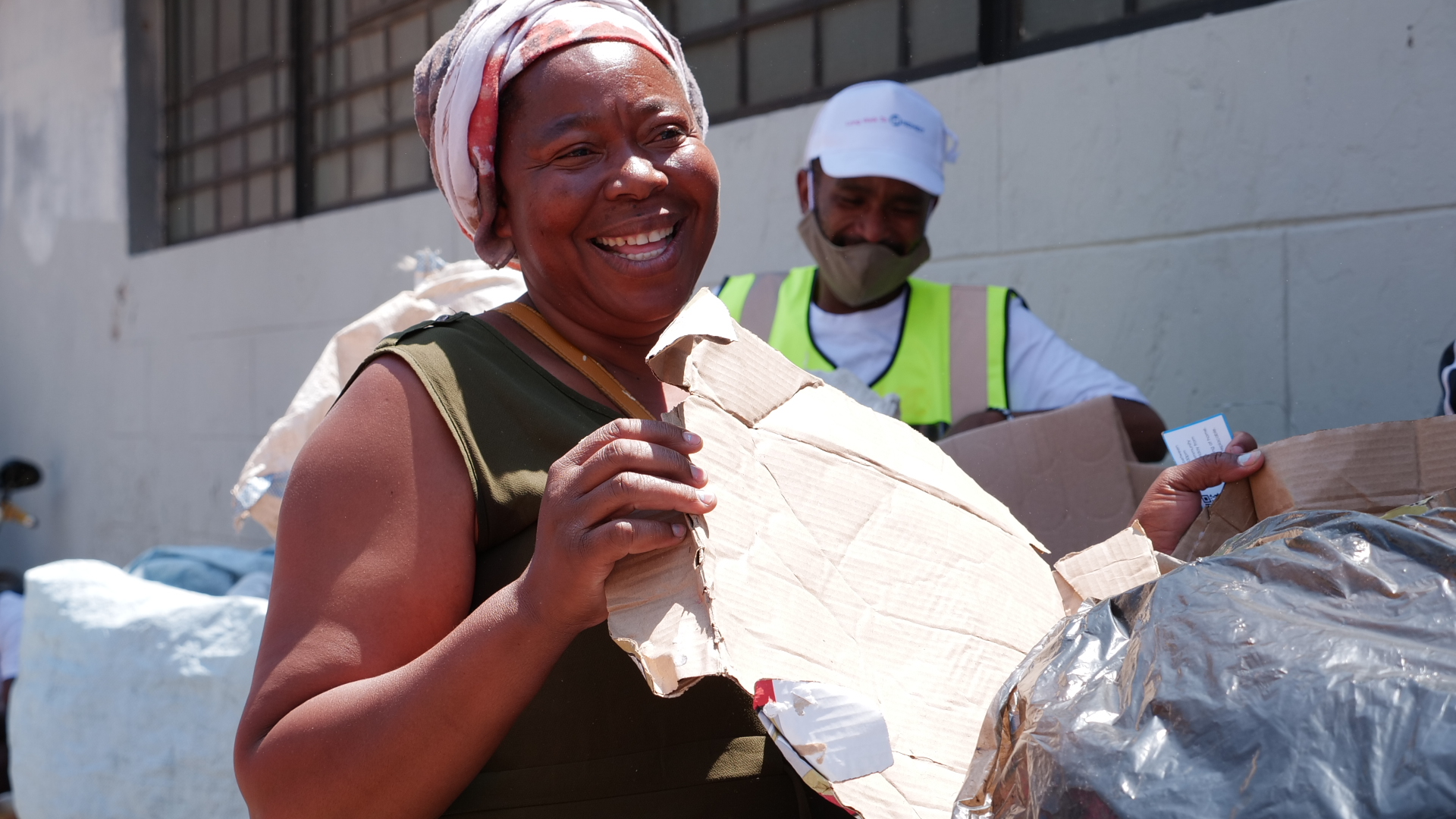
Ngalula, a refugee from the Democratic Republic of Congo (DRC), is one of hundreds of people in the neighbourhood of Lorentzville who joined a project to exchange recyclables for a digital currency that they use to buy much-needed groceries.
Run through local charity Love Our City Klean (LOCK), the project gives recyclers a card with a unique barcode that is used to load their recycling points. They spend the points at a weekly “Swap Shop” on essentials like beans, soups and rice.
“I didn’t used to like recycling, but this taught us how to fish so we can feed ourselves,” said Ngalula, 42, as she sorted her cardboard haul at a makeshift depot in Lorentzville, a neglected suburb in the South African inner city.
“I don’t know what I would have done without this,” said Ngalula, who was a domestic worker until she was let go during the country’s coronavirus lockdown.
The nation-wide lockdown to curb the spread of the novel coronavirus was announced in March and by April, 3 million South Africans had lost their jobs and one in five were going hungry, noted a survey by several South African universities.
Charities, businesses and the government have all launched feeding schemes, soup kitchens, community gardens and food voucher handouts to help feed the millions impacted by the lockdown.
But LOCK wanted to find a sustainable solution that let people receive food in a way that also empowered them.
In June, the charity’s co-founder Zwelihle Magwaza paired up with Makers Valley, a community-run project in Lorentzville, to create a recycling programme that would fight hunger and clean up the city at the same time.
LOCK sells the collected recyclable materials to bigger depots, or private buy-back centres, and that money is used to fund awareness campaigns and city clean-ups.
“I love Joburg,” said Magwaza in the reception of Victoria Yards, a former nappy factory that now acts as the Makers Valley headquarters, made up of art studios, community vegetable gardens, a clinic, the new recycling Swap Shop and more.
“We started this initiative because we see so much potential for the type of city Joburg could be,” Magwaza told the Thomson Reuters Foundation.