

Santwana Roy was 16 when her parents asked her to marry a man from a wealthier family in rural Bangladesh.
Two decades later, Roy, an internationally-recognised taekwondo champion, is using martial arts to fight child marriage, which has surged during the pandemic.
Choosing an education over a teenage wedding changed Roy’s life irrevocably: she attended college where she picked up karate and later went on to win gold in taekwondo for Bangladesh at the South Asian Games.
Today her foe is child marriage, an illegal practice that impacts millions of girls in the impoverished South Asian nation, particularly those forced out of education by COVID-19 school closures.
“Martial arts makes both your mind and body strong, allowing you to take steps that you wouldn’t have taken before,” 36-year-old Roy told the Thomson Reuters Foundation.
“For the girls from my town, it can be a way out of child marriage and even to tackle sexual harassment,” she said.
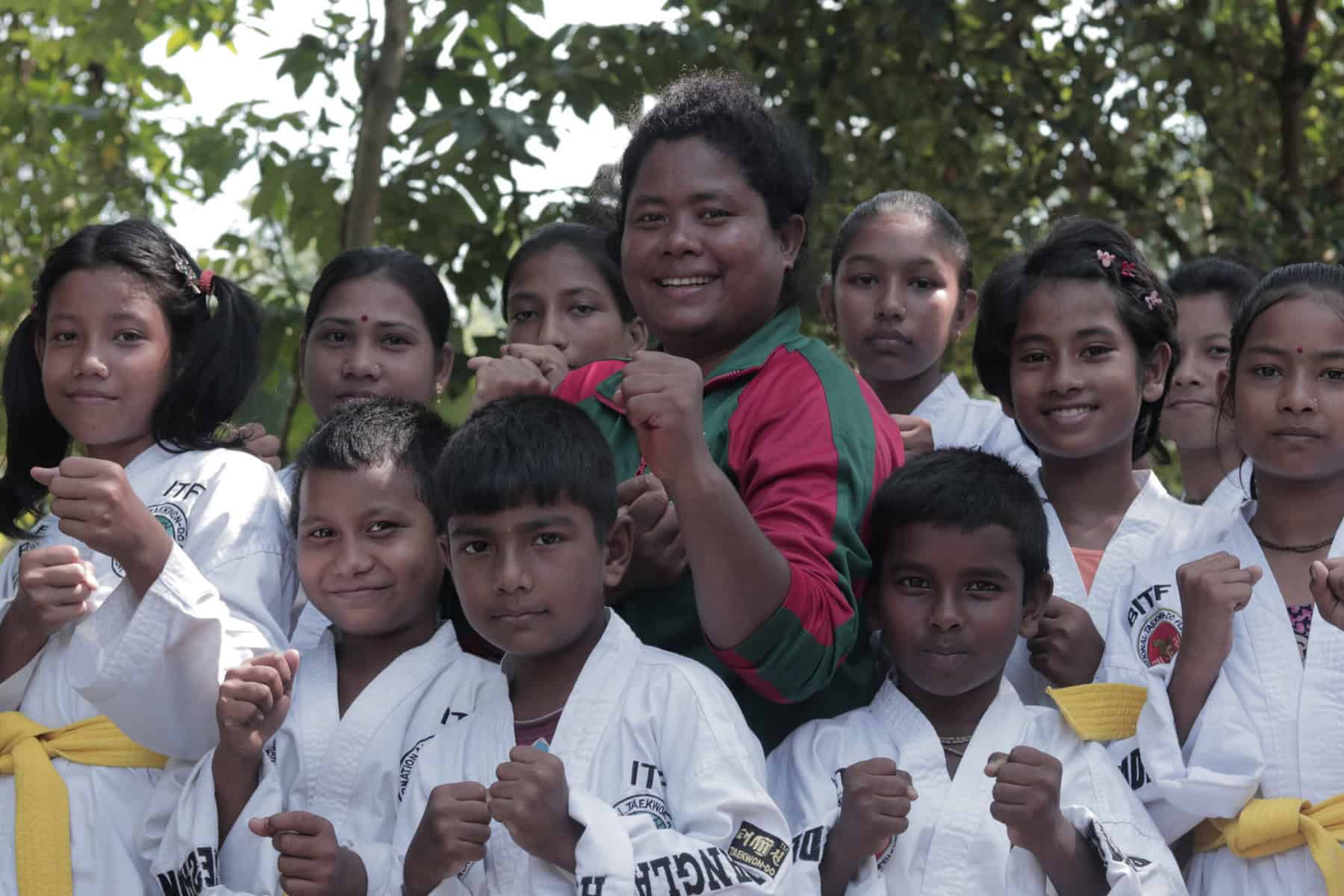
Roy travels by motorbike to local villages and on playing fields teaches girls how to kick, roll and strike in self-defence – skills, she says, that breed confidence and strength.
Many of her pupils are the same age Roy was when she defied her mother and father and they can face resistance from families who view the sport with scepticism.
“Initially parents did not want to send their girls to me for training. They thought that this was a men’s sport. They thought their girls would have to wrestle in short clothes. It took a lot of convincing from my end,” she said.