

By Megan Rowling
Jan 25 (Thomson Reuters Foundation) – Without bold action to build resilience to climate change, the world will likely see “dramatic reversals in economic development”, with poor and vulnerable communities paying the highest price, U.S. climate envoy John Kerry said on Monday.
He delivered the stark warning to a global summit on climate adaptation, hosted by the Dutch government, less than a week after taking up his role under new U.S. President Joe Biden.
The best course of action, Kerry said, is to treat climate change “like the emergency that it is” and step up global efforts to slash planet-heating emissions faster, to hold warming to 1.5 degrees Celsius, the lower limit in the Paris Agreement.
The world is currently on track to heat up by 3.7-4.5C, which “invites for the most vulnerable and poorest people on Earth fundamentally unliveable conditions”, he warned.
Kerry said more powerful storms were also costing his own country tens of billions of dollars each year.
“It is cheaper to invest in preventing damage, or minimising it at least, than cleaning up,” he said by video link.
About 20 world leaders spoke at the opening session of the largely virtual two-day summit, alongside the U.N. secretary general and heads of development finance institutions.
Many underscored the need to step up action to adapt to worsening extreme weather and rising seas. U.N. chief Antonio Guterres said that deserved far more investment, especially in the poorest countries and small island nations.
“Support for adaptation and resilience is a moral, economic and social imperative,” he told the summit.
“Adaptation cannot be the neglected half of the climate equation,” he added, pointing to “huge gaps” in financing to help developing countries cope with a warming planet.
Adaptation action includes everything from expanding green space in cities to prevent floods and moving coastal communities to safer places to capturing rainwater, providing storm warnings and giving farmers weather and crop advice via mobile phones.
Guterres called for 50% of climate finance from donor governments and international development banks to be allocated for adaptation, up from about a fifth now.
Most spending currently goes to developing clean energy systems and other means of curbing emissions.
The U.N. secretary general urged donors to commit to that 50% goal by the time of the next major U.N. climate summit, set for November – and to deliver on it by 2024.
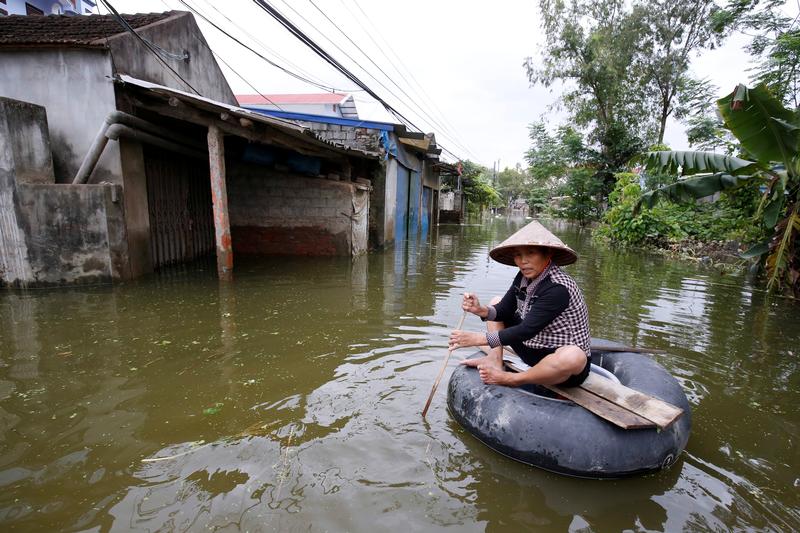
Vietnam’s Prime Minister Nguyen Xuan Phuc said the COVID-19 pandemic had diverted resources away from climate adaptation.
His country – with a long coastline vulnerable to sea level rise and agriculture at risk of weather extremes – requires about $35 billion in international support over the next decade to protect its people, he said.
Vietnam could only pay itself about 30% of what is needed to deal with its risks, he added.
Dutch Prime Minister Mark Rutte told the summit his country would divide its climate finance equally between adaptation and emissions reduction efforts, and urged more donors to follow.
France’s President Emmanuel Macron said his country would allocate one-third of its annual climate finance, or 2 billion euros ($2.4 billion), for adaptation.
German Chancellor Angela Merkel, meanwhile, said her government would boost support for increased insurance coverage against extreme weather in developing nations.
Kerry said the United States would “significantly increase the flow of finance” to global adaptation and resilience initiatives, and would make good on its climate finance pledges, without giving more details.
Under climate-change sceptic Donald Trump, the United States failed to deliver two-thirds of a $3-billion promise to the Green Climate Find, which helps developing countries adopt clean energy and adapt to climate change.