

* Project targets sex-for-fish trade in Lake Victoria region
* Solar-powered lamps allow women to fish for themselves
* Locals say lamps boost incomes and help reduce HIV rates
By Kagondu Njagi
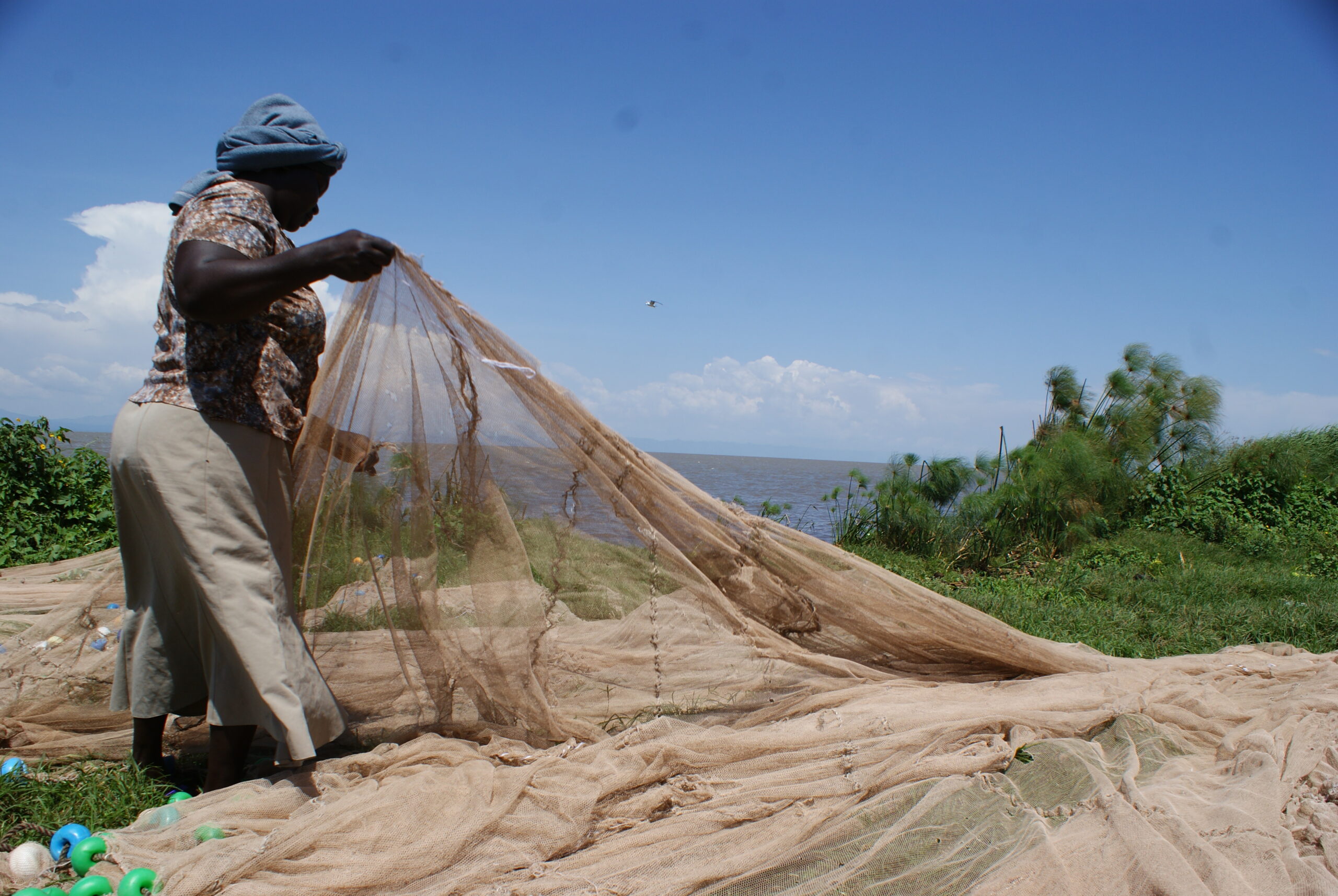
KENDU BAY, Kenya, March 16 (Thomson Reuters Foundation) – Mary Achieng’ sifted through her catch of silver cyprinid fish, sorting them into gunny sacks and carrying them to the weighing stand at Kogwang’ Beach, on the Kenyan shore of Lake Victoria.
Achieng’ had caught the fish the night before, using a solar-powered light to lure them into her nets.
The 500-kg (1,100-lb) haul would earn her 50,000 Kenyan shillings ($450) – enough to keep her family going until she next went out again on the lake a week later.
Before she got the lamp two years ago, Achieng’ had to stock her stall in Kendu Bay with whatever she could buy from local fishermen – many of whom would only sell to women offering up their bodies for sex.
“The fishermen dictated who to sell the fish to. If you did not please them, you would have nothing to sell for the day,” the 34-year-old, whose name has been changed to protect her identity, told the Thomson Reuters Foundation.
Such “sex-for-fish” deals are common in Lake Victoria’s fishing industry, which is controlled by men who can afford the tools needed to catch fish, including the lights used to attract the cyprinid, say local women’s rights advocates.
But a renewable energy project launched under the Africa for SDGs (Sustainable Development Goals) initiative is helping women in the area feed their families and stay safe from abuse by arming them with solar-powered lamps that allow them to do their own fishing.
Since it started in 2018, the project has given free solar lights to more than 400 women in western Kenya who were previously involved in the sex-for-fish trade, said Joe Bonga, chief executive officer of the Nairobi-based Africa for SDGs.
The project, implemented in partnership with the nonprofit International Christian Youthworks Africa and U.S.-based charity Watts Of Love, aims to reach 400 more women by the time it ends in 2023, Bonga noted.
“The solar lights have not only revolutionised fishing in this region, but they have also increased the economic production around the lake region,” he said.
The lamps have other uses away from the lake, he added.
“The good thing is that as you are going onto the lake, you are charging the solar light while using it. With enough power, you use the light again at home,” Bonga said.
The fishing industry provides a livelihood for about 90% of the Lake Victoria population, according to government figures.
Using her lamp to light her fish stall, Achieng’ said she can stay open longer each day, and now earns 10 times more than she used to.
“With the solar lights, I can do my own fishing and more,” she said. “I can decide to stay late in the market to sell my fish and I can also decide to be at home so that my children can study using the solar light.”