

* Umoja village is home to dozens of families, but no men
* Women applied for community title to nearby grazing land
* Women in Kenya own less than 2% of all titled land
By Dominic Kirui
UMOJA, Kenya, March 22 (Thomson Reuters Foundation) – When Jane Nolmongen’s husband banished her from their family home in northern Kenya after discovering she had been raped by a British soldier, she went somewhere she knew she would be safe: a village entirely run by women, where men are not allowed.
For the past 30 years, Nolmongen has lived in Umoja village in Samburu County, supporting her eight children and working land she could soon own, in defiance of a culture in which women are considered the property of their fathers and husbands.
“The village has been a source of support for me, because we have worked together to make progress in our lives and teach each other the importance of women’s rights,” said Nolmongen, 52, as she lit a fire to make some tea.
“Among the Samburu, we, as women, are just like rubbish to our husbands,” she told the Thomson Reuters Foundation.
Nolmongen was among the first residents of Umoja, which was founded in 1990 as a refuge for Samburu women who have suffered sexual assault and been cast out and stripped of any claims to their property or children, as well as those fleeing child marriage or female genital mutilation (FGM).
Today, the women are on the brink of being granted the title deed to a tract of grazing land by the county government – a right they never would have had outside the village – and are motivating nearby communities to also start giving land rights to women.
“In (Samburu) community, that was not possible for a woman 30 years ago. She would not be allowed to own land and other property because the husband would not allow her,” Nolmongen said.
Umoja was created by Rebecca Lolosoli, who was thrown out of her community and beaten by a group of men for speaking out against the practice of FGM.
While recovering in hospital, she came up with the idea to start a village where men were banned.
Umoja, which means ‘unity’ in Swahili, started with 15 women – at its peak, the population grew to about 50 families, explained Nolmongen.
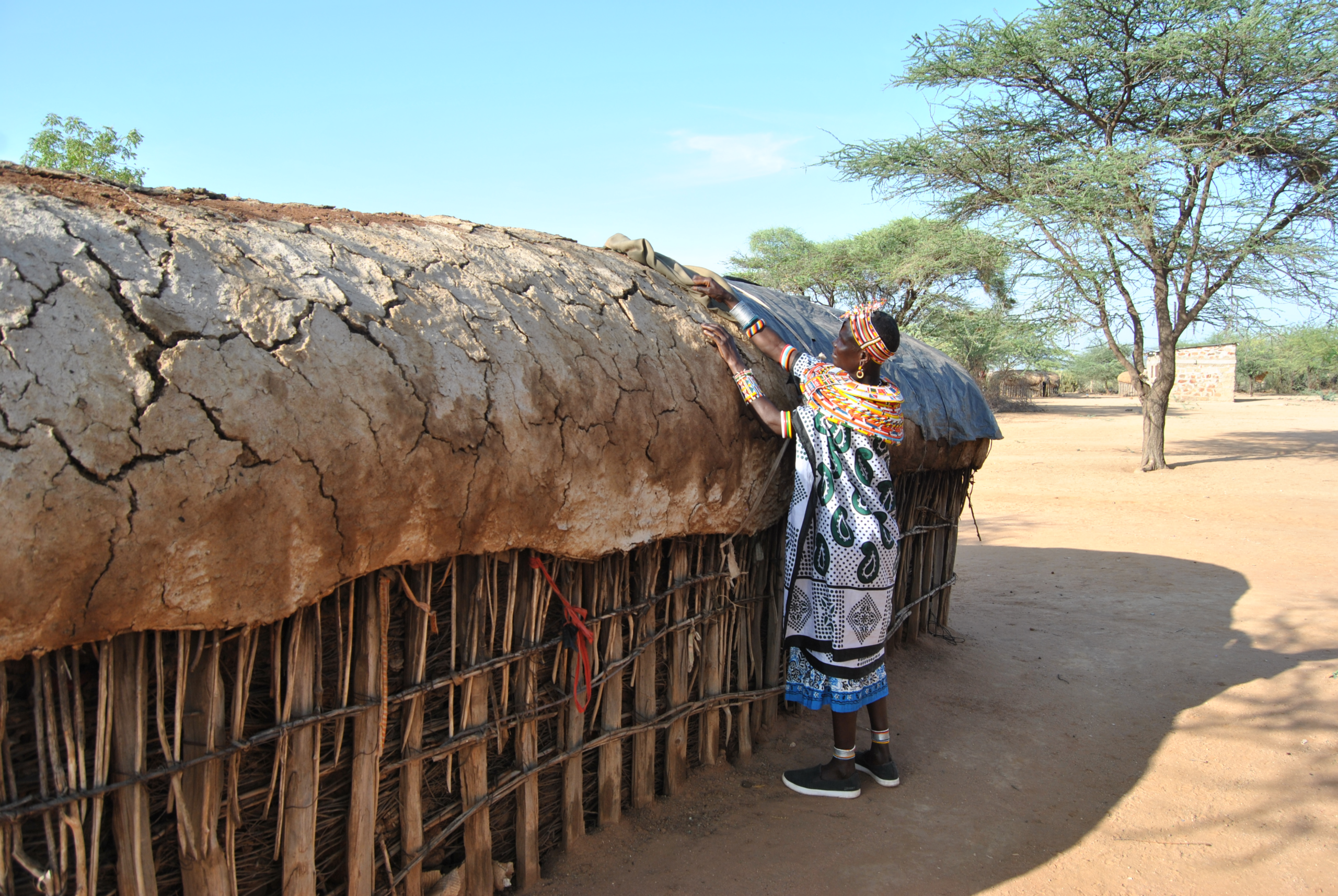
Now there are a total of 37 women and their children living in the village, which is made up of homes the women have constructed for each other and a school, all surrounded by a fence of thorny branches.
The women make money selling honey and handmade beads to tourists, although travel restrictions to curb the coronavirus pandemic mean they currently have no income, Nolmongen noted.
“After this disease came, (tourists) no longer come, and we have to think of other ways to survive,” she said. “If someone has savings, that is what they use now until we can sell the beads again.”
Henry Lenayasa, chief of the administrative region where Umoja village is located, said the women’s move to register their land is an example of a growing recognition of equal property rights among the Samburu.
“We, as administrators, are guided by the constitution to ensure women get their fair share. I normally hold barazas (meetings) in various villages to ensure this message reaches them, and also emphasize the need to empower girls,” he said.