

* Pandemic is pushing more Tunisians to learn to cycle
* Monthly protest rides call for more bike lanes, racks
* Number of cars in Tunisia increases by more than 70,000 a year
By Layli Foroudi
TUNIS, May 17 (Thomson Reuters Foundation) – Usually during the holy month of Ramadan, when Tunisians break their fast every evening, the streets of Tunis fill with cars and taxis as people go out to catch up with family and friends.
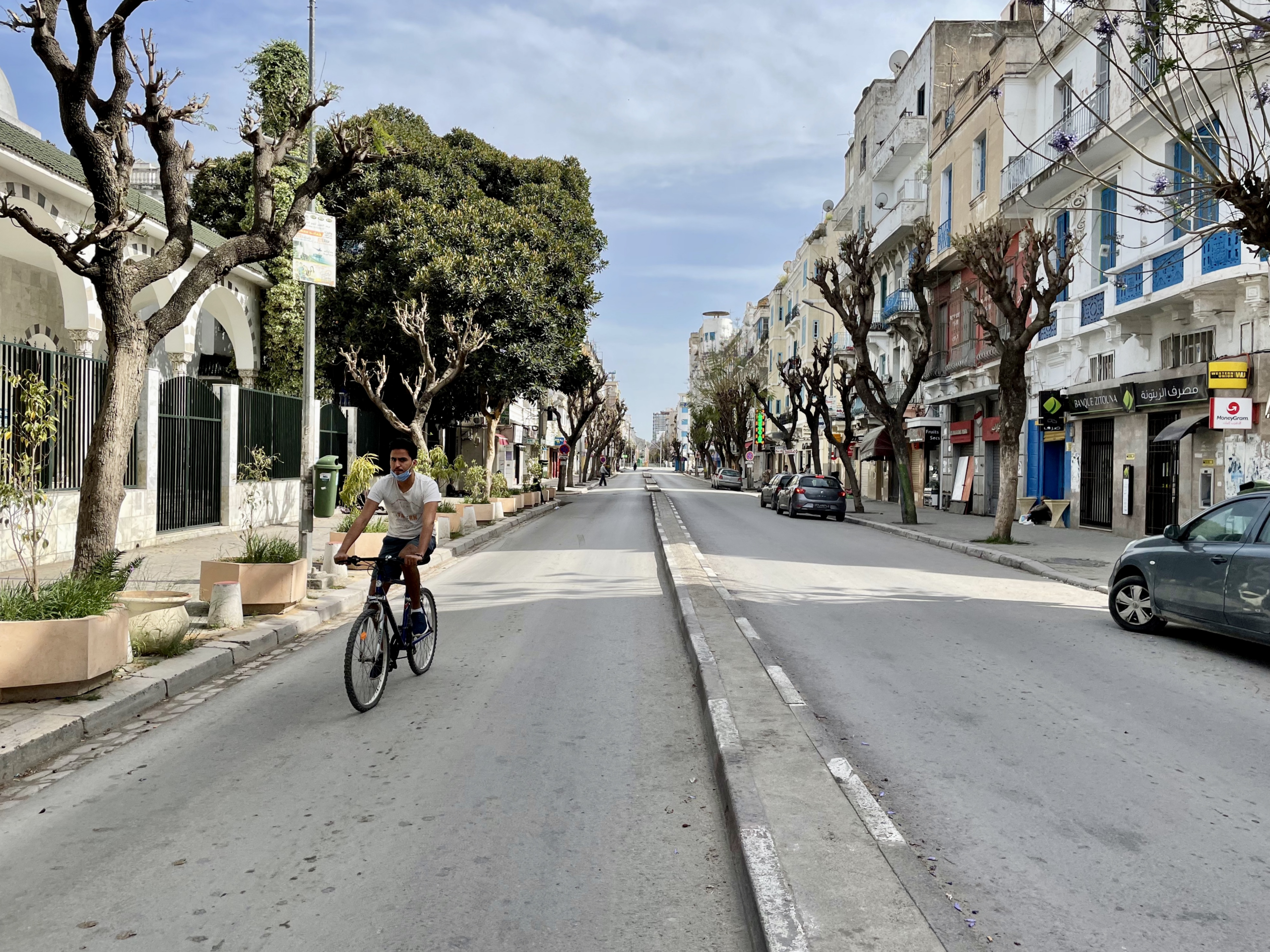
But this year, nights in the capital stayed unusually quiet due to a 7pm curfew for cars as part of measures to stop the spread of COVID-19.
Working around the new rules, Saif Touati got on his bike to meet friends for a coffee after dinner.
“I used to use the bike a lot, but stopped cycling because it was faster to drive,” said the 28-year-old DJ, adding that he got back into cycling during the country’s first lockdown from March to June last year, when his work abruptly dried up.
He and five friends started going for long cycle rides to pass the time. “I became used to it and now cycling is a pleasure,” he said.
With the pandemic prompting more Tunisians to hop on their bikes, whether to fill downtime or to get around travel restrictions, one activist group is using the jump in two-wheeled travel to boost their call for authorities to take cycling more seriously.
Launched in 2017, Velorution Tunisie organises bike trips for residents and tourists, runs a weekly bike school and holds monthly protest rides to demand officials improve urban cycling infrastructure.
There are only a handful of cycle lanes in Tunisia, and just a few racks or shelters for people to store their bikes, said Hamza Abderrahim, president and cofounder of the group, which gets its name from the French word for “bike” and “revolution”.