


By Nita Bhalla and Naimul Karim
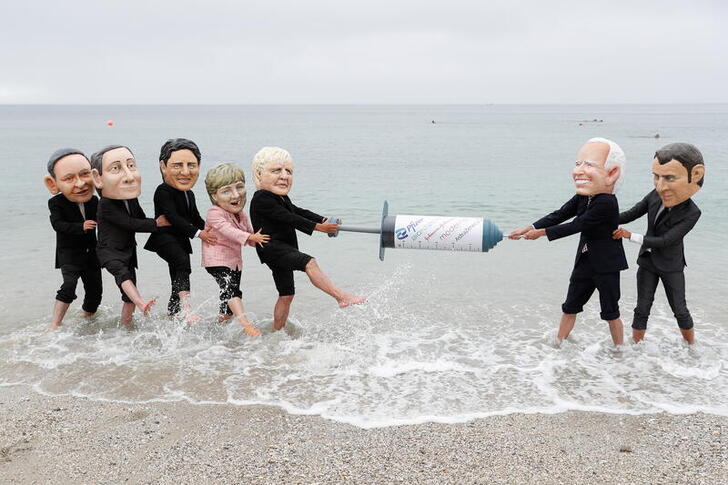
NAIROBI/DHAKA, June 14 (Thomson Reuters Foundation) -The G7’s plan to donate a billion COVID-19 vaccine doses to poorer countries within a year lacks ambition and does not move quickly enough to end the world’s worst health crisis in a century, development charities and health campaigners said.
Leaders from the Group of Seven (G7) major economies announced the plan at a weekend summit, but their pledge does not include entirely new resources and is also far short of the 5 billion to 6 billion shots needed by poorer nations.
While those campaigning for more equitable vaccine distribution said the plan was a step in the right direction, rich nations had failed to grasp the urgency needed to beat the pandemic.
The Thomson Reuters Foundation asked health experts and anti-poverty campaigners what steps they think are needed:
SHARE MORE VACCINES
Ayoade Alakija, co-chair of the African Union’s Africa Vaccine Delivery Alliance:
“The G7 vaccine plan is frankly quite depressing. It’s too little and the timeframe for donations is very late. I expected something more robust.
“I think the United States came to the G7 meeting with true intent and brought with it a pledge of 500 million doses. That was the marker to match – but no other country rose to the occasion.
“We need much more in terms of vaccine and most important we need to get the vaccines into the arms of people now as we see third waves occur in countries such as Uganda and South Africa.”
AN ACCELERATED TIMELINE
Henrietta Fore, executive director of UNICEF, the U.N. Children’s Fund:
“As the pandemic rages, the virus mutates and produces new variants that could potentially threaten the vaccinated and unvaccinated alike. We are in a fierce race. Donating doses now is smart policy that speaks to our collective best interests.
“Several forecasts suggest G7 countries will have enough vaccine supplies to donate 1 billion doses by as early as the end of 2021.
“In addition to these generous vaccine pledges, UNICEF and the many organizations and countries involved with distribution and readiness need clear timelines regarding when the vaccines will be available.
“This is a particularly important element for successfully delivering the vaccines in countries with poor health infrastructure.
“The COVID-19 pandemic has upended the lives of children, affecting every aspect of their lives: their health, education, protection and future prosperity.
“Now, more than ever, what we do today will have significant and lasting impact on our collective tomorrows. There is no time to waste.”