

* Food company partners with villagers to promote kenari nuts
* A quarter of rural people in eastern Indonesia live in poverty
* Village-owned enterprises help earn income without cutting trees
By Harry Jacques
MAKIAN ISLAND, Indonesia, Nov 22 (Thomson Reuters Foundation) – Farmer Musdi Siraju, 19, picked his way down the steep, slippery mountainside in bare feet, on his way to a grove of coconut palms, canarium and nutmeg trees where he works every day to support his family on eastern Indonesia’s Makian Island.
In 1512, colonial Portuguese traders, followed later by the Dutch and the English, descended on Makian and the other Moluccas – once known as the Spice Islands for their abundance of nutmeg and cloves – to exploit their rich natural resources.
Today, people in Musdi’s home village of Sebelei are earning more from what grows here, under an emerging economic model the government hopes can boost rural livelihoods while safeguarding natural landscapes in the world’s largest archipelagic nation.
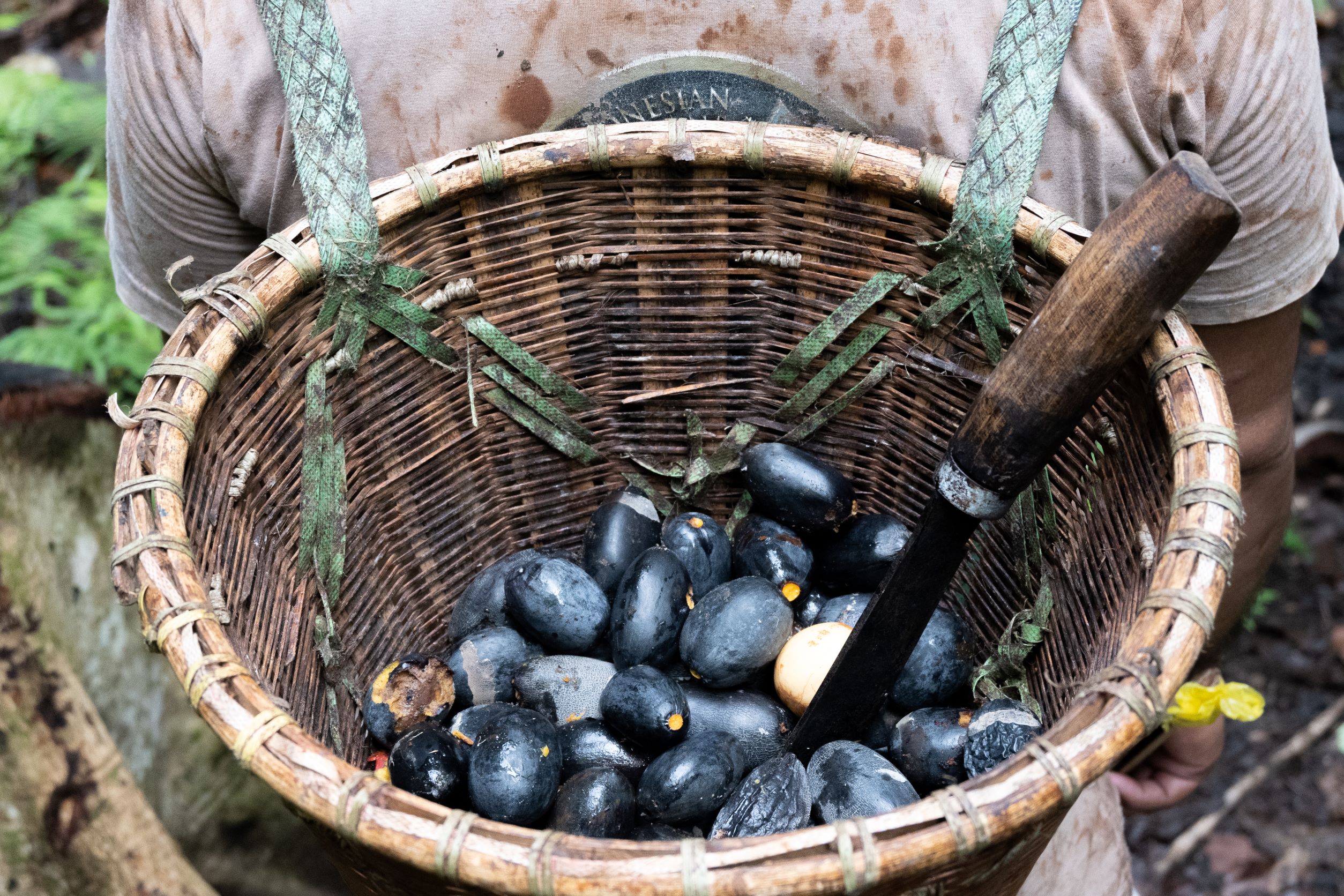
Through an enterprise set up by the village authorities, residents are harvesting and selling kenari – mineral-rich nuts that grow from century-old trees some 30 metres (98 ft) high.
“Back then, they came to take spices with violence,” said village head Samiun Asari, 60. “Today we have self-determination.”
The kenari nut, also known as pili, is versatile. Islanders eat it raw, blend it with sugar, bake it and add it to coffee, among other uses.
Until recently, it was traded only locally as a food staple, keeping prices low for hundreds of farmers like Musdi.
But since 2019, a partnership with Jakarta-based food company Timurasa Indonesia has allowed the farmers to increase production and spur demand for the little-known forest product.
“Very few people (even) in Indonesia know about the kenari nut,” said Timurasa co-founder Erdi Rulianto.
The enterprise kicked into a higher gear in August, when Timurasa put in an order for 500 kg (1,100 lb), its largest yet.
Erdi hopes to start exporting kenari nuts to Europe from next year. “People think of almonds and cashews, but this product is overlooked,” he told the Thomson Reuters Foundation.