

• Bhutan is one of the world’s few carbon-negative countries
• Aim is for electric cars to make up 70% of new sales by 2035
• Roadblocks include limited charging points, low consumer trust
By Namkhai Norbu
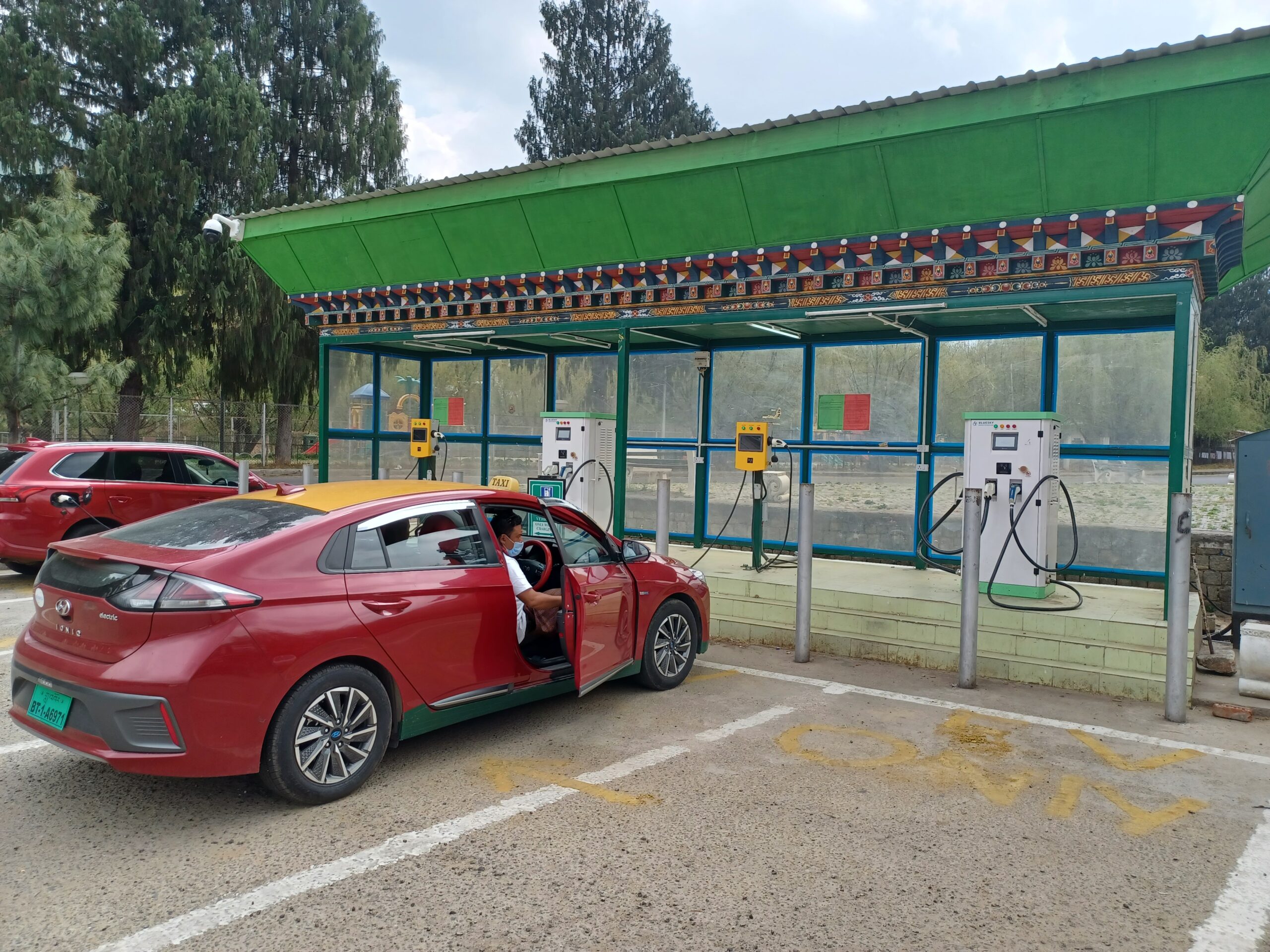
THIMPHU, May 18 (Thomson Reuters Foundation) – As night sets in, Dorji Wangchuk plugs his electric car into a charging station, then starts thumbing his rosary and mumbling prayers while he waits the half hour before he can continue driving his taxi around Bhutan’s capital, Thimphu.
He swapped his petrol taxi for an electric vehicle (EV) last year through a project that aims to put 300 battery-powered cabs on the road by September as part of the tiny Himalayan kingdom’s commitment to keep down its already low carbon emissions.
After seven months of driving his new taxi, which he bought helped by a subsidy and a collateral-free bank loan, Wangchuk, 47, said he is already seeing the benefits, especially as Russia’s war in Ukraine has sent fuel prices soaring.
He used to earn up to 60,000 ngultrum ($775) a month driving his old taxi, he said. Now, with the savings he makes on fuel and maintenance – because electric cars have fewer moving parts – he brings home twice as much.
“Driving an EV is much better. I don’t have to worry about changing gears and the car is comfortable too,” he told the Thomson Reuters Foundation. “I am even getting good reviews from my passengers.”
After a bumpy start in 2019, with COVID-19 lockdowns delaying car imports from countries like China, Japan and India, Bhutan’s electric taxi rollout is finally kicking into gear, said Sonam Tobgye, who manages the $3-million project.
Including the 129 electric taxis that have so far been bought through the programme – a figure that has risen seven-fold since last November – there are about 260 electric cars either on order or already being driven around Bhutan, he said.
That makes up only about 0.2% of all vehicles in the country.
But Tobgye said the idea is to start small and gradually build up orders until the government reaches its goal of having electric cars make up 70% of all new car sales by 2035.
“The 300 taxis will be the ambassadors,” he said. “We expect them to showcase (the electric cars) and build a level of confidence and trust in EVs. Then we expect the rest to follow.”
This is not Bhutan’s first attempt to get its citizens to ditch their gas guzzlers.
A fledgling electric vehicle programme stalled soon after its 2014 launch due to a combination of high purchase costs, limited charging and servicing infrastructure, and low public trust in the technology.
Some industry experts and consumers warn those same challenges could once again slam the brakes on Bhutan’s electric dreams.