

Coronavirus is changing the world in unprecedented ways. Subscribe here for a daily briefing on how this global crisis is affecting cities, technology, approaches to climate change, and the lives of vulnerable people.
By Ashutosh Sharma
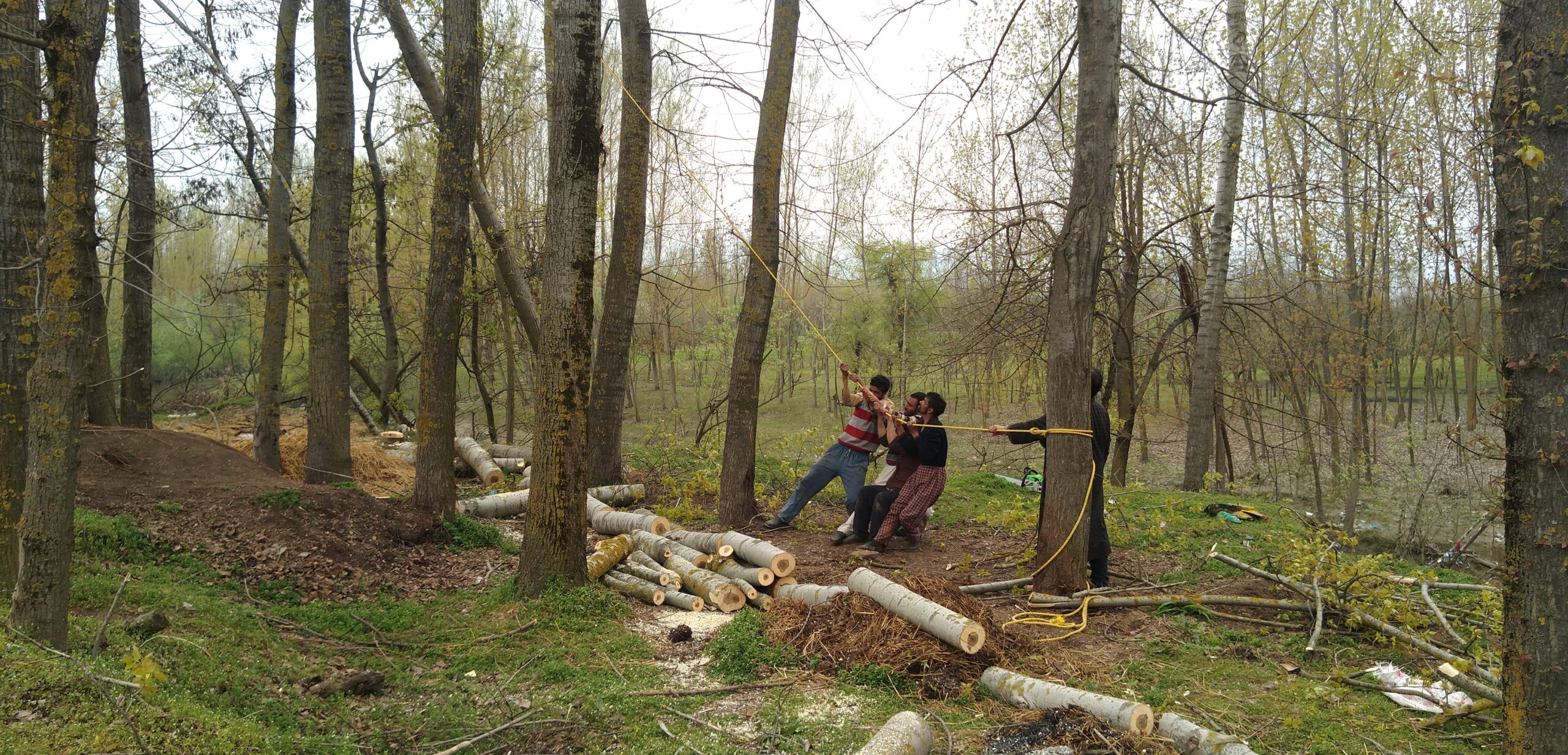
NEW DELHI, April 15 (Thomson Reuters Foundation) – Fearing a convergence of respiratory allergies and spread of the coronavirus pandemic, Kashmir authorities have ordered the felling of tens of thousands of poplar trees that account for nearly a third of the region’s forests.
But doctors and scientists say the imported trees’ pollen and drifting seeds are not a particularly significant allergy problem, and that widespread forest losses may be the bigger threat.
“It is totally a misnomer that poplar cotton acts as an allergen,” Tajamul Hussain Shah, of the pulmonary division of the Sher-i-Kashmir Institute of Medical Sciences, in Srinagar, told the Thomson Reuters Foundation.
Widespread felling of the trees kicked off after the Jammu and Kashmir High Court earlier this month said health threats from poplars should be examined and, if supported, female poplar trees, which produce drifting cotton-like clumps of seeds in the spring, should be felled.
The court decision was the result of a public-interest petition filed by a Srinagar lawyer, stating that poplar pollen could create “havoc for humans with respiratory diseases” and potentially aggravate COVID-19 infections.
The Jammu and Kashmir region has so far seen about 300 confirmed cases of the virus, and four deaths, according to the Ministry of Health and Family Welfare.
Environmentalists and doctors, however, swiftly pointed out that male, rather than female, trees produce pollen, and said that neither the pollen nor seeds from the tree represented a more significant respiratory threat than other spring-blooming plants.
“The desirability of felling of female poplar trees needs to be revisited,” environmental experts wrote in a court filing last week.
But many Kashmir district authorities, such as the Pulwama district magistrate, have issued orders that all female poplars be cut within a week, arguing that allergies could be mistaken for coronavirus infection and create “unnecessary panic”.
The order said those who fail to comply could face legal penalities for violating disaster management regulations.
Kashmiri authorities also promised to bring in police or state forest workers to carry out the work if it was not done swiftly enough.