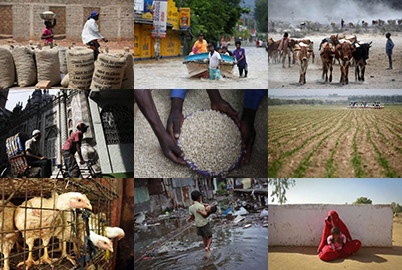
Many families who fled fighting in South Sudan's Jonglei State are still beyond the reach of aid, and more refugees from South Kordofan are likely to head south when the dry season begins
NAIROBI (AlertNet) – Many families who fled fighting in South Sudan’s restive Jonglei State are still living in the bush, beyond the reach of emergency aid, two months after the flare-up, the United Nations said.
An intensification of hostilities between the army and rebels in late August caused the entire populations of Gumuruk and Likuangole towns to flee their homes. The lucky ones have found their way to the town of Pibor, where they are sheltering with host families and receiving humanitarian aid.
“About 3,500 people have been registered so far, but more people are reported to be displaced in the bush,” the United Nations Office for the Coordination of Humanitarian Affairs (UN OCHA) said in its latest update.
“Humanitarian organisations have struggled to reach people affected by the hostilities.”
Jonglei, South Sudan’s largest state, has very little infrastructure, worsened by seasonal flooding. The U.N. has two flights a week delivering aid to Pibor.
A heavy-handed government disarmament campaign, launched in March, triggered an armed revolt in Jonglei, led by Murle militia chief David Yau Yau. In August, rebels killed at least 24 soldiers when they ambushed a South Sudanese army convoy.
South Sudan, which split away from Sudan a year ago, has been struggling to stamp its authority on a vast, undeveloped country awash with weapons.
The disarmament campaign was designed to end inter-communal violence in South Sudan's swampy eastern grasslands.
The bloody crisis began in late 2011 when an estimated 7,000 heavily armed Lou Nuer marched on rival Murle villages, triggering a wave of revenge attacks. Some 900 people were killed, tens of thousands displaced, an unknown number of women and children abducted and tens of thousands of cattle stolen.
Rights groups allege that elements of the SPLA engaged in killings, rape, beatings and torture during the disarmament campaign, fuelling local grievances.
The insecurity has delayed the emergency response to flood-affected people in Pibor County.
Jonglei is among the areas hardest hit by flooding which has affected 260,000 people in 43 of 79 counties in South Sudan.
The rains are expected to end in November, but that will not reduce the demand for humanitarian assistance because the onset of the dry season will make it easier for people to move around – both civilians and combatants.
More than 175,000 people from Sudan’s South Kordofan and Blue Nile states, where the government is fighting rebels, have fled across the border to poorly equipped refugee camps in South Sudan.
Every week, several hundred refugees from South Kordofan arrive in South Sudan’s Yida refugee camp. The majority are often children.
“Organizations responding to emergency needs of refugees are expecting that the influx of people seeking safety in South Sudan could pick up shortly,” UN OCHA said.
The U.N.’s refugee agency expects up to 60,000 new arrivals from South Kordofan during the dry season.
Many people are hiding from aerial bombings in caves in South Kordofan’s Nuba Mountains. “In the event of ground fighting, which is more likely during the dry season, those hiding in the mountains might flee in greater numbers,” UN OCHA said.
Our Standards: The Thomson Reuters Trust Principles.