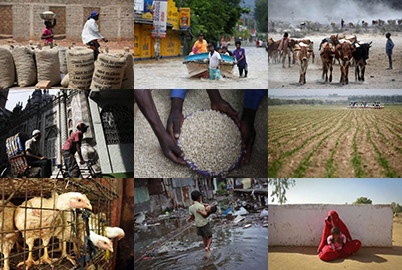
Partners plan to take vaccines, low-cost product for malnutrition, to poorest children, in long-term collaboration starting in two African countries
LONDON (Thomson Reuters Foundation) - Aid group Save the Children has teamed up with international pharmaceuticals giant GlaxoSmithKline (GSK) in a partnership that aims to save the lives of 1 million children over the next five years by developing and making available adapted medicines in some of the world's poorest countries.
The two organisations, which have already worked together to train community health workers, said on Thursday they would share expertise, resources, reach and influence to tackle some of the leading causes of child deaths.
One key medical initiative is the transformation of an antiseptic used in mouthwash into a gel that can be used to cleanse the umbilical cord stump of newborn babies, preventing serious infection. Another is the accelerated registration and roll-out of a powdered antibiotic in child-friendly doses to help fight pneumonia, one of the main killers of children under five.
The partnership will start with two programmes in Democratic Republic of Congo and Kenya. The results will be closely monitored, with the aim of expanding the scheme to other countries in sub-Saharan Africa, Asia and Latin America within five years.
"In the past Save the Children may not have embarked on a collaboration with a pharmaceutical company like GSK. But we believe we can make huge gains for children if we harness the power of GSK's innovation, research and global reach," Justin Forsyth, chief executive of the children's charity, said in a statement.
GSK said it would give at least £15 million ($23.25 million) over the course of the partnership, partly in donations from its 104,000 staff worldwide, as well as contributions through research and development (R&D) programmes.
"I hope this partnership inspires GSK employees and sets a new standard for how companies and NGOs can work together towards a shared goal,” said Andrew Witty, GSK's CEO.
Save the Children's Forsyth said aid agencies had become more open to working with business, as companies boost their philanthropic activities and NGOs sharpen their focus on impact and results.
"The biggest changes in the coming years will come from partnerships with governments combined with the private sector and NGOs," he told journalists. "We could see even more progress (on reducing child deaths) than we have seen in recent years."
SEAT ON THE BOARD
Almost 7 million children died in 2011 because of lack of access to basic healthcare, vaccines or nutritious food. But child mortality is falling fast, dropping by 700,000 in the past year alone, Forsyth said, adding that this "gives a glimmer of hope for the future".
Save the Children will have a seat on a new GSK paediatric R&D board to accelerate progress on innovative life-saving interventions for under-fives, and to identify ways of widening access in the developing world. The aid agency's expertise in child health and experience on the ground will help the company get basic medical services to children in the most remote and marginalised communities, the statement said.
"By joining forces with Save the Children, we can amplify these efforts to create a new momentum for change and stop children dying from preventable diseases," Witty said.
The partnership will also focus on expanding vaccine coverage to the poorest children, increasing investment in health workers, and developing a low-cost product to help combat child malnutrition.
The vaccination programme will include greater use of mobile technology, such as sending SMS messages to remind parents to take up vaccination services and providing health workers and clinics with smartphones to enable them to record and schedule vaccinations, the organisations said.
They have agreed to work together for an initial five-year period, but this could be extended if the initiative proves successful, a GSK spokeswoman told Thomson Reuters Foundation. Both Witty and Forsyth said they saw the partnership as a long-term collaboration.
Our Standards: The Thomson Reuters Trust Principles.