Sri Lanka’s deadly landslide and torrential rain point to weaknesses in sharing disaster updates
By Amantha Perera
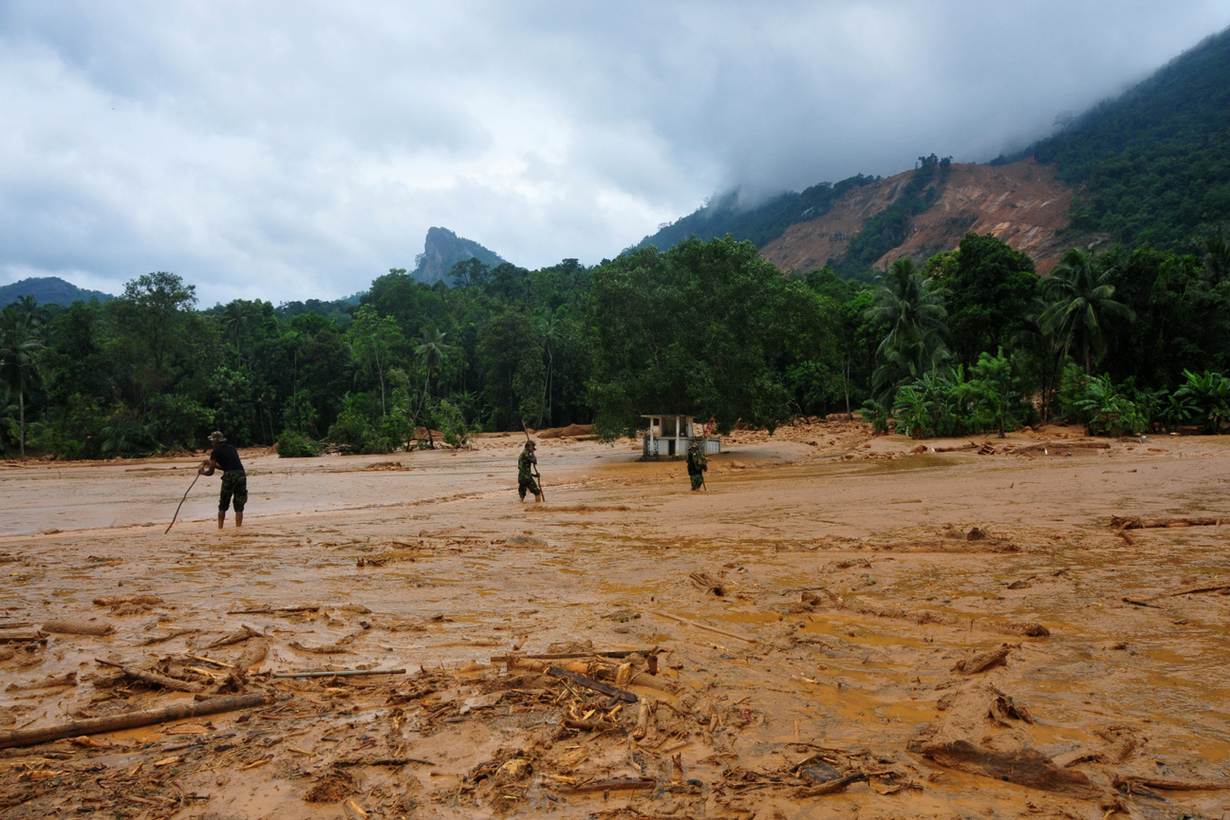
ARANAYAKE, Sri Lanka, May 25 (Thomson Reuters Foundation) - For the first 48 hours after a huge landslide wiped out his hometown of Aranayake and buried 220 families, Prabath Wedage was on his mobile phone constantly.
"I have not been off the phone for five minutes," said Wedage, who has been trying to coordinate consignments of relief supplies for 1,700 displaced people in 13 emergency shelters, including Rajagiri School, where he normally works.
In this devastated community - as in many disaster-hit places - the ubiquitous mobile phone and its social media apps are becoming a vital tool for relief and rescue workers, officials and families to share and gather information and keep in touch.
As Sri Lanka is hit with more disasters, from droughts to floods to landslides, making the most of the tools will be key curbing losses, experts say.
"We could have saved more lives if we had used these properly," Wedage told the Thomson Reuters Foundation.
He noted that it was only after last week's landslide, which followed three days of incessant rain, that many residents begun to use social media platforms like Facebook and Twitter to share disaster-related information.
But government agencies dealing with disaster management also have been slow to adopt social media as a tool, experts say.
NO FACEBOOK, NO TWITTER
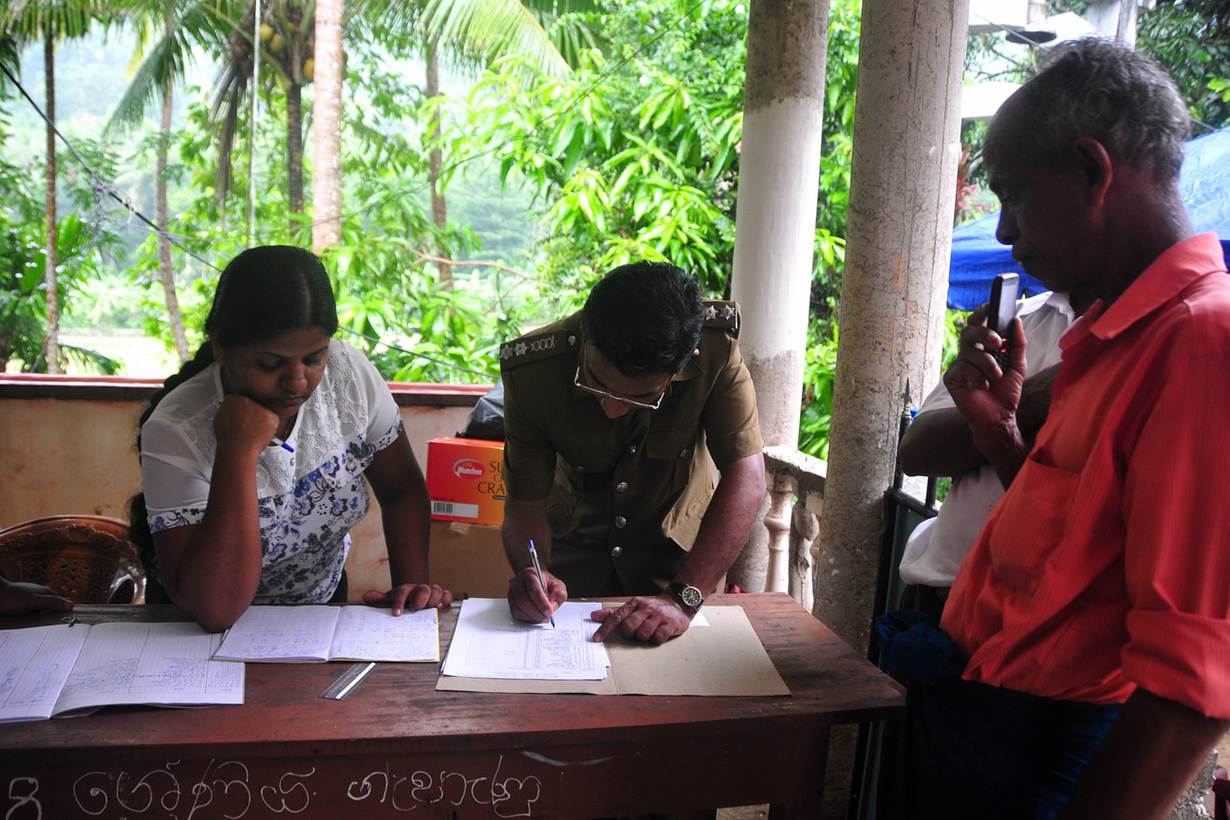
The country's Disaster Management Center, the main government agency dealing with disasters, does not have an active Facebook page or Twitter account. It relies on daily or twice-daily fax updates and press releases to media.
It has the capacity to send text messages to all mobile phone subscribers in the island, but has rarely used that facility, according to Pradeep Koddiplli, a spokesman for the centre.
The same is the case with the Meteorological Department, which has made its daily updates on its website more detailed, but is yet to get on to social media or use text messaging.
"We have looked into this, but we have to devise a mechanism that is tested and proven," said Lal Chandrapala, head of Meteorological Department.
For now, Wedage said, people looking for quick information during disasters "have to wait until a TV channel or a radio station broadcasts these updates, and that is too late to save any lives. We need live updates."
Others agencies, however, are already finding the value of turning to social media. As Sri Lanka was hit by 355 millimetres (14 inches) of rain last week, the Sri Lanka Red Cross (SLRC) relied heavily on its Twitter and Facebook platforms to get disaster-related information out.
In fact it was a SLRC tweet on the morning of May 19 that first alerted the nation to the enormity of the disaster. The tweet said 220 families were buried in the Aranayake landslide, while government officials balked at confirming a missing figure even 72 hours after the disaster.
The SLRC has also used social media to put out weather alerts, disaster warnings and relief and rescue information.
The organisation's aggressive push into social media has happened in part because of the lack of any other effective public warning system, said Mahieash Johnney, SLRC's communications manager.
"In Sri Lanka we do not have a proper dissemination mechanism to reach people when it comes to natural disasters," he said.
APPS TO THE RESCUE
Other smaller organisations also have taken to social media to give live updates and information during extreme weather.
Road.lk, for instance, is a home-grown, user-fed information channel on road conditions, normally used to help drivers avoid traffic jams.
During the recent heavy rain, its Twitter feed and mobile app worked as a conduit for hundreds of bits of information aimed to help people deal with flooding and other problems, its creator Raditha Dissanayake told the Thomson Reuters Foundation.
"Even this morning there were tweets telling people to get onto their roofs and wave blankets because rescue helicopters would be passing overhead. It's unlikely that these people have access to radio or television but if their mobiles are still on, they can receive this information," he said of the service, which has 22,000 Twitter followers.
PickMe, a local taxi app, also has introduced a flood relief button that allows users to donate flood-related relief material, and an SOS button that those trapped in flood waters can use to mark their location.
With no national media organisations providing constant live updates during the recent heavy rain, Roar.lk, a local current affairs website, began a live blog, while another, Yamu.lk, started a "How to help" page.
Road.lk's Dissanayake feels that if such efforts could be better coordinated - preferably by a government body or large agency like the Sri Lanka Red Cross - they could be more effective and share key data.
"We believe that the data that we collect is quite useful to rescue effort organisers and we hope that we will be able to better coordinate with them in the future," he said.
Johnney of the Sri Lanka Red Cross thinks it's time public authorities harnessed the power of social media in their disaster management efforts.
"During the floods these few days, we have seen the power of social media," he said. "When we needed to collect some items for flood relief, we just posted one message on Facebook and Twitter requesting donations. Within few hours, we had over 300 people at our headquarters."
(Reporting by Amantha Perera; editing by Laurie Goering :; Please credit the Thomson Reuters Foundation, the charitable arm of Thomson Reuters, that covers humanitarian news, climate change, women's rights, trafficking and property rights. Visit http://news.trust.org/climate)
Our Standards: The Thomson Reuters Trust Principles.