


By Lin Taylor
SUVA, Fiji, Dec 27 (Thomson Reuters Foundation) – When Cyclone Winston pummelled through Fiji last year, the largest storm recorded in the southern hemisphere, Sofia Talei’s taro and cassava crops were destroyed, leaving her livelihood as a farmer uncertain.
“I was so desperate. All the effort we put into it was destroyed after a few hours,” Talei, 33, told the Thomson Reuters Foundation.
But after the storm came an unexpected surprise: a wealth of financial literacy, business, and agricultural training, which led to Talei this year becoming the first female president of the main fruit and vegetable market in the Fijian capital Suva.
Women’s rights campaigners say disasters can present an opportunity for countries to not only rebuild infrastructure, but also tackle gender inequality, such as helping more women get into work and finding ways to address gender violence.
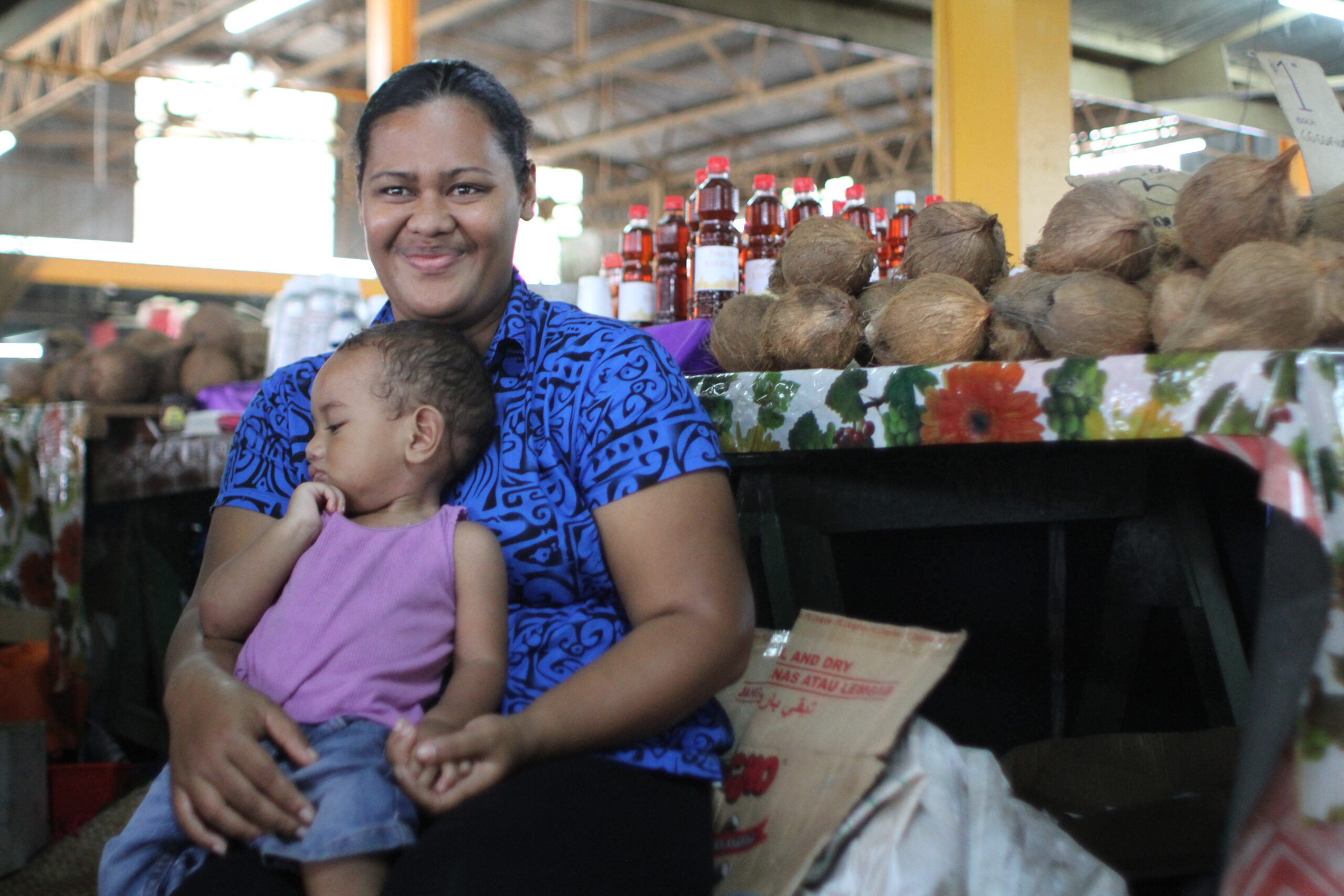
“Through the leadership training, it’s empowering us women to stand up and fight for women’s rights,” said Talei, a mother of three, standing proudly by her market stall, where she now sells coconuts and fast-growing crops like chillies, eggplants and cabbage which are better suited to unpredictable climates.
For stubborn gender stereotypes in small Pacific islands like Fiji mean women have fewer rights, such as access to services like banking, formal jobs, or even a chance to work, said Aleta Miller from U.N. Women in Fiji, which provides training for market stall vendors like Talei.
Such gender inequality has also led to high rates of violence against women. Two in every three women in the Pacific will experience violence – twice the global average – according to U.N. Women.
“What drives this violence? Fundamentally, it’s harmful social norms: deeply-held attitudes, beliefs, values and behaviours within society about the role of men and women,” said Miller, on the sidelines of a conference run by civil rights group CIVICUS in Suva earlier this month. “Women hold the same values, in some cases. A woman may agree with a man that he has the right to keep her in the house and to make her report to him where ever she goes,” she said.