


By Sophie Davies
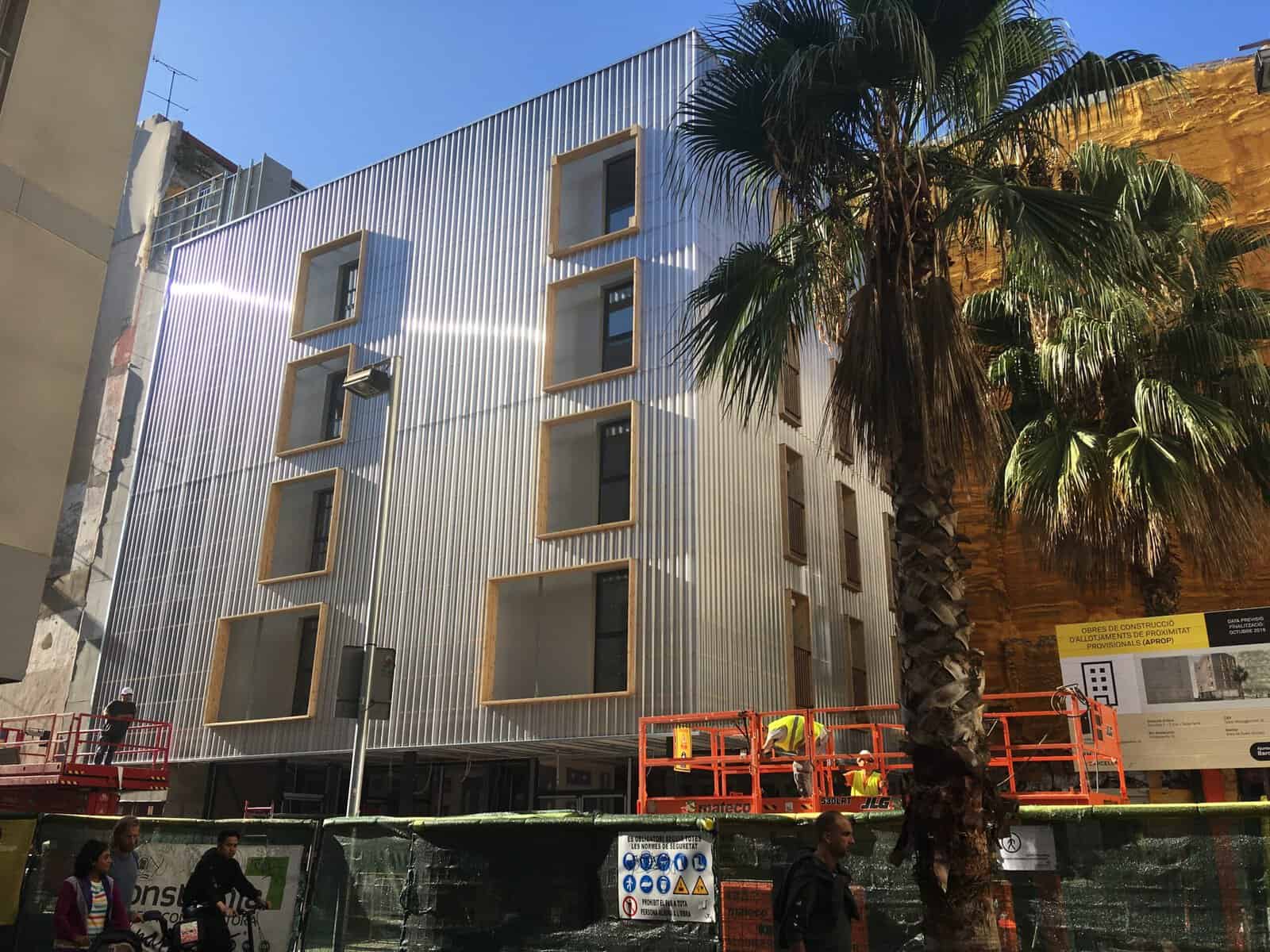
BARCELONA, March 23 (Thomson Reuters Foundation) – Down a cobblestone street a few metres from Las Ramblas boulevard, a vivid, contemporary-style building sits incongruously among the ancient churches and medieval squares that typify Barcelona’s old quarter.
The minimalist structure is home to a dozen new flats built out of disused shipping containers, the latest innovation in Barcelona’s search for a solution to its ongoing social housing crisis.
Rising rents coupled with a shortage of public housing that stems from policies geared toward home ownership are putting pressure on Spain’s most vulnerable citizens, housing experts say.
“In Spain, you still have these ideological debates over whether it’s ownership or rental we should (focus on) – you need to tackle both,” said Sorcha Edwards, secretary general of Housing Europe, a network of affordable-housing groups.
“Even when supply goes up the supply is not matching people’s incomes. So local economies suffer, families suffer,” she told the Thomson Reuters Foundation.
“In the most extreme cases, you have evictions and homelessness.”
By turning to shipping containers, Spain’s second-largest city has taken inspiration from similar projects in places like London, Amsterdam and Vancouver, where recycled maritime containers have been used for emergency or social housing.
Cheaper and easier to build than traditional buildings, shipping container homes could help vulnerable people stay in their communities, said Oscar Martinez Rivera, a social affairs professor at Barcelona’s Ramon Llull University.
“It is essential (for neighbourhoods) to maintain local residents because otherwise there will come a time when there will only be people passing through and almost no one living there,” said Rivera.
“This impacts directly on the social fabric that has often sustained (people in) situations of vulnerability,” he stressed.
City Hall spokeswoman Rosa Diaz said that the shipping container project is one of several new ways the administration is trying to increase its public housing supply.
“We are trying new types of projects that are sustainable … the need for mostly affordable housing is growing because prices have skyrocketed in recent years,” she said in a phone interview.
Under the city’s current housing mandate, which began last year, there are 65 social housing projects planned, providing nearly 4,500 homes, she noted.
Of those, three buildings – including the shipping container flats – are complete or nearly complete, and a further 13 are currently under construction, she said.